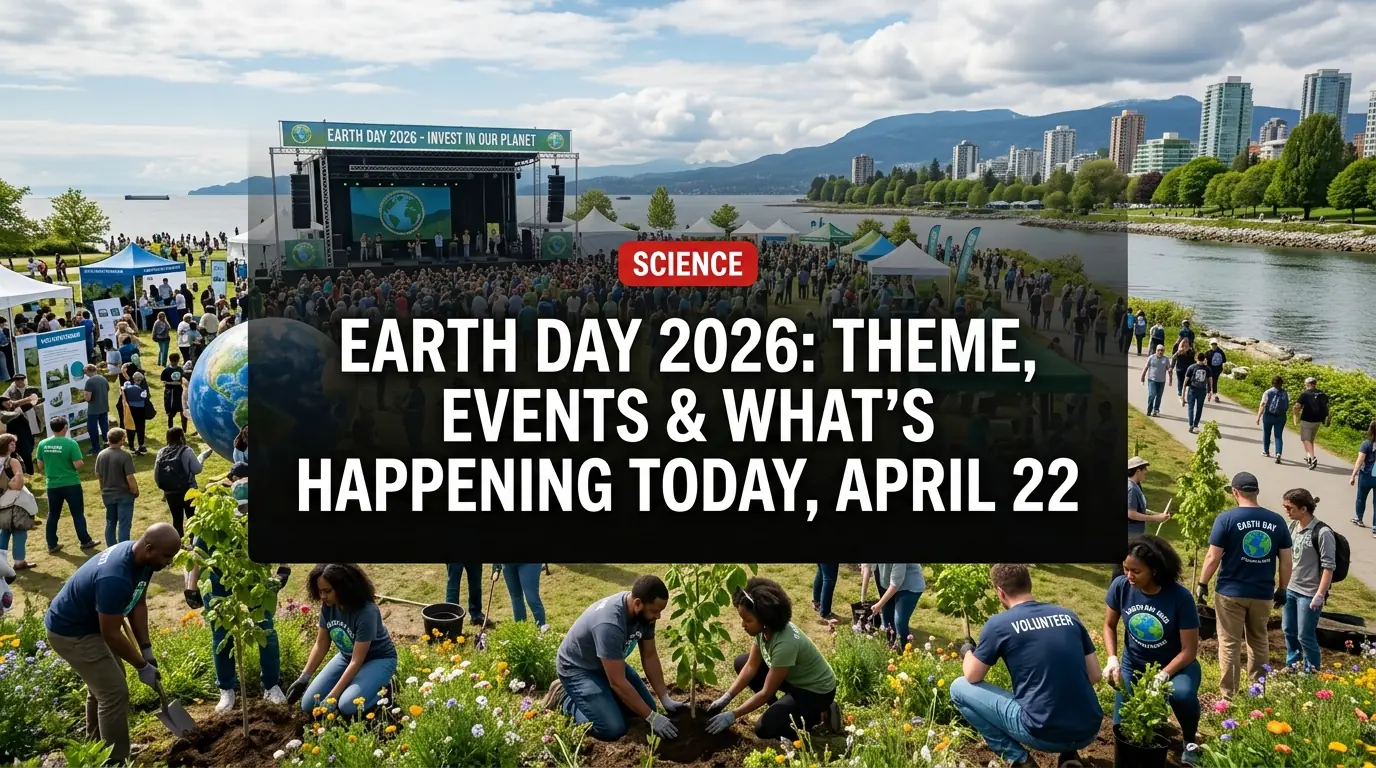
Earth Day lands on Wednesday, April 22, 2026, and this year's message is louder than ever: environmental progress doesn't wait for governments. The official 2026 theme — Our Power, Our Planet — shifts the focus away from policy gridlock and toward the collective force of communities, educators, workers, and families who protect the places they live every single day.
More than one billion people across 193 countries are expected to mark the occasion today, making Earth Day the largest civic event on the planet.
Why 2026 Matters More Than Ever
This Earth Day arrives against a backdrop of relentless climate data. According to Earth Day organizers and major climate bodies:
The 2026 Theme: Our Power, Our Planet
Earth Day organizers at EARTHDAY.ORG chose "Our Power, Our Planet" deliberately. The theme reflects a fundamental shift in strategy — away from waiting for top-down policy change, and toward mobilizing power at the community level.
"Environmental progress is sustained by daily actions of communities, educators, workers, and families protecting where they live and work," the organization stated in its official theme announcement. The campaign targets three accelerators: clean energy adoption, accountability for environmental damage, and community-scale climate solutions.
With the current US administration rolling back decades of environmental protections, the 2026 campaign leans into a simple truth: the power to protect the planet ultimately rests with people, not politicians.
What's Happening Today, April 22, 2026
Across the globe, Earth Day 2026 is packed with events that started building over the weekend of April 18–20 — deliberately timed so working people, students, and families could participate before the midweek date.
Here's what's happening today:
Town Halls With Elected Officials — Organizers are convening meetings with federal, state, and local officials across the US to push for environmental protections and challenge rollbacks of clean air, water, and land regulations.
Community Cleanups — Streets, parks, rivers, lakes, and beaches are being cleaned by volunteer groups in thousands of cities. Plastic pollution is a headline focus, with campaigns advancing global and local pledges to eliminate single-use plastics.
Teach-Ins in Schools — Educators worldwide are running Earth Day lessons. Schools in over 190 countries are participating in curriculum-linked environmental education sessions.
Reforestation Actions — Tree-planting campaigns are live in dozens of countries. EARTHDAY.ORG's Trillion Trees initiative, launched in prior years, is seeing fresh momentum today.
Demonstrations and Marches — Peaceful gatherings in major cities are pressing for renewable energy policy, corporate accountability, and ecosystem restoration.
- Earth Day was founded in 1970 by US Senator Gaylord Nelson after a 1969 oil spill in Santa Barbara, California
- The first Earth Day led directly to the creation of the US Environmental Protection Agency (EPA)
- Earth Day is observed by an estimated 1 billion people across 193 countries
- EARTHDAY.ORG runs the Great Global Cleanup — the world's largest volunteer environmental effort
- The 2026 theme "Our Power, Our Planet" centers on renewable energy and community-led climate action
A Brief History of Earth Day
Earth Day didn't emerge from a vacuum. It was born from outrage.
On January 28, 1969, an oil well blowout off the coast of Santa Barbara, California spilled 3 million gallons of crude oil into the Pacific Ocean, killing thousands of seabirds, dolphins, seals, and sea lions. The disaster galvanized public opinion.
Fifty-six years later, Earth Day has evolved from an American protest movement into the largest secular civic event on Earth. It helped birth the EPA, the Clean Air Act, the Clean Water Act, and the Endangered Species Act. It drove the Paris Agreement signing ceremony. And it continues to be the single biggest day for environmental mobilization worldwide.
How to Get Involved Today
Whether you have an hour or a full day, here are ways to mark Earth Day 2026:
Join a local cleanup. Search the EARTHDAY.ORG Global Event Map to find a community cleanup near you. Most events run two to four hours and require no experience — just show up.
Switch to renewable energy. Earth Day organizers are pushing individuals and businesses to audit their energy sources. Community solar programs and green utility options are available in most US states.
Plant something. A tree, a native plant, or even a container herb garden on a balcony contributes to local ecosystems and air quality.
Reduce single-use plastic. Today is a good day to audit your household and commit to swapping out one single-use plastic item — bags, bottles, or packaging.
Talk to your elected officials. Earth Day 2026 is explicitly calling for engagement with local and state representatives on environmental law protections. A five-minute phone call or email counts.
Educate others. Share reliable climate data, host a conversation, or introduce someone to a documentary, podcast, or article that changed how you think about the environment.
- Earth Day momentum has directly created landmark environmental legislation
- Community-level action is proven to drive measurable change in local ecosystems
- Participation is free and open to everyone — no expertise required
- Growing clean energy sector creates economic opportunity alongside environmental benefit
- One day of action doesn't substitute for year-round policy pressure
- Corporate greenwashing around Earth Day can dilute real commitments
- Climate fatigue is real — emotionally heavy topic that can cause disengagement
- Without systemic change, individual actions have limited scale
The Bottom Line
Earth Day 2026 isn't a celebration — it's a mobilization. The "Our Power, Our Planet" theme is a direct acknowledgment that the institutions many hoped would solve the climate crisis have, in too many places, moved backward. The response isn't despair. It's action at every level available.
Over 10,000 events are registered globally. Over one billion people are expected to participate. And 56 years of history show that Earth Day movements translate into real, lasting policy change.
Today is April 22. What you do with it is up to you.