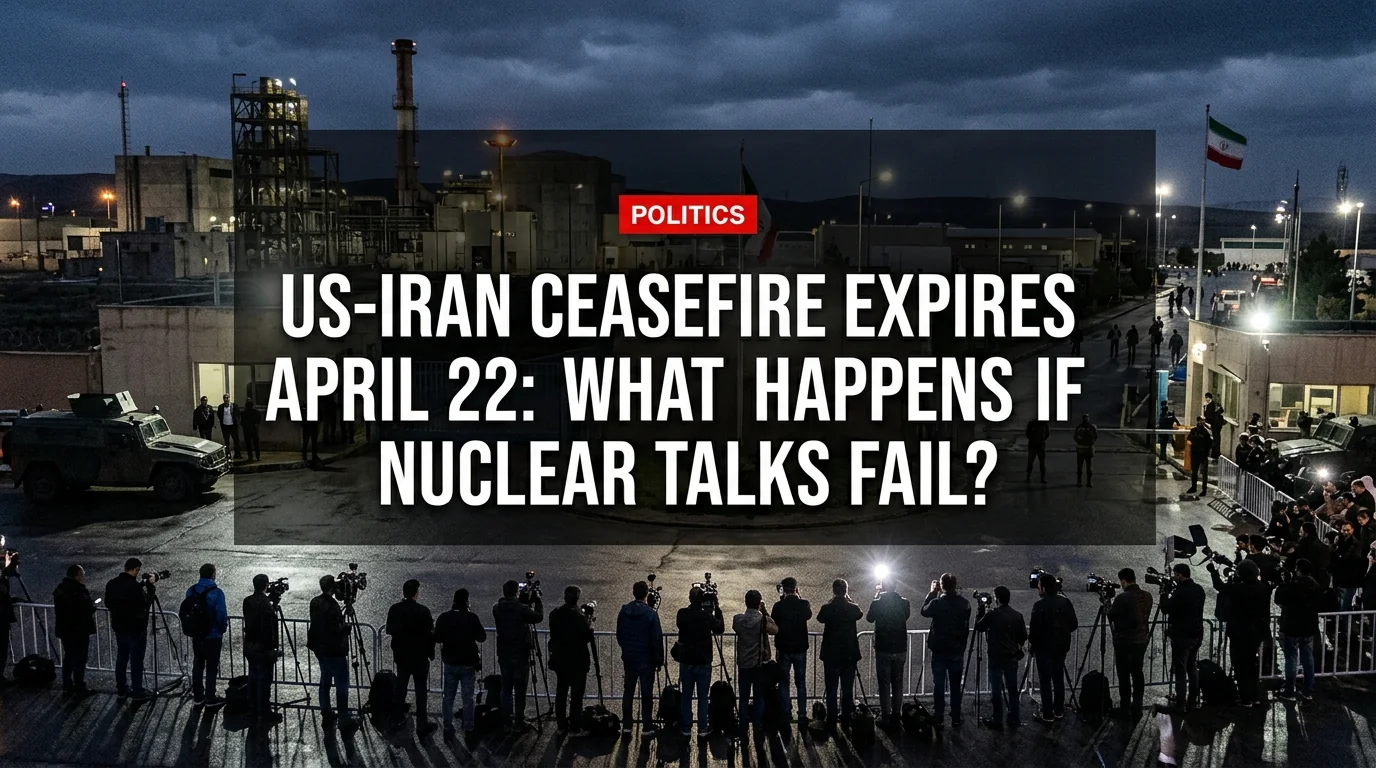
The clock is ticking. The two-week ceasefire that pulled the United States and Iran back from the brink of all-out war expires on April 22 — just five days from now — and negotiators on both sides are scrambling to either reach a nuclear deal or buy more time. Here is everything you need to know about where talks stand, what could derail them, and what a collapse would mean for the world.
How We Got Here
On April 7, 2026, President Donald Trump announced a surprise two-week ceasefire with Iran, reached less than two hours before his self-imposed military deadline. The U.S. and Israel agreed to suspend bombing runs on Iranian territory; Iran agreed in principle to allow safe passage through the Strait of Hormuz. The deal was described by both sides as a pause, not a peace — a narrow window for diplomats to negotiate something lasting.
The context was brutal. By the time the ceasefire was signed, more than 4,000 people had been killed across the Middle East, the vast majority of them in Iran and Lebanon. Oil markets had spiked past $100 per barrel after the Hormuz blockade choked off roughly 20% of global crude supply. Financial markets were rattled. Both governments faced enormous domestic pressure.
The Talks So Far — And Why They Stalled
The first major diplomatic meeting — the highest-level US-Iran engagement since the 1979 Islamic Revolution — ended without a deal. Vice President JD Vance, leading the American delegation, told reporters afterward that Iran had chosen "not to accept our terms" and that Washington needed a "fundamental commitment" from Tehran not to develop nuclear weapons.
Iran countered with a 10-point plan that Trump initially called a "workable basis on which to negotiate." The plan, now public, contains terms the U.S. has shown little appetite for: an end to all primary and secondary sanctions, full Iranian control over the Strait of Hormuz, U.S. withdrawal from the Middle East, release of frozen Iranian assets, UN ratification of any agreement, and — critically — Iran's explicit right to enrich uranium.
That last point is the central fault line. Trump has been unambiguous: "There will be no enrichment of Uranium." Secretary of State Marco Rubio described America's 15-point counterplan as making clear Iran "can never have nuclear weapons."
- Zero uranium enrichment
- Verified dismantlement of enrichment facilities
- No path to nuclear capability
- Hormuz reopened immediately
- Right to enrich for civilian purposes
- Sanctions lifted before disarmament
- U.S. military withdrawal from region
- Binding UN framework required
The Sticking Points — Explained
1. Uranium Enrichment This is the deal-breaker on paper. Iran has enriched uranium to near-weapons-grade levels and insists civilian nuclear energy is a sovereign right guaranteed under the Non-Proliferation Treaty. The U.S. and Israel say any enrichment capability creates an unacceptable breakout risk. Previous nuclear deals — including the 2015 JCPOA — allowed limited enrichment; Trump killed that agreement in 2018. Getting back to even that framework now looks ambitious.
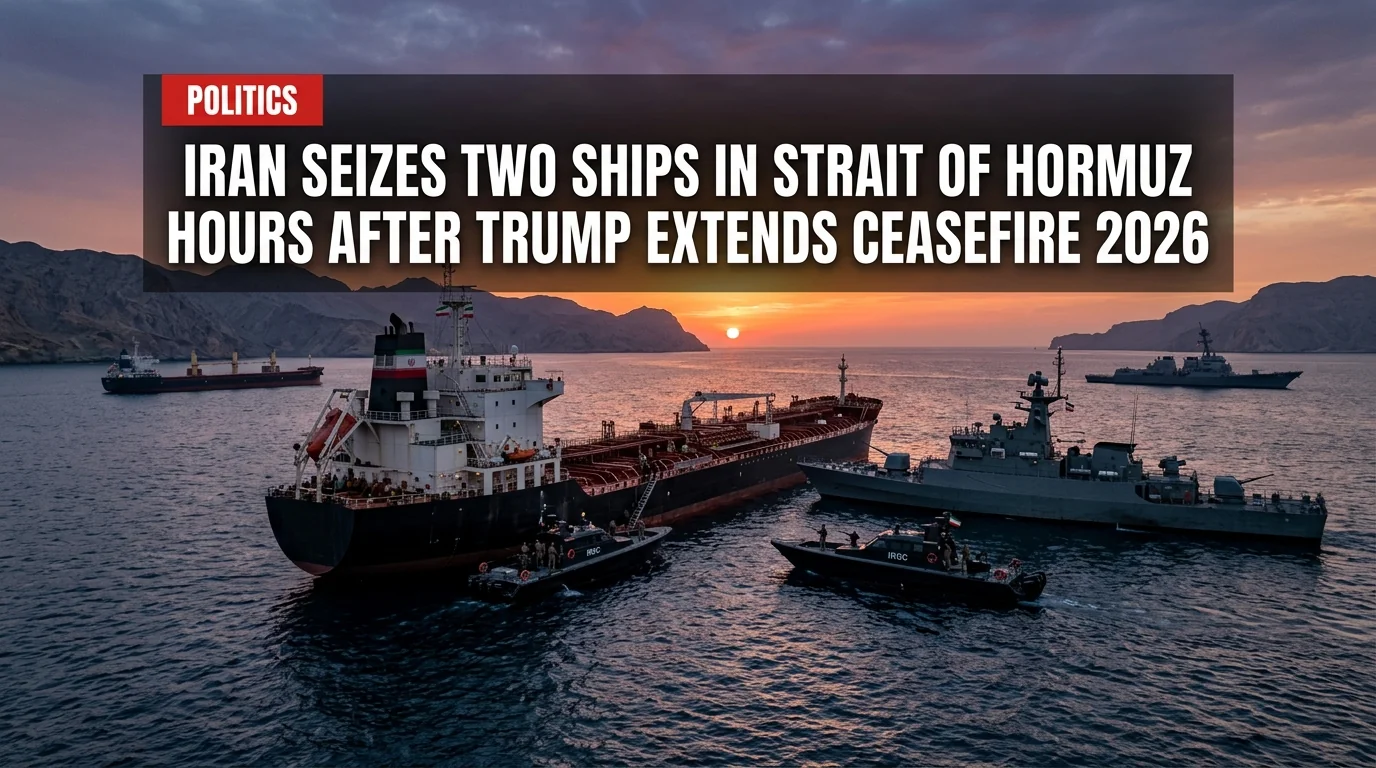
2. The Strait of Hormuz Iran has not fully reopened Hormuz despite the ceasefire. U.S. and allied navies are maintaining a presence; tanker traffic remains disrupted. Bloomberg reported this week that the U.S. and Iran are considering a ceasefire extension partly because this technical standoff — who controls passage, under what conditions — remains unresolved. Every day Hormuz stays shut, pressure on both governments intensifies.
3. Sanctions Architecture Iran wants full relief from U.S. sanctions as a precondition for meaningful disarmament talks. Washington wants disarmament steps first. This sequencing dispute killed the 2022 Vienna talks and is resurfacing now. The Biden-era "compliance for compliance" model is off the table; the Trump administration has demanded front-loaded concessions from Tehran.
What the U.S. Congress Is Saying
On Thursday, the House of Representatives rejected a resolution that would have required President Trump to withdraw U.S. military forces from the conflict with Iran unless Congress formally authorized the action. The vote signals that Trump retains broad political cover to resume hostilities if talks collapse — and removes leverage Iran might have counted on from domestic opposition to the war.
The Israel-Lebanon Wild Card
Separate from — but intertwined with — the US-Iran talks, Israel and Lebanon announced a 10-day ceasefire on Thursday as well. The Israeli-Lebanese front had been a flashpoint throughout the conflict, and the pause there reduces one potential flashpoint that could have complicated the Iran talks. However, it also means Netanyahu's government is under less immediate military pressure to accept whatever Iran deal Trump might broker — a dynamic that could make Israeli sign-off on any agreement harder to obtain.
Russia has also used the Iran standoff as strategic cover. The largest Russian drone attack of 2026 on Ukraine — striking Kyiv, Odesa, and Dnipro overnight — was timed to a moment when Western air defense resources are stretched between two theaters, according to Ukrainian commanders.
Three Scenarios for Next Week
Scenario 1: Extension Agreed (Most Likely) Both sides extend the ceasefire by two weeks to continue talks. This buys time without resolving anything structural. Markets stabilize; oil dips slightly. Diplomatic pressure continues. This is the path of least resistance and the one mediators from Oman and Qatar are actively pursuing.
Scenario 2: Framework Deal The sides announce a high-level "framework" — not a full deal, but a shared set of principles that can be negotiated into treaty language over months. Think of it as an agreement to agree. This would be a political win for Trump and could allow a Hormuz reopening, but the hard work on enrichment and sanctions would remain undone.
Scenario 3: Ceasefire Collapses If no extension and no deal materializes by April 22, the situation reverts to hostilities. The U.S. Navy's presence in the Gulf and prior targeting of Iranian military infrastructure means escalation could be rapid. Oil would likely spike past $120 per barrel again — a level already briefly hit on April 2. Global equity markets would take a significant hit. European and Asian governments are already quietly urging Washington to take any extension offered.
The Bottom Line
As of Friday morning, no deal has been confirmed and no extension has been officially announced. Trump said Thursday the U.S. is "very close" to an agreement — language he has used before without a deal materializing. Iran's Foreign Ministry has said negotiations are continuing but has not confirmed any breakthrough.
International mediators from Oman, Qatar, and Switzerland are running a diplomatic relay race against the April 22 clock. Whether they can bridge the gap on enrichment and sanctions sequencing in five days — or at least lock in more time — will determine whether this fragile ceasefire becomes a foundation for peace or a prelude to renewed war.