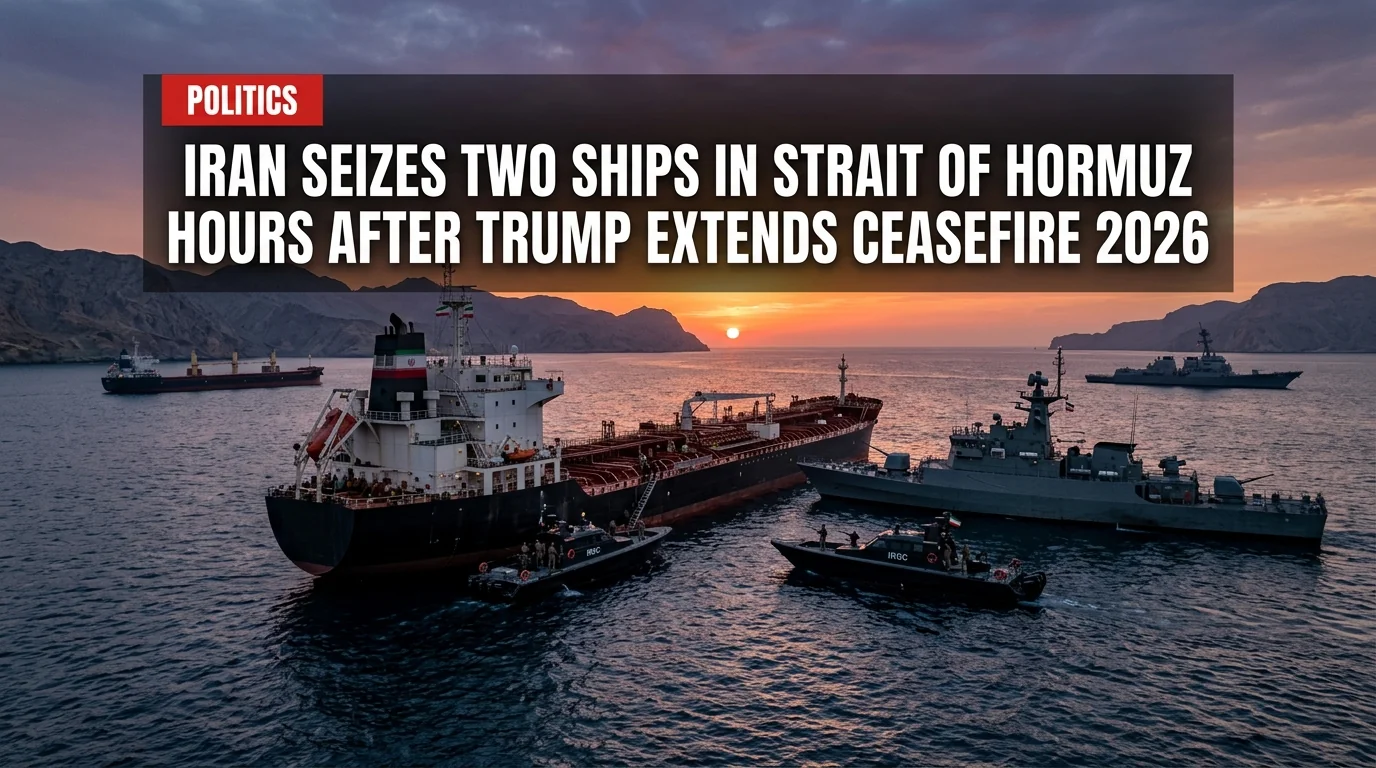
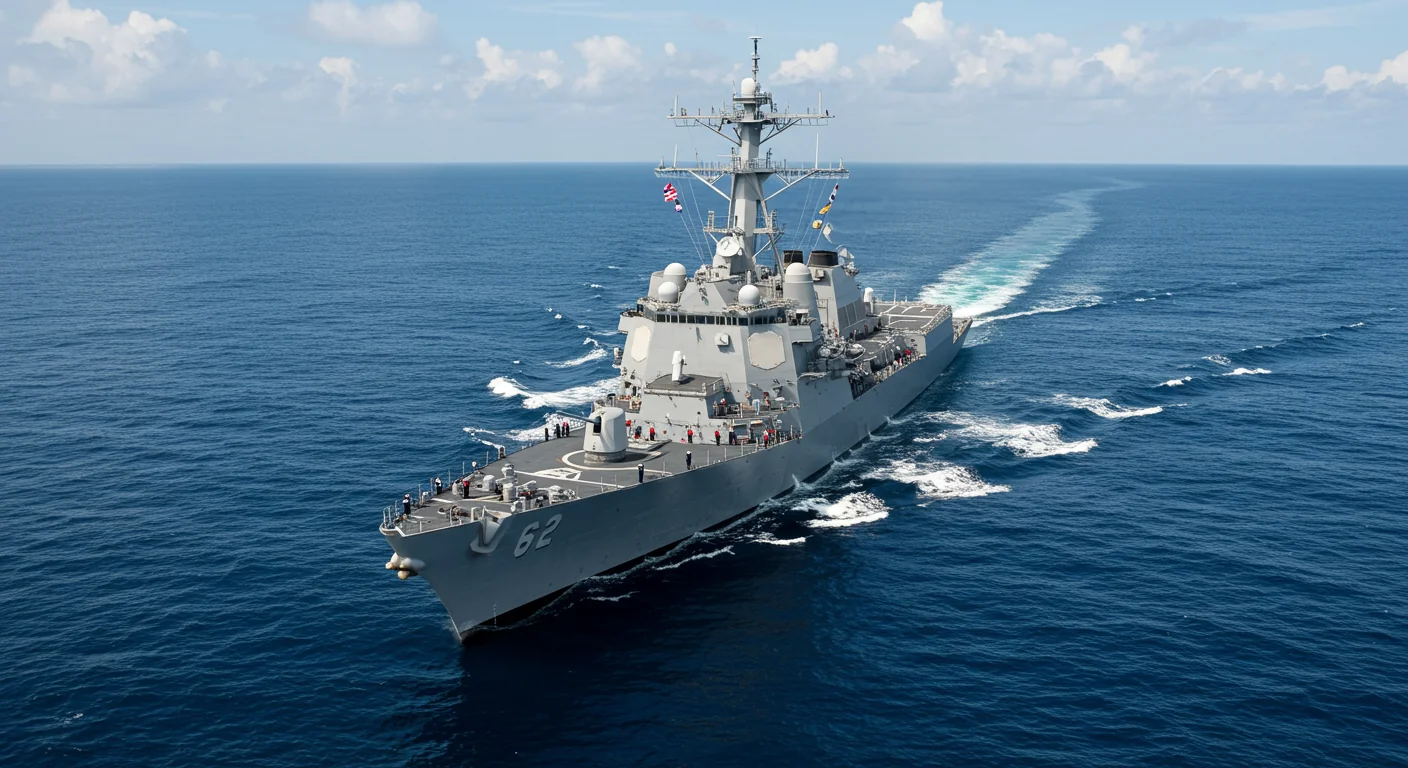
President Donald Trump on Wednesday ordered the U.S. Navy to shoot and destroy any Iranian vessel caught laying mines in the Strait of Hormuz, dramatically escalating the United States' posture in the ongoing conflict with Iran just hours after extending a fragile ceasefire.
The order came as Pentagon officials briefed lawmakers on a classified intelligence assessment warning that fully clearing the Strait of Hormuz of Iranian mines could take up to six months after the war ends — a timeline that would keep global oil markets on edge well past any peace agreement.
What Trump's Shoot Order Actually Means
The presidential directive gives U.S. Navy commanders immediate authority to engage and destroy any watercraft observed placing mines in the Strait, without requiring additional authorization from Washington. It is one of the most aggressive rules of engagement issued in the conflict so far.
The White House framed the move as a defensive measure to protect freedom of navigation. "We're going to clear those mines and anyone who tries to stop us is going to be dealt with very, very harshly," Trump told reporters at the White House on Wednesday.
Iranian officials rejected the characterization, calling the U.S. naval blockade itself a violation of the existing ceasefire. Senior Iranian commanders said the shoot order marks a "red line crossing" that removes any remaining incentive for Tehran to return to the negotiating table.
Six Months to Clear the Waterway
The Pentagon's classified briefing to Congress revealed the staggering logistical challenge ahead. Removing mines from the Strait of Hormuz — a 33-mile-wide passage at its narrowest point — would require a sustained multinational naval operation involving specialized mine-countermeasure vessels, underwater drones, and explosive ordnance disposal teams.
Navy officials confirmed that Iran has deployed a mix of moored contact mines and more sophisticated influence mines that respond to a vessel's magnetic signature, acoustic profile, or pressure changes — making clearance significantly more complex than previous mine-removal operations in the region.
"This is not a two-week job," one senior naval officer told congressional staffers, according to people familiar with the briefing. "We're talking about a methodical, months-long process under contested conditions."
Iran Seizes More Ships, Defying Ceasefire Extension
Even as Trump extended the ceasefire on Tuesday, Iran's Revolutionary Guard Corps moved aggressively in the Strait, seizing two vessels on Wednesday: the MSC Francesca, an Italian-owned Panamanian-flagged container ship, and a tanker identified as the Epaminondas.
Iran's IRGC said both ships were seized for "violating maritime regulations" — language Tehran has used repeatedly to justify detaining foreign-flagged vessels it views as supporting the U.S.-led blockade.
The ship seizures drew immediate condemnation from Italy, Greece, and the European Union, which called for the immediate release of the crews and cargo. The U.S. State Department said it was monitoring the situation closely but stopped short of calling for military intervention to recover the vessels.
Lebanon Complicates the Broader Picture
In a parallel diplomatic track, Lebanese officials declared Wednesday that no regional peace framework can move forward without a full Israeli military withdrawal from Lebanese territory. The statement came as Israeli strikes continued near Beirut's southern suburbs, killing at least one Lebanese journalist, according to officials in Beirut.
The Lebanon dimension has complicated ceasefire negotiations because Iranian-backed Hezbollah — a key Lebanese political and military force — is directly linked to Tehran's negotiating posture. Any deal with Iran that does not include a Hezbollah settlement is seen by Lebanese officials as inherently incomplete.
- Prevents immediate full-scale conflict
- Keeps diplomatic channels technically open
- Stabilizes oil markets short-term
- Iran continues mine-laying and ship seizures under its cover
- No enforcement mechanism for blockade violations
- Six-month cleanup still needed even if deal is struck today
Markets on Edge: Oil, Earnings, and the 'War Premium'
Global oil markets rallied earlier this week on news of the ceasefire extension, with Brent crude pulling back from its recent highs above $95 per barrel. But the Wednesday escalation reversed those gains, pushing prices back toward the $90 mark as traders priced in the growing risk of a prolonged disruption.
The S&P 500 opened lower Thursday before recovering ground, boosted by a strong earnings season. Of the 87 S&P 500 companies that have reported first-quarter results so far, 81% beat earnings estimates and 76% topped revenue expectations. But analysts warn that the Iran risk premium remains a significant wildcard for the second half of the year, particularly for energy-intensive sectors.
What Happens Next
With Trump's shoot order now in effect and Iran showing no signs of standing down, the coming days will test whether the ceasefire can hold at all. Diplomatic officials from Oman — which brokered earlier talks between Washington and Tehran — are reportedly attempting to arrange a new round of negotiations, but neither side has confirmed a meeting date.
The Pentagon's six-month mine-clearance estimate has added urgency to the talks. Even a swift peace agreement would leave global shipping operating in a degraded security environment for the better part of 2026, with cascading effects on energy prices, inflation, and supply chains worldwide.
For now, the U.S. Navy is the last line between a tense standoff and a shooting war in one of the world's most consequential waterways.