
The fragile two-week ceasefire between the United States and Iran expires Tuesday evening, April 21, 2026 — and as of this morning, there is no deal. With Vice President JD Vance en route to talks and President Trump issuing fresh threats on social media, the world is watching one of the most high-stakes diplomatic standoffs in recent memory.
How We Got Here
On April 7, 2026, the US and Iran agreed to a two-week ceasefire following a period of intense military confrontation that included US strikes on Iranian nuclear sites and Iran's temporary closure of the Strait of Hormuz. The ceasefire was intended to create space for nuclear negotiations — but those talks have stalled over fundamental disagreements.
The core US demand: Iran must completely abandon uranium enrichment and surrender all enriched material — including uranium "dust" from bombed facilities — with strict limits on ballistic missiles and Iran's support for regional armed groups. In exchange, Iran would receive sanctions relief.
Iran rejected the US proposal outright. Tehran insists on its right to civilian nuclear power and has resisted what it calls the complete dismantling of its nuclear program.
Trump Turns Up the Pressure
On Monday, Trump escalated his rhetoric, stating on social media that "lots of bombs [will] start going off" if Iran fails to reach a deal before the ceasefire expires. He separately clarified to Bloomberg that the deadline is "Wednesday evening Washington time" — extending the window by roughly 24 hours beyond what was initially understood.
The White House confirmed that the US continues to demand zero uranium enrichment, with Trump stating: "There will be no enrichment of Uranium, and the United States will, working with Iran, dig up and remove all of the deeply buried Nuclear 'Dust.'" That refers to enriched material from previous US airstrikes on Iran's buried nuclear facilities.
Vance Heads to Pakistan — Iran Talks Next
Vice President JD Vance departed Washington Tuesday morning, with Pakistan as his first stop. He is then expected to participate in a fresh round of US-Iran negotiations on Wednesday — coinciding precisely with the deadline.
Special envoy Steve Witkoff and Jared Kushner are also involved in the diplomatic effort. A CNN report noted that Trump's erratic social media posts over the weekend — threatening Iran publicly while backchannel talks were underway — had complicated the negotiating environment, with Iranian officials reportedly frustrated by the mixed signals.
What Iran Wants
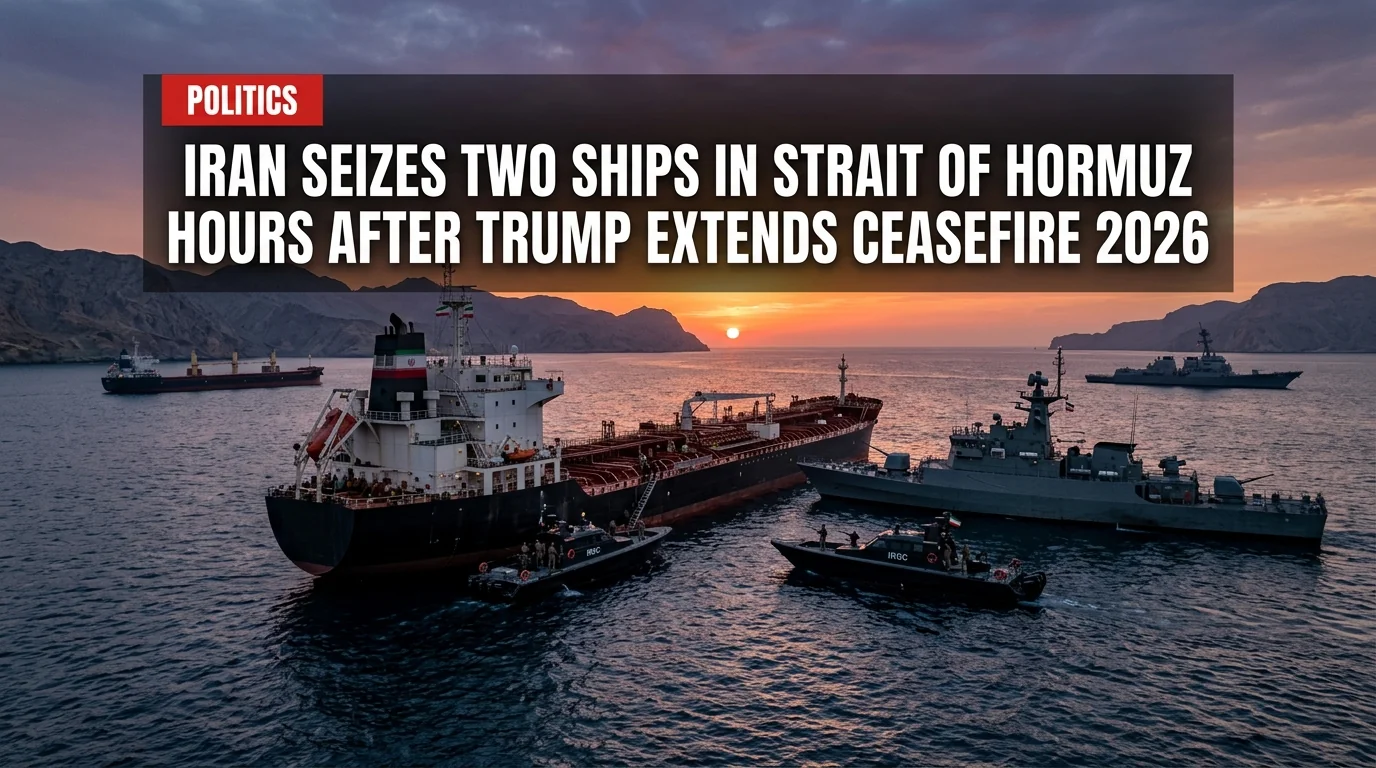
Iran has demanded the immediate release of an Iranian cargo vessel seized by the US Navy during the conflict — a move Tehran calls a precondition for continued good-faith negotiations. The US has not complied. Iran also wants guarantees that the US will not resume strikes regardless of the nuclear talks outcome, and insists any deal preserve some form of civilian nuclear capability.
The Iranian Foreign Ministry issued a statement Monday calling the ship seizure "a flagrant violation of international law" and warning it would not negotiate under duress.
The Three Scenarios
Market and Energy Implications
Global oil markets have been pricing in a "deal premium" since the ceasefire was announced. Brent crude has traded in the $85–$92 range during the truce period. Analysts at Goldman Sachs warned that a collapse of talks could push oil back above $110/barrel within 48 hours of any resumed hostilities — citing Hormuz as the critical chokepoint through which approximately 21 million barrels per day of oil flows.
The IMF has separately flagged the Iran situation as the top near-term downside risk to its April 2026 global growth forecast.
What Happens Tonight
All eyes are on Washington — and Islamabad. If Vance's Wednesday session produces even a framework agreement or a further ceasefire extension, markets are likely to rally and oil prices ease. If talks break down, the US military has signaled readiness to resume operations.
The next 24 hours will determine whether the most significant US-Iran confrontation in decades ends in diplomacy or a return to open conflict. We will update this article as developments unfold.