One year ago today, on Easter Monday, April 21, 2025, Pope Francis died at Casa Santa Marta in Vatican City. He was 88 years old. The cause of death was cerebral stroke and cardiovascular collapse — a quiet end to a thunderous 13-year papacy that reshaped the Catholic Church from the inside out.
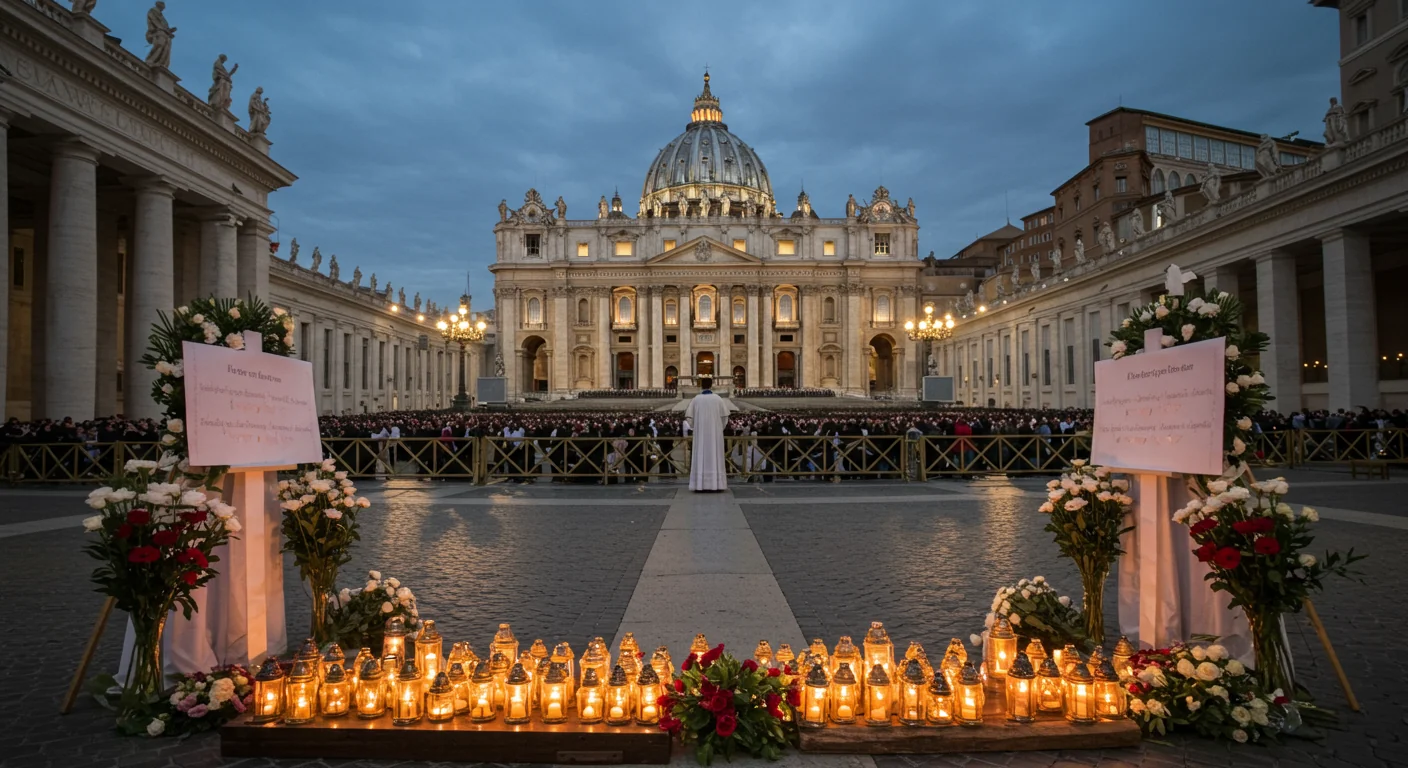
Today, the Basilica of Saint Mary Major — where Francis chose to be buried, in a simple tomb befitting the pope who called himself a "sinner" — holds commemorative ceremonies in his honor. At 5:00 PM Rome time, the Holy Rosary is recited. At 6:00 PM, a solemn Mass is celebrated, broadcast live on Vatican Media. A commemorative plaque is unveiled. Pope Leo XIV, currently on an Apostolic Journey in Africa, sends a message to be read aloud.
The Man Who Changed the Papacy
Francisco José Mario Bergoglio was born in Buenos Aires in 1936. On March 13, 2013, he walked onto the balcony of St. Peter's Basilica as the 266th pope — the first Jesuit, the first from the Americas, the first to take the name Francis, after Saint Francis of Assisi, patron of the poor.
From his first words — "Buona sera" (Good evening), delivered with a humble shrug — he signaled something different was coming. He refused the papal palace. He wore plain white. He washed the feet of prisoners, refugees, and Muslim women. He called a corrupt Vatican "a self-referential Church" and demanded it serve the margins.
Over 13 years, he visited 60 countries, canonized hundreds of saints, and launched the Synod on Synodality — a radical experiment in giving ordinary Catholics a voice in Church governance. He acknowledged the Church's history of clerical abuse with unprecedented directness. He opened doors to LGBTQ+ Catholics that his predecessors had kept firmly closed, permitting blessings for same-sex couples in the landmark 2023 declaration Fiducia Supplicans.
- Papacy: March 13, 2013 – April 21, 2025 (13 years, 39 days)
- Age at death: 88
- Countries visited: 60+
- First Jesuit pope in history
- First pope from the Americas
- Buried at Basilica of Saint Mary Major — his personal request
What He Actually Changed
His critics called him a liberal disruptor; his supporters called him the Holy Spirit's instrument. The truth is harder to pin down.
Francis did not change doctrine — the Church's formal teaching on abortion, contraception, or same-sex marriage did not shift. What shifted was tone, posture, and emphasis. He redirected the institution toward poverty, ecology (the encyclical Laudato Si' became the most influential Vatican document on climate in history), and a theology of mercy over judgment.
He reshaped the College of Cardinals, appointing over 100 in his tenure — deliberately drawing from Africa, Asia, and Latin America. He decentralized power. He championed women in leadership roles, though never crossing the line to ordination.
The cardinals who gathered in the Sistine Chapel on May 8, 2025, to choose his successor had a clear brief: continue this. The word they kept using was synodal — a Church that listens.
Pope Leo XIV: The American Heir
Fifteen days after Francis died, Cardinal Robert Francis Prevost of Chicago stepped onto the same balcony where Francis had once offered a simple "Good evening." He became Pope Leo XIV — the first American-born pope in the Church's 2,000-year history, and the first Augustinian in 500 years.
Leo's style is quieter. Where Francis was instinctive and spontaneous — sometimes dangerously so, his aides would privately admit — Leo is measured, deliberate, and institutional. He does not traffic in grand gestures. He revived traditional Holy Week practices. He has been careful not to overwrite Francis's legacy, speaking of him frequently and with evident warmth.
At Easter 2026, just two weeks ago, Leo called on Catholics to follow the example of Francis "who, on Easter Monday of last year, returned to the Lord." He has continued the Synod process, kept the same emphasis on service to the peripheries, and rebuked — obliquely but unmistakably — U.S. military policy abroad, stating that "God does not listen to the prayers of those who wage war."
- Continued Francis's focus on the poor and global South
- First American pope brings new diplomatic leverage
- Steadier, less volatile communication style than his predecessor
- Named to TIME 100 Most Influential People 2026
- Less charismatic and spontaneous than Francis
- Some reform advocates want faster movement on women's roles
- Faces same structural pressures: declining Western attendance, abuse accountability
The Unanswered Questions
A year on, the questions Francis raised are still being argued. What does a synodal Church actually look like in practice? Will his climate legacy survive in an era of geopolitical rollback? Will the clerical abuse crisis — exposed but never fully resolved — finally find structural answers?
And then there is the simpler question: did Francis bring people closer to faith?
Church attendance data is mixed. In Western Europe and North America, the long decline continued. In Africa and parts of Asia, Catholic numbers grew. In Latin America — his spiritual home — a complicated picture of ongoing Protestant growth but fierce loyalty to the Francis model.
How to Watch Today's Memorial
The anniversary ceremonies at the Basilica of Saint Mary Major in Rome are free to watch online:
- Vatican Media: live.vatican.va
- Tele Pace: available on YouTube and the Tele Pace website
- Basilica of Saint Mary Major social channels: simulcast on YouTube and Facebook
The Mass begins at 6:00 PM Rome time (12:00 PM Eastern / 9:00 AM Pacific).
Francis is buried in the left transept of the Basilica, in front of the icon of the Madonna Salus Populi Romani — Our Lady, Protectress of the Roman People. It was his most-visited shrine as pope. He chose it himself.
Today, a commemorative plaque is unveiled at that spot. In a papacy full of symbolic gestures, this may be the last one bearing his name.