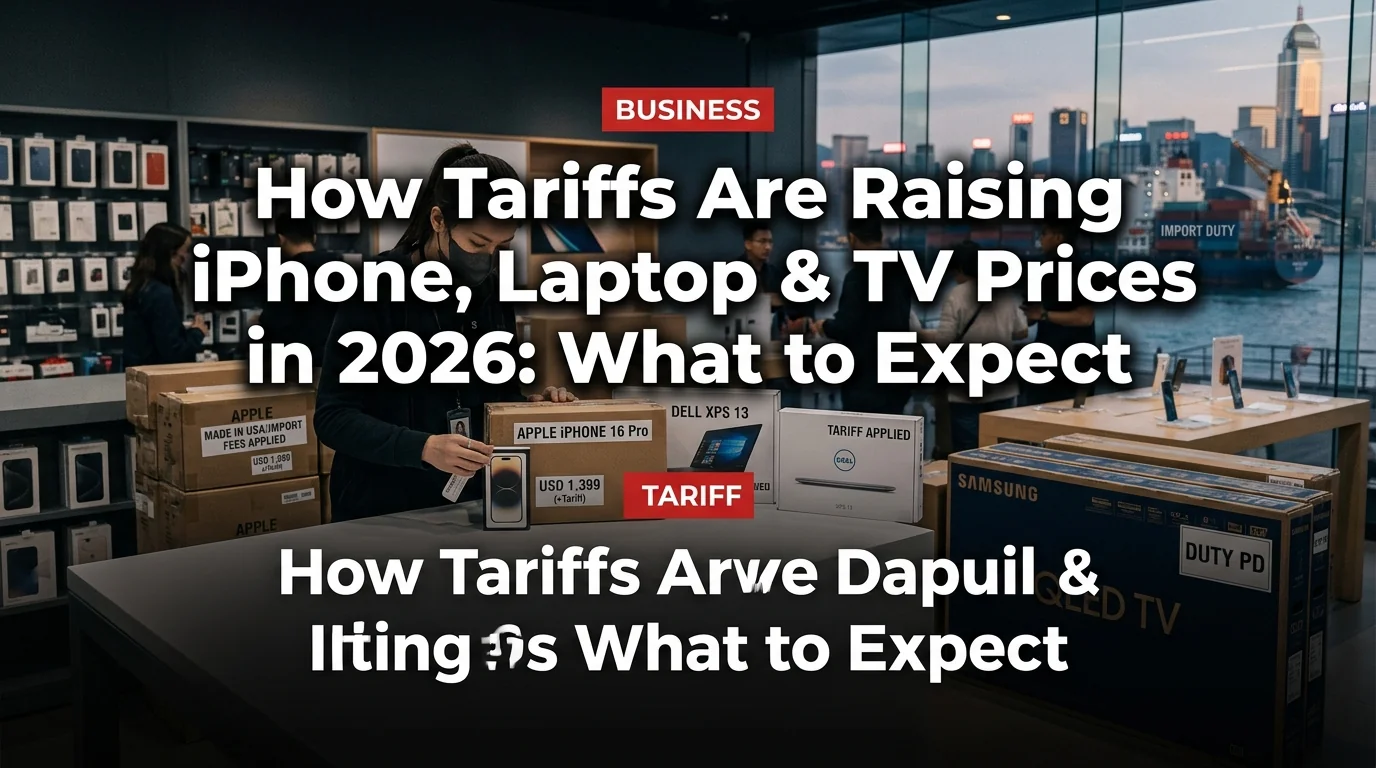
The average American household will pay an estimated $1,300 more in 2026 due to US tariffs — and in some product categories, prices are climbing far faster than most consumers realize.
With an effective tariff rate now sitting at 10.3% (up from just 2.2% at the start of 2025), businesses that absorbed costs last year are now passing them directly to shoppers. Here's a category-by-category breakdown of what's getting more expensive and by exactly how much.
Electronics: The Biggest Sticker Shock
If you're planning to buy a new phone, laptop, or gaming console in 2026 — brace yourself. Electronics have the steepest projected tariff-driven price increases of any category.
Most consumer electronics are manufactured or assembled in China, which remains subject to the highest US tariff rates. The Consumer Technology Association (CTA) projects:
- Smartphones: ~31% price increase (+$255 on the average $826 phone) — see best budget smartphones under $300 for deals before prices climb further
- Laptops: Up to 68% more expensive in some estimates
- Gaming consoles: Up to 69% price surge
- Monitors: ~32% increase
- Accessories (keyboards, mice, printers): ~25% higher
A 10% Section 122 tariff on select electronics categories is estimated to have a 3–7% direct price impact on retail. The larger increases reflect supply chain disruption and manufacturer margin protection.
Cars: Thousands More on the Sticker
A 25% tariff on imported passenger vehicles and light truck parts — for buyers looking at alternatives, see the best electric cars 2026 ranked for models with domestic assembly is fundamentally reshaping the auto market. No other single tariff is hitting consumers as hard in absolute dollar terms.
left: label: Average New Car Price (Pre-Tariff Baseline) value: $47,000 points: - No tariff surcharge - Full model availability - Normal production volumes right: label: Average New Car Price (2026 Tariff Impact) value: $50,000–$53,400 points: - $3,000–$6,400 tariff-driven increase - Reduced import inventory - Some models discontinued ::
J.P. Morgan Global Research estimates the combined impact on vehicles and parts at $2,580–$3,258 per vehicle in the first three years, with new vehicle price inflation running at 3% above baseline. Industry analysts provide a wider range — some projecting $3,000 to $10,000 increases depending on origin country and vehicle type.
The hardest-hit buyers: those purchasing fully imported vehicles (European luxury cars, Japanese brands assembled overseas) where the 25% tariff applies in full. Domestically-assembled vehicles face cost increases too, as imported parts still carry tariffs.
Groceries: Smaller Increases, But Meaningful
Grocery price increases from tariffs are more modest than electronics or autos — but they're hitting a category where Americans have the least flexibility.
Clothing and Footwear: A Silent Crisis
The apparel industry is absorbing one of the most significant structural tariff shocks — but headlines have been slower to cover it.
- - Clothing prices projected to rise ~21% over the next two years
- - Shoes and leather goods: ~22% increase projected
- - US apparel industry relies heavily on Asian manufacturing
- - Fast fashion brands face the sharpest margin pressure
- - Higher-end brands more likely to absorb costs short-term
Who Gets Hit Hardest
The Timeline: When Did Prices Start Moving?
What Economists Are Saying
The Yale Budget Lab estimates the current tariff regime raises the overall price level by 0.6% in the short run, translating to roughly $800 lost purchasing power per average household. The Tax Foundation pegs the annual household cost at $1,300, with lower-income families facing disproportionate impact.
The Federal Reserve has been closely watching tariff pass-through data. Their concern: if businesses accelerate price increases faster than models predict, it could complicate monetary policy decisions on interest rates through the second half of 2026.
For consumers, the practical advice from financial analysts is consistent:
- Delay major electronics purchases if possible — prices not yet at peak
- Lock in auto deals now before dealer inventory at pre-tariff pricing is exhausted
- Stock pantry staples when on sale, as grocery inflation is expected to persist
- Buy clothing off-season — retail markdowns may partially offset tariff increases