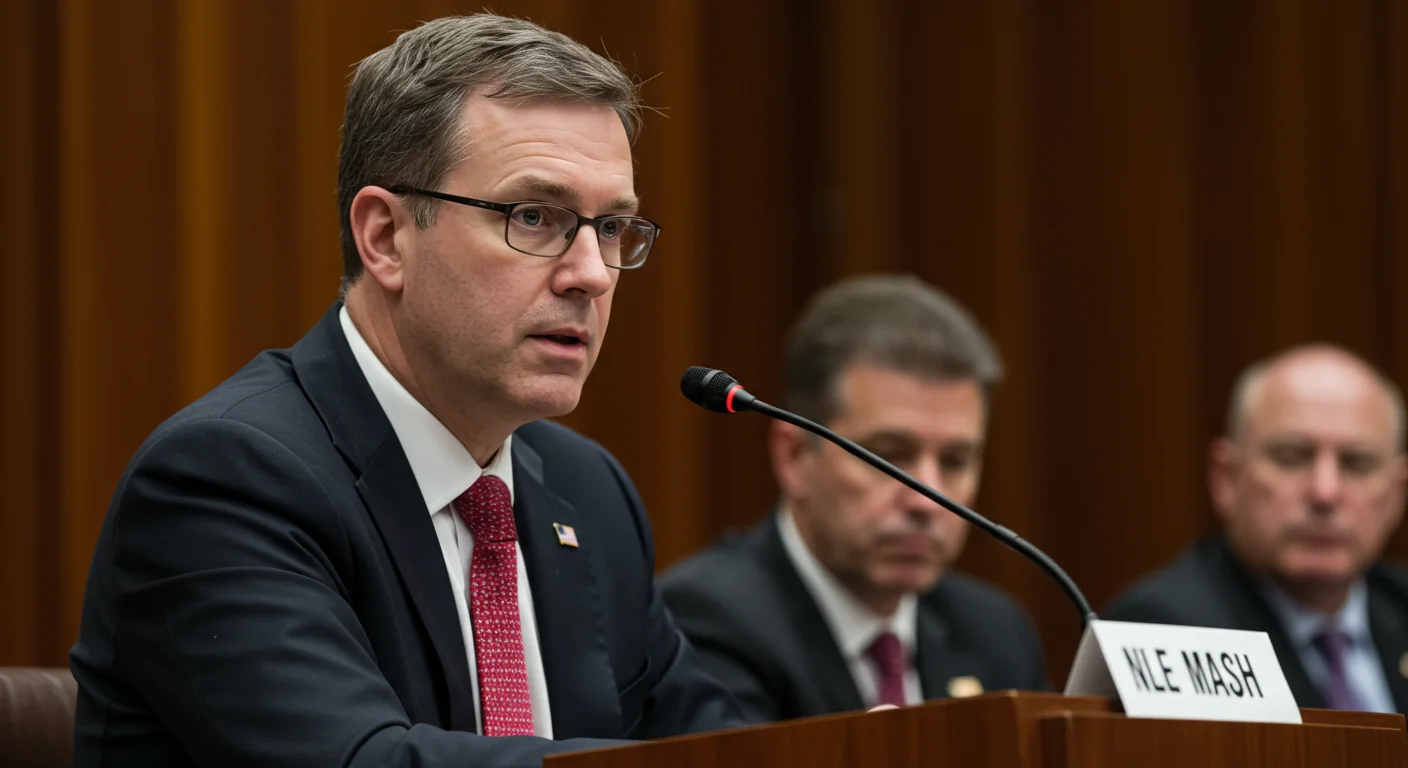
Trump's pick to lead the Federal Reserve sat before the Senate Banking Committee today and made one thing immediately clear: he won't be taking orders from the Oval Office.
Kevin Warsh, 56, faced hours of tough questioning on Tuesday as senators probed whether he could remain independent from a president who has publicly demanded lower interest rates and even floated firing the current Fed chair Jerome Powell.
"I will be an independent actor if confirmed," Warsh told the committee, adding that Trump had never asked him to cut rates and he had made no such promises.
The line that grabbed the most headlines: "I will not be the president's sock puppet."
Who Is Kevin Warsh?
Warsh isn't new to the Fed. He served as a Federal Reserve governor under Ben Bernanke from 2006 to 2011, appointed by President George W. Bush at just 35 years old — the youngest governor in the Fed's history at the time.
He resigned in 2011 after opposing Bernanke's plan to purchase $600 billion in Treasury securities (QE2), signaling he was willing to break from consensus when he disagreed with the direction of monetary policy.
Since then, Warsh has worked at Duquesne Family Office, advised billionaire investor Stanley Druckenmiller (earning $10 million from that role), and lectured at Stanford Graduate School of Business.
The Confirmation Hearing: What Senators Wanted to Know
Independence from Trump
The central question hanging over the hearing: can Warsh say no to a president who views interest rates as a political tool and has repeatedly attacked the Fed for not cutting fast enough?
Warsh's answer was direct — he'd had no conversations with Trump about specific rate decisions, nor would he make commitments about future policy. "The Fed's independence is essential to its mission," he said.
Democratic senators, led by Sen. Elizabeth Warren, pushed harder. Warren noted Warsh's vast personal wealth — including stakes in SpaceX, Polymarket, and several crypto-adjacent companies — and questioned whether financial conflicts of interest could shape his monetary decisions.
Warsh said he would recuse himself from matters involving firms he holds stakes in.
The Tillis Wildcard
The most unexpected moment came from the Republican side. Sen. Thom Tillis (R-NC) announced he would vote against moving forward with Warsh's nomination — not because of any opposition to Warsh personally, but to pressure the Justice Department to drop its criminal investigation of current Fed chair Jerome Powell.
The DOJ probe relates to alleged cost overruns on the Fed's Washington headquarters renovation. Tillis's block means Republicans may not have the votes to confirm Warsh without Democratic support, reshuffling the political calculus significantly.
- Strong academic and Fed governor experience
- Signaled willingness to defy political pressure
- Near-universal Republican support (except Tillis hold)
- Inflation hawk with clear anti-QE track record
- $135M+ wealth raises potential conflict-of-interest questions
- Stakes in SpaceX, Polymarket, and crypto companies
- Resigned from Fed in 2011 under contentious circumstances
- Tillis hold could delay or block confirmation vote
What Warsh Actually Believes on Rates
Despite Trump's desire for rate cuts, Warsh has a hawkish track record. He opposed QE2 in 2011. He's said repeatedly that inflation — still running above the Fed's 2% target — remains the defining challenge.
"The fatal policy error going back four or five years is still a legacy that we're dealing with," Warsh told senators, a thinly veiled critique of the post-COVID era of ultra-low rates and stimulus that many economists blame for the inflation surge of 2022–2024.
The current Fed Funds rate sits at 4.25%–4.50%. Trump has publicly called for cuts to 2% or lower. Warsh gave no indication he intends to deliver that.
The Path to Confirmation
If the Senate Banking Committee votes to advance Warsh's nomination, it goes to the full Senate floor. Republicans hold a 53-47 majority, but Tillis's hold means the GOP can't advance Warsh without at least one Democratic vote — or resolving the Powell DOJ situation first.
Jerome Powell's current term as chair runs through May 2026. If Warsh isn't confirmed in time, Trump could attempt to reappoint someone in an acting capacity, though the Fed's structure makes a unilateral removal of Powell legally contested.
Why It Matters
The Federal Reserve chair is arguably the most powerful economic position in the world. With the US-Iran ceasefire expiring Wednesday and oil prices already surging past $89/barrel, markets are watching monetary policy closely. A hawkish Fed at a time of geopolitical-driven inflation could trigger recession fears.
For everyday Americans, the outcome shapes mortgage rates, credit card APRs, auto loan costs, and the pace of any potential rate relief they've been waiting on since 2022.
Warsh's hearing didn't resolve whether he'll be confirmed. But it confirmed he's not planning to hand Trump the rate-cut lever — which may end up being the most important thing he said all day.