
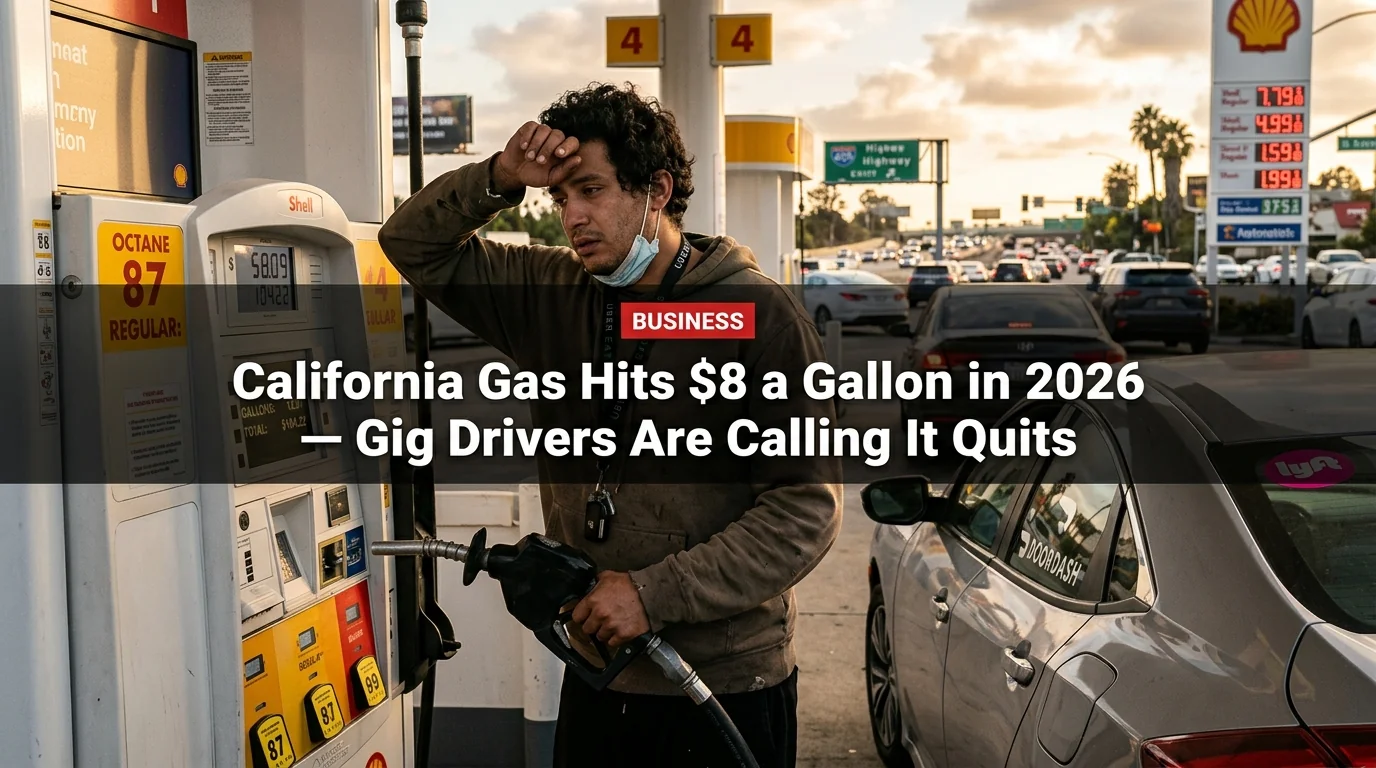
California drivers pulled up to gas stations this week to find something that once seemed unthinkable: regular unleaded topping $8.00 per gallon on average across the state. For most commuters, it's a painful hit to the wallet. For the hundreds of thousands of gig economy workers who depend on their vehicles to earn a living, it may be the breaking point.
Mass walkouts and work stoppages by Uber and Lyft drivers erupted across Los Angeles and San Francisco on Friday, with drivers citing a simple calculation: at current fuel prices, many trips no longer cover costs. The disruptions have left riders facing surge prices, long wait times, and in some cases no cars at all during peak morning hours.
How California Reached $8 a Gallon
California has always paid more for gas than the rest of the country — but the gap has never been this wide. Several forces have collided to push prices to historic highs in 2026.
Refinery capacity collapse. The state has lost three major refineries since 2023, leaving California more dependent on a shrinking pool of local supply. Unlike most U.S. states, California is largely cut off from the national pipeline network, meaning it cannot easily import cheaper fuel from Texas or the Gulf Coast.
Cap-and-trade costs. California's carbon cap-and-trade program adds roughly $0.50–$0.80 per gallon on top of base fuel costs — a premium that compounds with every price spike.
State and local taxes. California levies the highest gasoline excise tax in the nation at $0.59 per gallon, plus a 2.25% sales tax and various local surcharges. Combined, taxes and fees account for over $1.50 per gallon before the fuel itself is priced.
Global oil market volatility. Tensions in the Middle East through early 2026, including disruptions around key shipping routes, sent crude oil prices surging, and California's isolated supply chain meant those increases hit the state harder than anywhere else.
The Gig Driver Math Doesn't Add Up
For rideshare drivers, the economics have quietly been deteriorating for months — but $8 gas has pushed many past their tolerance limit.
A typical Uber or Lyft driver in Los Angeles logs 150–200 miles per day. At the national average gas price, that might cost $20–$25 in fuel for a moderately efficient car. At $8/gallon in California, the same driver is spending $50–$65 a day just on gas — before accounting for vehicle wear, insurance, or platform fees.
Uber and Lyft take between 25–30% of each fare, and neither company has announced a fuel surcharge adjustment proportional to California's current prices. The small per-trip fuel surcharges that exist — typically $0.55–$1.10 per ride — don't come close to covering the shortfall.
"I made $140 yesterday and spent $58 on gas," said one Los Angeles-based Uber driver who joined Friday's walkout. "That's before I pay for my car insurance, phone bill, or any maintenance. I am literally working to lose money."
Strikes in LA and San Francisco
The walkouts that erupted Friday were largely organic — coordinated through driver Facebook groups and WhatsApp chats rather than any formal union structure. In Los Angeles, dozens of drivers gathered outside LAX and downtown pickup zones, refusing to accept new trips and urging passengers to complain directly to Uber and Lyft corporate.
In San Francisco, the disruptions were most visible around the Financial District and SFO during the morning rush. Riders reported waiting 20–40 minutes for cars that typically arrive in under five minutes. Surge pricing in some zones hit 3.5x the base fare — meaning a $15 trip was billed at over $50.
Both Uber and Lyft declined to offer specific comment on the driver actions. Lyft issued a brief statement acknowledging "ongoing dialogue with driver partners about the challenging cost environment in California."
A State Already Under Pressure
The gas price crisis arrives at a particularly difficult moment for California's economy. The state has been wrestling with elevated costs of living, outmigration of residents to lower-cost states like Texas and Florida, and a budget deficit that has constrained Sacramento's ability to offer relief.
Governor Gavin Newsom's office has not announced any emergency fuel price relief measures as of Friday afternoon. In past price spikes, the state has temporarily suspended portions of the gas tax — a politically popular move that has modest impact on pump prices.
Some economists argue that California's gas premium is, at this point, structural rather than cyclical — meaning it won't resolve itself when global oil prices fall. The state's refinery closures cannot be quickly reversed, and the regulatory cost stack isn't going away.
What Riders and Drivers Can Do
For riders dealing with surge pricing and reduced availability, a few options can help:
- Schedule rides in advance — Both Uber and Lyft allow scheduled trips that lock in prices before demand peaks.
- Try alternatives — BART, Caltrain, and LA Metro are seeing higher ridership and running extended service on major corridors.
- Use Waymo — The robotaxi service operating in San Francisco and LA doesn't face the same driver walkout pressure and is expanding its fleet.
For drivers weighing whether to stay on the road:
- Track your real hourly rate — Factor in fuel, wear, and platform fees against gross earnings before deciding if a shift is worth it.
- Maximize short trips in dense areas — Shorter trips near airports or downtown cores tend to have better earnings-per-mile ratios.
- Explore fuel rewards programs — Costco, Arco, and some credit cards offer per-gallon discounts that can meaningfully offset costs.
What Happens Next
The pressure on California lawmakers is mounting. Several state legislators are calling for an emergency session to discuss gas tax relief, a windfall profits tax on oil companies operating in the state, or expanded subsidies for rideshare drivers to transition to EVs.
Uber and Lyft, meanwhile, face a difficult balancing act: raise fares to compensate drivers and risk losing riders to cheaper alternatives, or maintain current pricing and watch their driver supply thin out during peak hours.
For now, California commuters are left navigating a transportation system under strain — and drivers are left running the numbers at every fill-up, wondering if today is the day they park the car for good.