OpenAI has made its first-ever media acquisition — and the AI world is still processing what it means.
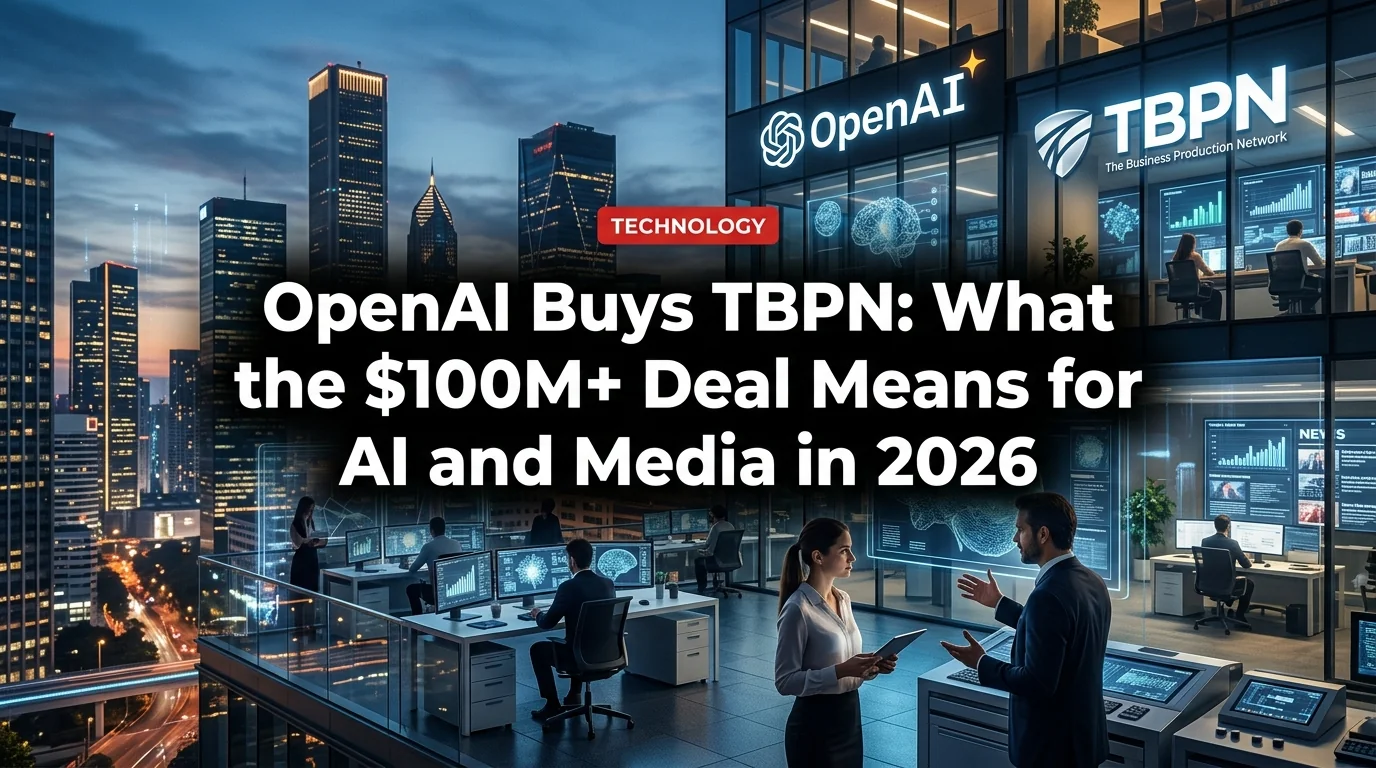
On April 2, 2026, OpenAI announced it had acquired TBPN (Technology Business Programming Network), a wildly popular daily live tech talk show hosted by entrepreneurs Jordi Hays and John Coogan. The deal, valued by analysts at more than $100 million, marks a major shift in how AI companies are thinking about public narrative and media influence.
What Is TBPN?
If you haven't heard of TBPN, you're not alone — and you might be surprised by its size. TBPN is a live daily show that streams weekdays from 11am to 2pm PT on YouTube. It covers tech, startups, venture capital, and AI with an unfiltered, founder-native perspective.
On paper, its subscriber count looks modest: roughly 58,000 to 70,000 YouTube subscribers. But that number is wildly misleading. TBPN routinely pulls 130,000+ simultaneous live viewers — a number that rivals many major television broadcasts in the tech space. Its podcast and clip content add millions more monthly listeners.
The show has become required listening in Silicon Valley. Guests include top founders, investors, and operators. Its casual but information-dense style has made it a go-to for anyone who wants to know what the tech industry actually thinks — not what the press releases say.
Why Did OpenAI Buy It?
OpenAI said the deal was about driving "constructive conversation" around AI. TBPN will sit inside OpenAI's strategy organization, but — critically — the company committed to keeping editorial control entirely with TBPN's founders.
Sam Altman himself put it plainly on X:
"TBPN is my favorite tech show. We want them to keep that going and for them to do what they do so well. I don't expect them to go any easier on us — am sure I'll do my part to help enable that with occasional stupid decisions."
The self-deprecating quote is classic Altman — but it also carries a real message: OpenAI is betting that TBPN's credibility depends on independence, and destroying that credibility would defeat the point of owning it.
The Business Case Is Strong
Beyond narrative influence, the raw economics here are compelling. TBPN did approximately $5 million in advertising revenue in 2025 and is on track for more than $30 million in 2026, according to reporting from the Wall Street Journal. That growth curve is exceptional for a show that didn't exist two years ago.
For a company like OpenAI — which raised $40 billion in 2025 alone at a $300 billion valuation — a $100 million media acquisition is essentially a rounding error on the balance sheet. But the potential returns, both financial and reputational, are enormous.
TBPN already earns money from sponsorships, live events, and premium content. Under OpenAI's ownership, that infrastructure could expand significantly.
What Critics Are Saying
Not everyone is cheering. Outlets including CNN and Slate quickly raised concerns about what happens when the world's most powerful AI company owns a media property that covers AI.
The argument is simple: even with formal editorial independence, the relationship creates inherent conflicts. Will TBPN hosts be as willing to run critical segments about OpenAI's safety record, its legal battles, or its competitive behavior? Will guests who want to stay in OpenAI's good graces self-censor?
OpenAI's Chris Lehane — the company's chief strategy officer, who previously worked for Democratic politicians — defended the deal forcefully. But his political background has become part of the story for critics who see the acquisition as a sophisticated influence operation dressed up as a media investment.
- TBPN keeps full editorial independence (OpenAI committed publicly)
- Sam Altman personally vouched for the arrangement
- TBPN's credibility is the asset — destroying it would be self-defeating
- Provides OpenAI with direct access to the most influential tech audience
- Inherent conflict of interest even with formal independence
- Chilling effect on critical coverage — guests may self-censor
- Sets a precedent for AI companies buying media properties
- OpenAI's strategy team now owns a show that covers OpenAI
The Bigger Picture: AI Companies and Media Control
The TBPN acquisition doesn't exist in a vacuum. It's part of a broader pattern of AI companies recognizing that the war for public trust is as important as the war for technical capability.
We've seen AI companies invest heavily in policy teams, fund think tanks, hire former government officials, and now — buy media properties outright. OpenAI's move is the most direct version of this strategy yet.
For the media industry, the implications are significant. TBPN is proof that niche live content with deeply engaged audiences can generate tens of millions in revenue. It's also now proof that that kind of audience is valuable enough for a $300 billion AI company to pay nine figures for.
- TBPN was founded in 2025 by Jordi Hays and John Coogan
- The show streams daily, weekdays, 11am–2pm PT on YouTube
- OpenAI committed to full editorial independence for TBPN
- This is OpenAI's first-ever media acquisition
- The deal makes TBPN part of OpenAI's strategy organization
What Happens Next
For now, TBPN is running exactly as it always has. Hays and Coogan are still hosting. Guests still get booked independently. The format hasn't changed.
The real test will come over time — when a genuinely damaging OpenAI story breaks, when regulators come knocking, or when TBPN's hosts have to decide how hard to push on topics that directly affect their new parent company.
OpenAI is betting that TBPN's founders will stay independent, and that the audience's trust will remain intact. That bet might pay off. Or it might be remembered as the moment when Silicon Valley's media credibility hit a new low.
Either way, the age of AI companies as media owners has officially begun.