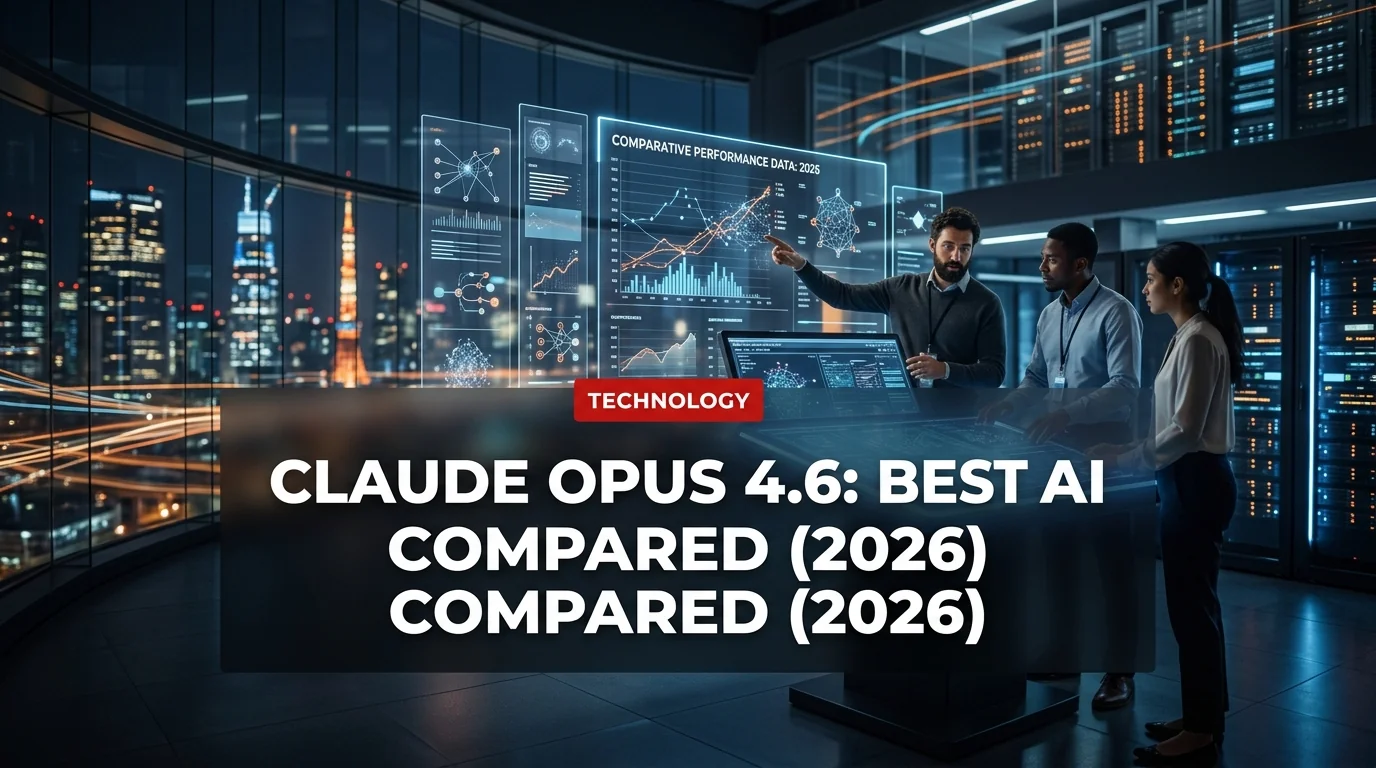
Grok 4.20, GPT-5.4, and Claude Opus 4.6 are the three most powerful AI models available in March 2026. Each comes from a different lab with a different philosophy — and choosing wrong could cost you hundreds of dollars a month or leave you with worse results.
We compared all three across benchmarks, pricing, features, and real-world use cases. Here's the verdict.
Quick Answer: Which AI Model Should You Pick?
- Best for coding: Claude Opus 4.6 — leads Terminal-Bench 2.0 and SWE-bench
- Best all-rounder: GPT-5.4 — strongest general reasoning with native computer use
- Best value: Grok 4.20 — $2/$6 per million tokens vs $30/$180 for GPT-5.4 Pro
- Largest context: Grok 4.20 — 2M tokens vs 1M for the others
Head-to-Head Specs Comparison
GPT-5.4 (OpenAI)|Claude Opus 4.6 (Anthropic) Released March 5, 2026|Released February 5, 2026 1M token context window|1M token context window $30/$180 per 1M tokens (Pro)|$5/$25 per 1M tokens $200/mo Pro subscription|$100/mo Max (5x usage) GDPval: 83%|GDPval: ~81% OSWorld: 75.0%|OSWorld: 72.7% Native computer use (mouse/keyboard)|Agent Teams for multi-step workflows 33% fewer hallucinations vs GPT-5.2|Terminal-Bench 2.0 leader ::/versus
| Feature | GPT-5.4 | Claude Opus 4.6 | Grok 4.20 |
|---|---|---|---|
| Release Date | March 5, 2026 | February 5, 2026 | February 18, 2026 |
| Context Window | 1,000,000 tokens | 1,000,000 tokens | 2,000,000 tokens |
| GDPval Score | 83% | ~81% | 79% |
| OSWorld Score | 75.0% | 72.7% | Not reported |
| API Cost (In/Out) | $30 / $180 (Pro) | $5 / $25 | $2 / $6 |
| Subscription | $200/mo (Pro) | $100/mo (Max 5x) | $300/mo (Heavy) |
| Hallucination Rate | 33% lower than GPT-5.2 | Low (long-context stable) | Moderate |
| Computer Use | Native (mouse/keyboard) | Via Agent Teams | Via X platform tools |
| Multimodal | Text, image, audio, video | Text, image | Text, image, video |
Benchmarks: Who Actually Wins?
Pricing Breakdown: The Real Cost
GPT-5.4
- Most capable general reasoning (GDPval 83%)
- Native computer use for autonomous tasks
- Best multimodal support (text, image, audio, video)
- Steerable "thinking" with effort controls | Most expensive API ($30/$180 per 1M tokens) | $200/mo Pro subscription is steep | Overkill for simple tasks
Claude Opus 4.6
- Best coding model available (Terminal-Bench #1)
- 6x cheaper API than GPT-5.4 Pro
- Agent Teams for complex multi-step workflows
- Minimal context rot over long sessions | No native video or audio processing | Slightly lower general reasoning than GPT-5.4 | Agent Teams still in beta
Grok 4.20
- Cheapest API by far ($2/$6 per 1M tokens)
- Largest context window (2M tokens)
- Real-time X/Twitter data integration
- Unfiltered personality | $300/mo Heavy subscription is the priciest | Limited third-party integrations | "Unfiltered" can mean unreliable | No published OSWorld scores ::/proscons
Pricing tells a very different story than benchmarks. At the API level, Grok 4.20 is 15x cheaper than GPT-5.4 Pro for input tokens and 30x cheaper for output tokens. Claude Opus 4.6 sits in the middle — six times cheaper than GPT-5.4 while offering near-equivalent performance.
But subscription pricing flips the script: Grok Heavy costs $300/month versus GPT-5.4 Pro at $200/month and Claude Max at $100/month.
Best Use Cases for Each Model
GPT-5.4: The All-Rounder
GPT-5.4 is the best choice if you need one model to do everything. Its native computer use capability — actually controlling your mouse and keyboard — makes it the strongest for autonomous office work: filling spreadsheets, navigating web apps, writing emails across platforms.
OpenAI's integration with Google Calendar and Gmail means GPT-5.4 can manage your schedule and inbox directly. No other model offers this level of desktop integration.
Claude Opus 4.6: The Developer's Choice
For software engineering, Claude Opus 4.6 is the clear winner. Anthropic's Claude Code has captured 54% of the enterprise coding market by early 2026 — more than GitHub Copilot and Cursor combined. Opus 4.6 plans more carefully, sustains agentic tasks longer, and catches bugs that other models miss.
The 1M token context window with minimal "context rot" means you can feed it an entire codebase and get coherent answers about code 500,000 tokens deep. GPT-5.4 and Grok both struggle with coherence at that depth.
Grok 4.20: The Real-Time Analyst
Grok's killer feature is live data. Its X platform integration means it can analyze breaking news, trending discussions, and social sentiment as they happen. For traders, journalists, and social media managers, this real-time capability is genuinely irreplaceable.
Grok 4.20 also holds the largest context window at 2 million tokens — twice the competition. If you're processing massive documents or lengthy transcripts, that extra context space matters.
The Controversy Factor
Elon Musk positions Grok as the anti-censorship alternative, calling competitors "woke." In practice, this means Grok will sometimes produce content that OpenAI and Anthropic refuse to generate. Whether that's a feature or a bug depends entirely on your use case and values.
What's Coming Next
Final Verdict
Pick Claude Opus 4.6 if you're a developer or need reliable agentic workflows. Best coding model, best price-to-performance ratio, least hallucination risk on long tasks.
Pick Grok 4.20 if you need real-time data analysis, the largest context window, or the cheapest API. Accept the trade-offs in polish and safety guardrails. ::/highlight
There's no single "best" AI model in 2026 — there's only the best model for your specific job. The good news: all three are genuinely remarkable, and the competition between them is making each one better, faster.