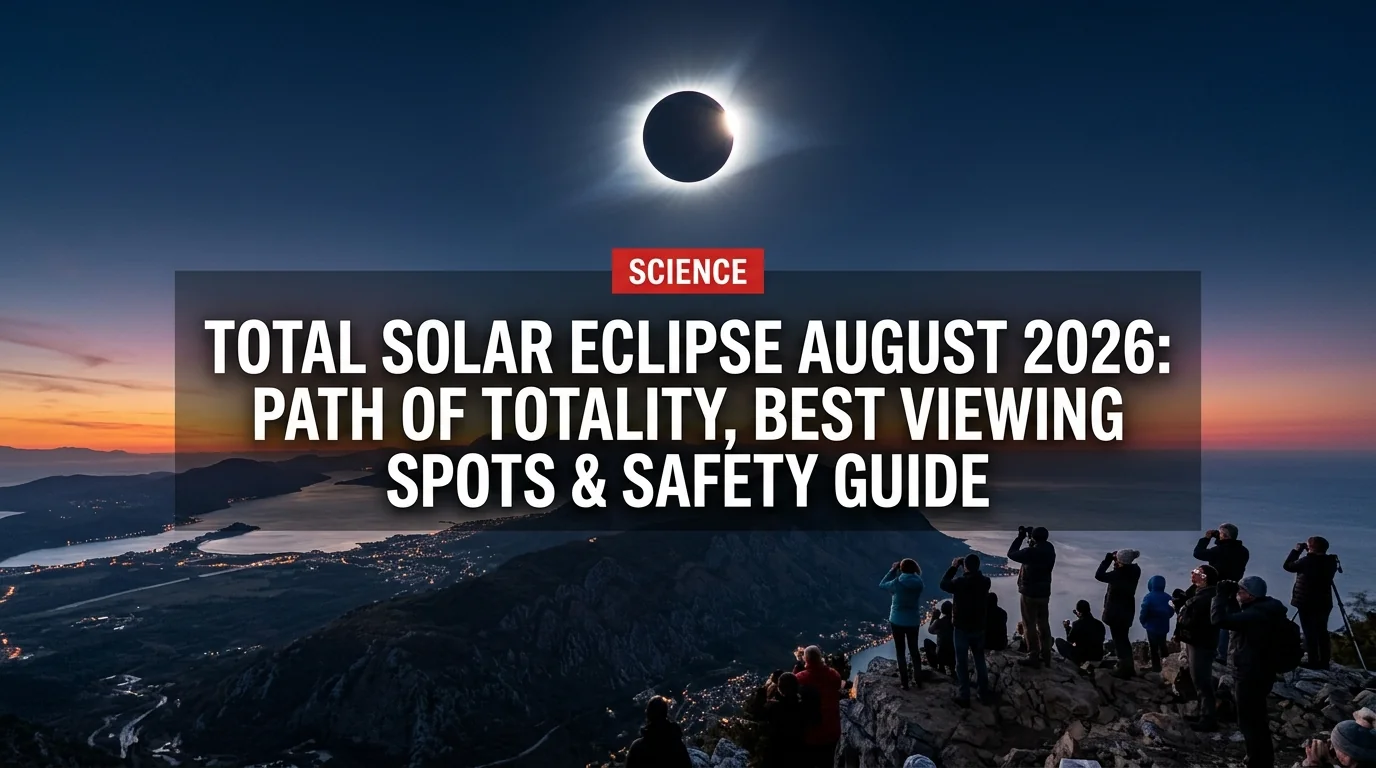
On August 12, 2026, the Moon will block out the Sun entirely for millions of people across Iceland, Spain, and North Africa — the first total solar eclipse visible from Western Europe in nearly a decade. If you're planning to be in the path of totality, now is the time to book. Here's everything you need to know.
What Makes the 2026 Eclipse Special?
This isn't just another eclipse — the August 2026 event is one of the most accessible total solar eclipses in decades for European travelers. The path of totality cuts directly through some of the continent's most visited destinations: Bilbao, Zaragoza, Valencia, and the Balearic Islands (Mallorca, Ibiza) are all in or near the central path. Spain, in particular, will experience the longest totality duration in Western Europe.
Path of Totality: Where Will the Eclipse Be Total?
The Moon's shadow enters from the North Atlantic, sweeps southeast across Iceland and the Faroe Islands, then cuts diagonally across Spain before crossing the Mediterranean and entering North Africa.
1. Iceland
The path of totality enters Iceland's northwestern coast, covering parts of the Westfjords region. Reykjavik will experience a very deep partial eclipse (over 99%), while those willing to drive a few hours northwest will be in the full path. Iceland in August offers a dramatic landscape backdrop — but cloudy skies are a real risk.
2. Northern and Central Spain (Best Viewing)
Spain is the crown jewel of the 2026 eclipse. The path sweeps through:
- Bilbao — One of Spain's most cosmopolitan cities sits inside the path
- Zaragoza — Near the center of the path with excellent totality duration
- Valencia coast and surrounding area — Partial overlap; check exact coordinates
- Mallorca (Balearic Islands) — Palma de Mallorca sits within the path, making it one of the most in-demand eclipse destinations in Europe
- Ibiza — Northern Ibiza falls within or very near the totality band
August in Spain means clear, dry skies — historically the best weather probability of any location on the path. This alone makes Spain the top recommendation for eclipse chasers.
3. North Africa — Algeria and Tunisia
After crossing the Mediterranean, the path enters Algeria and Tunisia before heading northeast. Cities in northern Algeria will experience full totality, though travel logistics and weather forecasting add complexity for most visitors.
4. Russia (Siberia)
The path eventually makes landfall in Russia's far northern and Siberian regions before the eclipse ends. Remote and challenging to reach, but a unique option for the adventurous.
- Parts of Portugal, France, Italy, and the UK will see a deep partial eclipse (60–95% coverage)
- The center of the path gives the longest totality — aim for the central line if possible
- Exact path coordinates for every city will be available on NASA's eclipse site
- Weather is the single biggest risk factor — have a backup location in mind
How to Watch the Eclipse Safely
Looking directly at the Sun during a partial eclipse — even when 99% is covered — will cause permanent eye damage. The only safe times to look without protection are during totality itself, when the Moon fully covers the Sun.
Eclipse Glasses
Eclipse glasses are not regular sunglasses. You need ISO 12312-2 certified solar filters. During the partial phases before and after totality, wear them at all times. The moment totality begins (the diamond ring effect marks the transition), it's safe to remove them and look directly. Replace them immediately when the diamond ring appears again at the end of totality.
Camera and Telescope Filters
Pointing an unfiltered camera at the Sun will destroy the sensor. Use a certified solar filter on any lens or telescope until totality begins.
Phone Cameras
Most modern smartphones will auto-protect by dimming exposure, but the images won't be impressive without a solar filter attachment. For totality itself, just point and shoot — the corona is bright enough for any camera.
- Best weather probability on the entire path
- Major cities (Bilbao, Zaragoza, Mallorca) inside the path
- World-class food, wine, and accommodation infrastructure
- Accessible by direct flights from most of Europe and North America
- Accommodation prices will spike — book now
- August is already peak tourist season in Spain
- Coastal areas may have morning sea fog — have an inland backup plan
Eclipse Timeline: What You'll See
Exact times vary significantly depending on your location within the path. Use NASA's eclipse calculator for precise local times once you've chosen your viewing spot.
How to Watch the Solar Eclipse Live Online (Free)
If you can't make it in person, several organizations will stream the eclipse:
- NASA — NASA typically streams major eclipses live on its website and YouTube channel
- ESA (European Space Agency) — Likely to stream from Spain-based observatories
- TimeandDate.com — Offers countdown clocks, path maps, and usually a live stream
- Local Spanish TV — RTVE and regional Spanish broadcasters will cover the event extensively
Expect streams to go live several hours before totality and continue through the event.
Planning Tips: Book Now, Not Later
The 2026 eclipse is five months away as of this writing — and hotels in Mallorca, Bilbao, and Zaragoza are already seeing elevated August bookings. Eclipse tourism is real. For the 2017 North American eclipse, towns in the path of totality sold out 12–18 months in advance.
What to do now:
- Identify 2–3 possible viewing locations along the central path in Spain
- Book refundable accommodation in multiple spots
- Order ISO-certified eclipse glasses from a reputable retailer (Amazon, telescope retailers, or science museums)
- Monitor weather forecasts starting in late July 2026
Frequently Asked Questions
Is the 2026 eclipse visible from the US? The continental US will not see totality — only a partial eclipse of varying coverage. The further north and east you are, the more coverage you'll see. Plan a trip to Spain or Iceland for the full experience.
How long does totality last? In the best locations along the central line in Spain, totality will last approximately 2 minutes and 18 seconds — enough time to see the solar corona, prominences, and the dramatic shift in sky color and temperature.
What's the next total solar eclipse after 2026? The next total solar eclipse visible from parts of Europe is in 2027 (August 2, 2027), which will cross Spain again along with Egypt and Saudi Arabia — another exceptional year for eclipse chasers.
Can I photograph the eclipse with my phone? Yes, during totality you can photograph freely. During partial phases, you need a solar filter. Many people find that just experiencing totality in person — without staring at a screen — is the better choice for a 2-minute window you won't forget.