
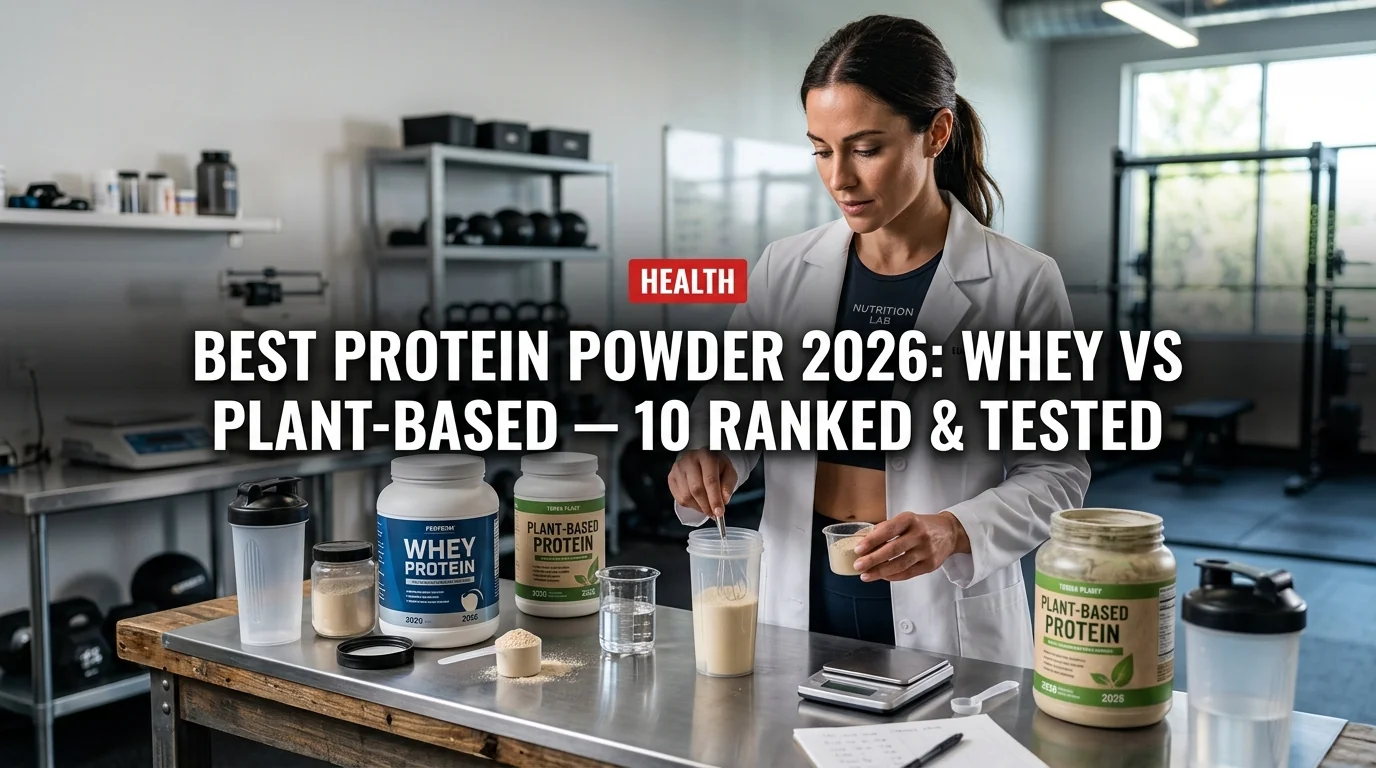
Whether you're trying to build muscle, lose weight, or just hit your daily protein goals without choking down chicken breast for the fourth time, protein powder is one of the most practical supplements you can buy. But the market is flooded — thousands of options, aggressive marketing, and wildly different quality levels.
We ranked 10 of the best protein powders available in 2026 by the metrics that actually matter: protein per dollar, amino acid profile, ingredient transparency, taste, and digestibility. No fluff, no affiliate filler.
The Quick Picks
| Product | Type | Protein/Serving | Price/Serving | Best For |
|---|---|---|---|---|
| Optimum Nutrition Gold Standard | Whey Blend | 24g | ~$1.10 | Overall best value |
| Transparent Labs Whey Isolate | Whey Isolate | 28g | ~$1.90 | Clean label, lean gains |
| Dymatize ISO100 | Hydrolyzed Isolate | 25g | ~$1.80 | Fast absorption, post-workout |
| Garden of Life Sport | Plant Blend | 30g | ~$2.10 | Best plant-based |
| Orgain Organic Protein | Plant Blend | 21g | ~$1.20 | Budget plant-based |
| MyProtein Impact Whey | Whey Concentrate | 21g | ~$0.80 | Tightest budget |
| BSN Syntha-6 | Whey Blend | 22g | ~$1.40 | Best taste |
| Thorne Whey Isolate | Whey Isolate | 21g | ~$2.40 | Sensitive stomachs |
| Vega Sport Premium | Plant Blend | 30g | ~$2.50 | Athletes & endurance |
| Gainful | Custom Blend | 20–26g | ~$2.20 | Personalized goals |
1. Optimum Nutrition Gold Standard Whey — Best Overall
ON Gold Standard has been the #1 selling protein powder for over a decade for good reason: it works, it tastes decent, and it's priced fairly. Each serving delivers 24g of protein from a blend of whey isolate, concentrate, and peptides — giving you fast-absorbing protein without the sticker shock of pure isolate.
Who it's for: Anyone who wants a proven, reliable protein without overthinking it.
- Proven quality with decades of consumer trust
- Available in 20+ flavors
- ~24g protein per scoop at ~$1.10/serving
- Low fat and carb content
- Uses whey concentrate (not pure isolate) — may cause bloating in lactose-sensitive users
- Some flavors use artificial sweeteners
2. Transparent Labs Whey Protein Isolate — Best Clean Label
Transparent Labs built its brand on one thing: no proprietary blends, no fillers, no BS. Their whey isolate is sourced from grass-fed cows and delivers 28g of protein per scoop with just 1g of fat and 1g of carbs. Every ingredient is listed with exact amounts.
At ~$1.90/serving it's a premium pick, but if you care about what's actually in your tub, it's worth it. Third-party tested, Informed Sport certified.
Who it's for: Fitness-focused buyers who read labels and prioritize quality over price.
3. Dymatize ISO100 — Best Post-Workout
ISO100 uses hydrolyzed whey isolate, which means the protein is pre-broken into smaller peptides for faster digestion. Post-workout, when your muscles need amino acids fast, this is a measurable advantage. At 25g protein and virtually zero fat or carbs, it's a bodybuilder and physique competitor staple.
It's one of the better-tasting isolates on the market too — the Birthday Cake flavor has a cult following.
Who it's for: Serious lifters who train fasted or want maximum absorption speed.
4. Garden of Life Sport Organic — Best Plant-Based
If you're vegan, lactose intolerant, or just prefer plant proteins, Garden of Life Sport is the benchmark. It delivers 30g of protein per serving from a certified organic pea, navy bean, lentil, and cranberry protein blend. NSF Certified for Sport, meaning it's tested for banned substances — important for competitive athletes.
Who it's for: Vegan athletes, anyone avoiding dairy, or people who need a banned-substance-tested option.
5. Orgain Organic Protein — Best Budget Plant-Based
At around $1.20/serving, Orgain is the most affordable certified-organic plant protein that doesn't taste like chalk. It uses a pea-brown rice-chia blend and delivers 21g of protein per serving. The chocolate fudge flavor in particular is routinely praised as the best-tasting plant protein available.
Who it's for: Budget-conscious buyers who want plant-based without paying $2.50/serving.
6. MyProtein Impact Whey — Best Budget Overall
MyProtein dominates the European supplement market and has expanded aggressively in the US. Impact Whey is whey concentrate at its most no-frills: ~21g protein, ~$0.80/serving during frequent sales. The flavor range is massive (40+ options). Quality is solid for the price.
Who it's for: High-volume buyers and students who prioritize cost above all else.
7. BSN Syntha-6 — Best Tasting
Syntha-6 is what happens when a company prioritizes taste above pure protein efficiency. It uses a six-protein matrix (whey concentrate, isolate, casein, egg albumin, and more) which gives it a rich, milkshake-like texture. At only 22g protein and 200+ calories per scoop, it's not the leanest option — but if you've been skipping your protein shake because it tastes terrible, this fixes that problem.
Who it's for: People who prioritize taste and consistency over macros, or those who use it as a meal supplement.
8. Thorne Whey Protein Isolate — Best for Sensitive Stomachs
Thorne is a clinical nutrition brand trusted by healthcare practitioners. Their whey isolate is ultra-filtered to remove virtually all lactose, making it the go-to for people who've had digestive issues with other proteins. It's NSF Certified for Sport, third-party tested, and uses minimal ingredients. The unflavored version mixes into anything.
Who it's for: Anyone with lactose sensitivity, IBS, or GI issues with standard whey concentrates.
9. Vega Sport Premium — Best for Endurance Athletes
Vega Sport is designed specifically for athletic performance, not just protein hitting. Each serving packs 30g of plant protein plus tart cherry (for recovery), turmeric (anti-inflammatory), and probiotics (digestion). It's one of the most complete all-in-one plant supplements on the market.
The price (~$2.50/serving) reflects the added ingredients. If you're just counting protein grams, look elsewhere — if you want a recovery formula, this pays off.
Who it's for: Endurance athletes, CrossFit, runners who want protein + recovery support in one scoop.
10. Gainful — Best Personalized Option
Gainful takes a different approach: you fill out a quiz about your goals, dietary restrictions, and body metrics, and they formulate a custom protein blend shipped monthly. The subscription model (~$2.20/serving) costs more than off-the-shelf, but it removes the guesswork entirely. You can also add performance boosters (creatine, collagen, electrolytes) to your formula.
Who it's for: Beginners overwhelmed by choices, or anyone who's cycled through five products without finding what works.
Whey vs Plant-Based: Which Is Better in 2026?
- Complete amino acid profile (all 9 essential AAs)
- Faster absorption (especially isolate and hydrolyzed)
- Generally cheaper per gram of protein
- Leucine-rich — the key trigger for muscle protein synthesis
- Dairy-free and vegan-friendly
- Often better digestive tolerance
- Pea+rice blend matches whey's amino profile closely
- More fiber, typically cleaner ingredient lists
The honest answer: for pure muscle-building, whey isolate has a slight edge in leucine content and absorption speed. But modern plant-based formulas — especially pea + rice blends — close that gap significantly. If you have no dietary restrictions, whey is the pragmatic choice. If you're vegan or dairy-sensitive, Garden of Life Sport or Vega will serve you just as well.
What to Look For When Buying
- Look for at least 20g protein per serving with under 150 calories (for lean options)
- Third-party certifications (NSF, Informed Sport, Informed Choice) matter if you compete
- Whey isolate = lower lactose than concentrate; better for sensitive users
- Avoid products with "proprietary blends" that hide ingredient amounts
- Artificial sweeteners (sucralose, acesulfame-K) are safe but some people prefer stevia or no sweetener
- Leucine content drives muscle protein synthesis — aim for 2–3g leucine per serving
How Much Protein Do You Actually Need?
Research consistently puts the optimal protein intake for muscle building at 1.6–2.2g per kg of bodyweight per day (0.7–1g per pound). For a 180lb person, that's roughly 130–180g of protein daily — significantly more than the average diet provides without supplementation.
Protein powder is a tool, not a magic bullet. It fills the gap between what you get from food and what your training demands. One scoop per day is often enough.
Bottom Line
The best protein powder is the one you'll actually use consistently. For most people, Optimum Nutrition Gold Standard hits the sweet spot of quality, taste, and price. If you want zero-compromise clean ingredients, Transparent Labs Whey Isolate is worth the premium. Plant-based? Garden of Life Sport is the gold standard at that end of the market.
Don't overthink it. Hit your daily targets, stay consistent, and the protein source matters far less than the total amount.