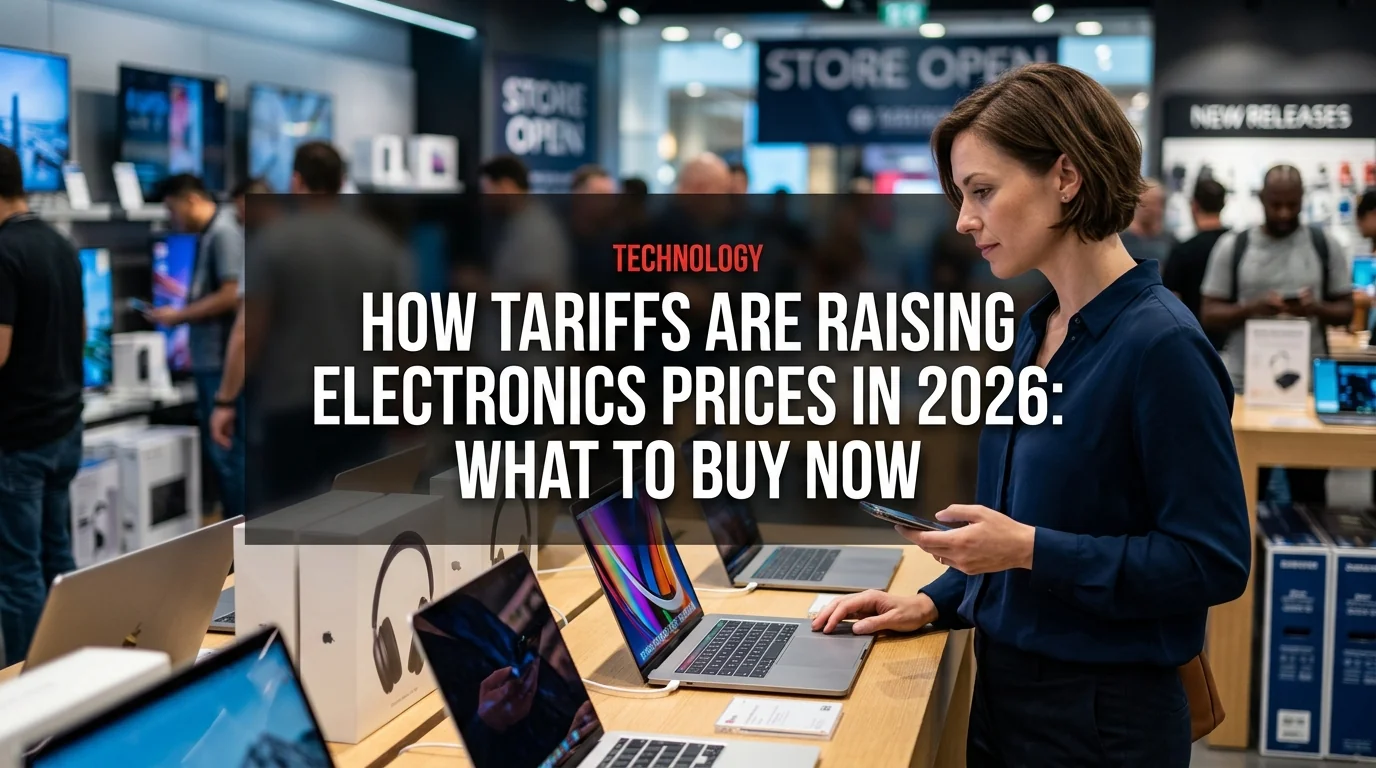
If you've been eyeing a new laptop, phone, or TV, there's an uncomfortable truth in 2026: tariffs are pushing electronics prices higher, and the full impact hasn't fully landed yet. Here's exactly which categories are hit hardest, by how much, and what to do about it.
Why Electronics Are Getting More Expensive in 2026
The United States import tariffs introduced and expanded in 2025-2026 apply steep duties on goods manufactured in China -- the world's largest electronics producer. A broad 30%+ tariff on Chinese-made goods has forced manufacturers into an uncomfortable choice: absorb the cost, shift production elsewhere, or pass it to consumers.
Most are doing some combination of all three. The result? Real price increases showing up at retail right now, with more on the way as inventories built before tariff hikes sell out.
Laptops: Up to $200-$400 More by Mid-2026
Laptops are among the hardest-hit categories. The majority of Windows laptops -- from budget Chromebooks to premium ultrabooks -- are manufactured in China. The 30%+ tariff translates directly to retail prices, and mid-range laptops ($600-$1,000) are expected to increase by $150-$400 by summer 2026 as pre-tariff inventory runs dry.
Who is most exposed:
- Lenovo, HP, and Dell have significant China manufacturing -- expect 15-25% price increases
- Acer and ASUS similarly reliant on Chinese production
- Apple MacBooks benefit from partial India production shift -- smaller impact
Best move: If you need a laptop in the next 6 months, buy now. The current window while retailers are still moving pre-tariff stock is the lowest-cost moment in the foreseeable future.
Smartphones: A Split Picture by Brand
Smartphones show the most varied tariff impact, because manufacturers have been shifting production geographies for years.
Apple iPhone: Apple has aggressively moved iPhone production to India (handling a significant share of iPhone 16 and 17 production). India-made iPhones face substantially lower duties than China-made devices. iPhone 17 prices held relatively stable at launch.
Samsung Galaxy: Samsung manufactures in Vietnam and India, largely avoiding China tariffs. The Galaxy S26 lineup launched at similar price points to S25.
Google Pixel: Pixel 9 series manufactured in Vietnam. Limited tariff exposure. The Pixel 9a launching in spring 2026 is expected to maintain its budget-friendly price.
Chinese Android brands: Devices manufactured in China face the full tariff load -- expect the steepest price hikes here.
- Apple iPhone 17 (India-made)
- Samsung Galaxy S26 (Vietnam)
- Google Pixel 9a (Vietnam)
- Budget phones from Chinese factories
- Some Motorola models (China-made lines)
- Mid-range imports from China-based brands
TVs and Monitors: Among the Worst-Hit
Televisions are one of the categories consumers will feel most acutely. The majority of TV panels -- even for brands like Sony, LG, and Samsung -- include Chinese-made components, and many entry-level and mid-range sets are fully assembled in China.
A 55-inch 4K TV that retailed at $400-$500 pre-tariff could realistically hit $550-$650 once current inventory cycles out. Premium 65-inch+ OLED sets that were $1,200-$1,800 could push past $2,000.
Monitors follow the same pattern -- particularly gaming monitors, where Chinese manufacturing dominates the mid-range segment.
Recommendation: If you have been on the fence about a TV upgrade, now is the time. Pre-tariff units at major retailers are still moving at older price points.
Gaming Consoles and Accessories
The PlayStation 5 and Xbox Series X are manufactured in China. Both Sony and Microsoft had already increased console prices in certain markets in 2025. With tariffs adding additional cost pressure, expect:
- PS5 base price likely to increase $50-$100 if manufacturing remains in China
- Xbox Series X in a similar position
- Nintendo Switch 2 -- manufactured partly in Vietnam -- faces somewhat lower tariff exposure
Accessories (controllers, headsets, charging docks) are heavily China-reliant and among the first products to see visible retail price increases.
- Game controllers: Mostly China-manufactured, tariff-exposed
- Mechanical keyboards: Heavy China manufacturing concentration
- Webcams and streaming gear: Expect 20-30% price bumps
- SSDs and storage: Partially protected by Taiwan/Korea production
- Cables and accessories: Among highest tariff exposure
What About Smart Home and Wearables?
Smart speakers (Amazon Echo, Google Nest), smart displays, and budget wearables are overwhelmingly China-manufactured. These categories were among the first to see quiet price increases at retail -- sometimes with no announcement as Amazon and Google absorb some cost but pass the remainder through.
Apple Watch and AirPods have benefited from production diversification to Vietnam and India, limiting but not eliminating tariff impact.
The Best Window to Buy: Right Now
Retailers are still working through inventory purchased before the latest tariff escalations. Once that stock sells out -- which analysts estimate will happen across most categories by late Q2 2026 -- new inventory arrives at higher landed costs, and prices reset upward.
Smart Buying Strategy for 2026
Buy immediately: Laptops, TVs, gaming consoles, and monitors. Pre-tariff stock is depleting. Price increases of 15-30% are coming and are not reversible without a policy change.
Buy with less urgency: iPhones, Samsung Galaxy flagships, Google Pixel -- these brands have diversified production and face lower tariff exposure. You are not racing a deadline here.
Watch and wait: If a specific product is on backorder or a new generation is imminent, waiting is fine -- but factor in that the replacement model will also carry tariff costs.
Consider refurbished: Certified refurbished electronics from Apple, Dell Refurbished, and Amazon Renewed represent pre-tariff hardware at discounted prices. This window is expanding as more 2024-2025 devices become available refurbished.
The bottom line: tariffs have changed the calculus for electronics purchasing in 2026. The consumers who act before mid-year will pay meaningfully less than those who wait. This is the arithmetic of supply chains and import duties working in real time.