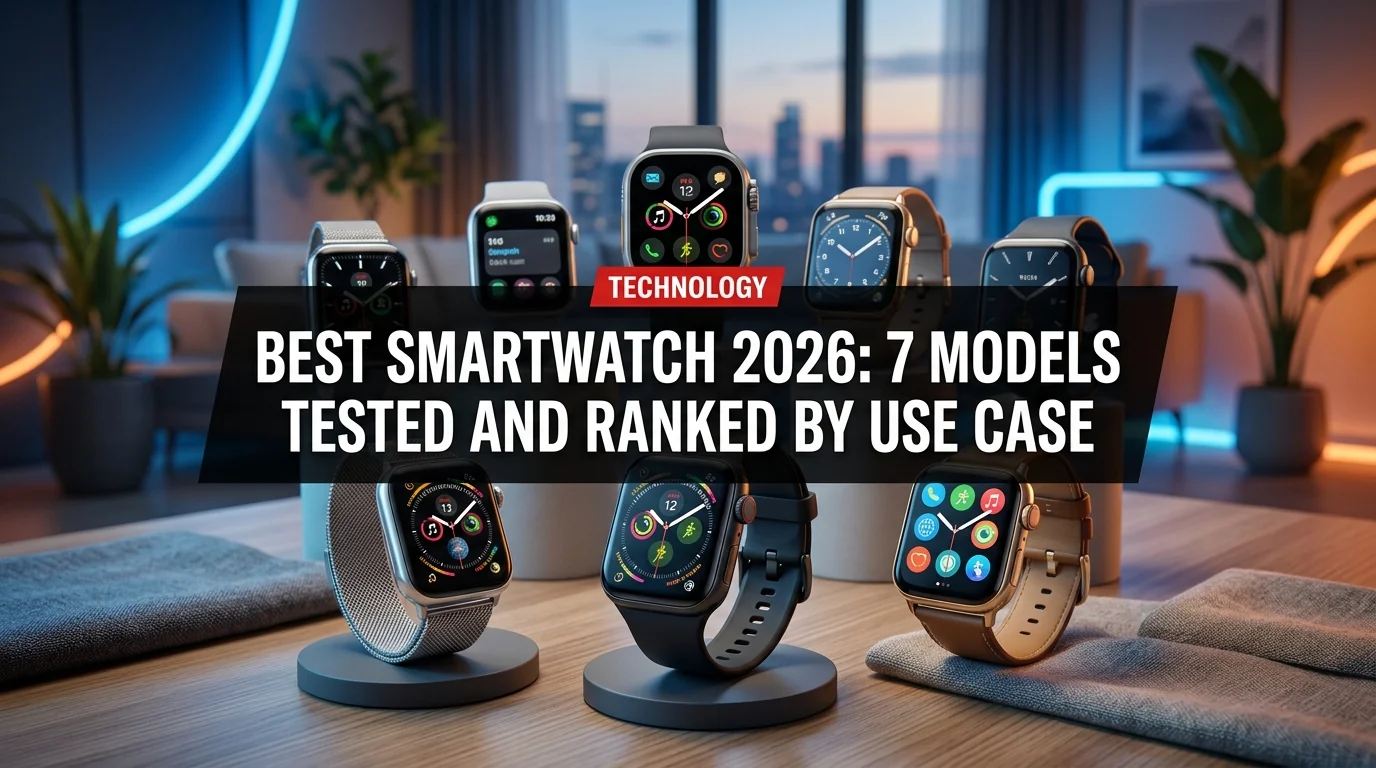
The smartwatch market hit 279 million units shipped in 2026, and picking the right one has never been harder. Apple, Samsung, Garmin, and Google are all swinging for the fences — but the best watch for a marathon runner is not the best watch for a busy executive.
We broke down seven top smartwatches by what actually matters: fitness tracking, health sensors, battery life, smart features, and value. Here's who wins — and who doesn't.
The Quick Verdict
If you want the one-line answer before we get into details:
| Use Case | Best Pick | Price | Why |
|---|---|---|---|
| Overall (iPhone) | Apple Watch Series 11 | $399 | Best health suite, seamless iOS |
| Rugged / Adventure | Apple Watch Ultra 3 | $799 | 42-hour battery, dive-rated |
| Android Users | Samsung Galaxy Watch 8 Classic | $379 | Rotating bezel, Gemini AI |
| Pure Fitness | Garmin Fenix 8 Pro | $999 | MicroLED, multi-week battery |
| Best Value Android | Google Pixel Watch 4 | $349 | Fitbit health + clean Wear OS |
| Battery King | OnePlus Watch 3 | $299 | 5-day battery, Wear OS |
| Budget Pick | Amazfit Bip 6 | $69 | SpO2, sleep, HR alerts for under $70 |
Apple Watch Series 11 — Best for Most People
Apple's flagship watch isn't revolutionary this year, but it doesn't need to be. The Series 11 added 5G cellular, FDA-approved hypertension alerts, and sleep apnea detection — turning a notification machine into a genuine health device.
The 24-hour battery still won't impress Garmin users, but the new fast-charging pod gets you from 0 to 80% in 30 minutes. For anyone deep in the Apple ecosystem, nothing else comes close.
- Most accurate health sensors on any consumer watch
- FDA-approved blood pressure and sleep apnea alerts
- 5G cellular support (no phone needed)
- Deepest app ecosystem of any smartwatch
- iPhone-only — Android users need not apply
- 24-hour battery is worst-in-class
- $399 starting price keeps climbing
Apple Watch Ultra 3 — The Adventure Tank
The Ultra 3 pushes battery to 42 hours (up from 36 on the Ultra 2), adds a brighter 3,000-nit display, and earns a proper dive certification. It shares the Series 11's health sensors but wraps them in a titanium chassis that laughs at trail runs and ocean swims.
Tom's Guide called it "overkill for most users," and they're right — if you're not diving, hiking, or running ultras, the Series 11 gives you 90% of the experience at half the price.
Samsung Galaxy Watch 8 Classic — Best for Android
Samsung's rotating bezel is back and better than ever. The Galaxy Watch 8 Classic runs Wear OS with Samsung's One UI skin, ships with Gemini AI baked in, and introduces an antioxidant index for metabolic health tracking.
The stainless steel design is genuinely premium. At 3,000 nits, the display holds its own against Apple. The catch? Samsung's app ecosystem still trails Apple's, and the health features — while improving — aren't FDA-approved yet.
- FDA-approved health alerts
- 24-hour battery
- 5G cellular
- iPhone-only
- Gemini AI assistant
- Rotating bezel navigation
- Antioxidant health index
- Works with any Android phone
Google Pixel Watch 4 — The Sleeper Hit
Google's fourth attempt finally nails the formula. The Pixel Watch 4 merges Fitbit's health algorithms with Wear OS 5, adds satellite SOS (via Skylo), and delivers the best sleep tracking on any Wear OS device.
The curved dome display is gorgeous. Battery life improved to a real two days. And the March 2026 Pixel Drop added Express Pay for transit in 14 countries. If you're on Android and don't need Samsung's premium hardware, this is the smarter buy.
Garmin Fenix 8 Pro — The Endurance Champion
Garmin doesn't play the smartwatch game. It plays the survival game. The Fenix 8 Pro debuted MicroLED at CES 2026 (winning five Innovation Awards), delivers multi-week battery life, and offers training metrics that make Apple Health look like a toy.
This is the watch for serious athletes, ultra-runners, and anyone who considers charging a device every night a personal failure. It won't run your Uber app, but it will track your VO2 max across a 100-mile race.
Battery life (hours) in typical use. Garmin's multi-week endurance dwarfs the competition. The OnePlus Watch 3 leads Wear OS devices at 5 days.
OnePlus Watch 3 — Battery Without Compromise
The dark horse of 2026. OnePlus crammed a 120-hour battery into a Wear OS watch that actually looks and feels premium. It runs Google's full app ecosystem, supports NFC payments, and charges fully in 45 minutes.
The trade-off is health sensors — no ECG, no blood pressure, no FDA approvals. If you want a smart daily driver that lasts a workweek on one charge, this is it.
Amazfit Bip 6 — The $69 Wonder
At $69, the Bip 6 has no business being this good. SpO2 monitoring, skin temperature, sleep tracking, customizable watch faces, and high/low heart-rate alerts. The display is sharp, the GPS is adequate, and it lasts over a week.
You lose smart features — no app store, no NFC, no voice assistant. But if you want health tracking for the price of a nice dinner, nothing beats it.
Who Should Buy What
- **iPhone power user →** Apple Watch Series 11 ($399)
- **Adventure / diving →** Apple Watch Ultra 3 ($799)
- **Android daily driver →** Samsung Galaxy Watch 8 Classic ($379)
- **Android on a budget →** Google Pixel Watch 4 ($349)
- **Serious athlete →** Garmin Fenix 8 Pro ($999)
- **Battery above all →** OnePlus Watch 3 ($299)
- **Just want basics →** Amazfit Bip 6 ($69)
What's Coming Next
The smartwatch wars are far from over. Samsung's Galaxy Watch 9 lands in July 2026 with a rumored Snapdragon Elite Wear chip in the Ultra model. Google's Pixel Watch 5 arrives in October with a custom Tensor processor. And Garmin's Fenix 9 is targeting late 2026 with tri-band GNSS for 50cm-accurate positioning.
The bottom line: there's no single "best" smartwatch in 2026. There's the best watch for you. Match your priorities — health sensors, battery life, ecosystem, or budget — and the right choice becomes obvious.