
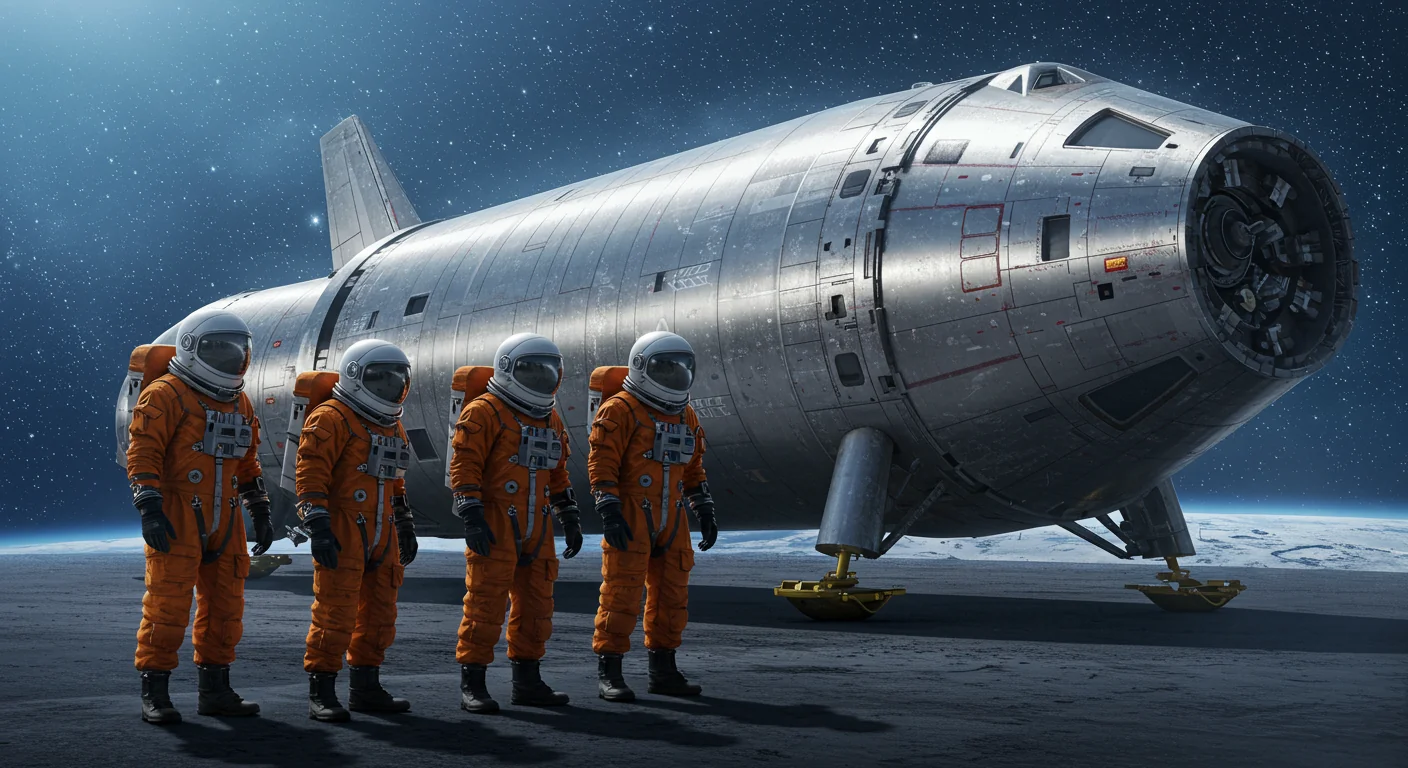
NASA's Artemis 2 mission is less than 72 hours from launch, and the countdown is officially underway. For the first time since Apollo 17 in 1972, human beings will travel beyond low Earth orbit — this time aboard the Orion spacecraft atop the massive Space Launch System (SLS) rocket. Here is everything you need to know before liftoff on April 1, 2026.
Launch Time and Window
The Artemis 2 launch window opens on Wednesday, April 1, 2026 at 6:24 p.m. EDT (22:24 UTC). The launch will take place from Launch Pad 39B at NASA's Kennedy Space Center in Cape Canaveral, Florida — the same historic complex that sent Apollo astronauts to the Moon over five decades ago.
NASA is expressing high confidence in an on-time launch. Teams at Kennedy Space Center report zero technical issues as of March 29, with only weather remaining as the primary variable. Current forecasts show an 80% chance of favorable conditions, though meteorologists are monitoring cumulus cloud buildup and elevated surface winds.
If weather scrubs the April 1 window, NASA has backup dates built into the mission timeline. The agency has not yet announced alternate dates publicly.
The Crew: Four Astronauts Heading to the Moon
The Artemis 2 crew has been in preflight quarantine and is ready for history. All four astronauts are experienced spaceflight veterans, though none has ever traveled beyond the International Space Station.
- Reid Wiseman (Commander) — NASA astronaut and former Chief Astronaut; flew to the ISS in 2014
- Victor Glover (Pilot) — NASA astronaut; first Black astronaut on a long-duration ISS mission (2020-2021)
- Christina Koch (Mission Specialist) — NASA astronaut; holds the record for longest spaceflight by a woman (328 days)
- Jeremy Hansen (Mission Specialist) — Canadian Space Agency astronaut; first Canadian to travel beyond Earth orbit
Victor Glover and Christina Koch each carry historic firsts for this mission. Glover will be the first Black astronaut to fly a lunar mission, while Koch will be the first woman to travel to lunar distance.
What Happens During the 10-Day Mission
Artemis 2 is a test flight, not a landing. The Orion spacecraft will carry the crew on a loop around the Moon and back — a figure-eight trajectory designed to stress-test every system before NASA commits to a lunar landing on Artemis 3.
The farthest point from Earth the crew will reach is approximately 450,000 km (280,000 miles) — farther than any human has traveled since Apollo 13 in 1970. At this distance, communication delays become noticeable, and the crew will operate with greater autonomy than ISS astronauts.
Key systems being evaluated during the flight include the Orion life support systems, thermal protection during deep space exposure, navigation without GPS, and crew communication protocols in high-radiation environments.
Where to Watch Artemis 2 Launch Live
NASA is making this historic event accessible across nearly every platform. Here are all the ways to watch for free:
For viewers outside the United States, NASA+ is available globally and requires no subscription. The YouTube stream is also accessible worldwide with no restrictions.
If you want the in-person experience, Kennedy Space Center Visitor Complex viewing packages are sold out. However, free public viewing areas exist along Florida's Space Coast — Canaveral National Seashore and Merritt Island National Wildlife Refuge both offer open access, though check each site for launch-day hours and road closures.
Why Artemis 2 Matters
NASA's Artemis program has been in development since 2017 and has faced years of delays, budget battles, and a global pandemic. Artemis 1, the uncrewed test flight in late 2022, proved the rocket and spacecraft could survive the journey. Artemis 2 now answers the harder question: can humans survive it too?
Beyond national pride, the mission carries scientific weight. The Moon's South Pole region contains water ice in permanently shadowed craters — a potential resource for rocket fuel and drinking water that would enable sustained human presence beyond Earth. Artemis 2 is the bridge between ambition and reality.
The broader Artemis program also includes international partnerships with the European Space Agency (which built the Orion service module), the Canadian Space Agency (represented by Jeremy Hansen), and the Japan Aerospace Exploration Agency. This is not just an American mission — it is the first internationally crewed mission to leave Earth orbit.
Final Countdown Checklist
If you want to follow the mission closely, here's what to have ready before Tuesday evening:
- Download the NASA+ app (free) on your phone or streaming device
- Set a reminder for 12:50 PM EDT on April 1 — that's when NASA's live broadcast begins
- Follow @NASA and @NASAArtemis on X for real-time updates
- Bookmark nasa.gov/artemis for official mission status
- If you're in Florida, check road closure maps on the Brevard County website before traveling
T-minus 3 days. The countdown is on.
Artemis 2 launch is scheduled for April 1, 2026 at 6:24 PM EDT. All times are subject to change based on weather and technical readiness. Check NASA.gov for the latest status updates.