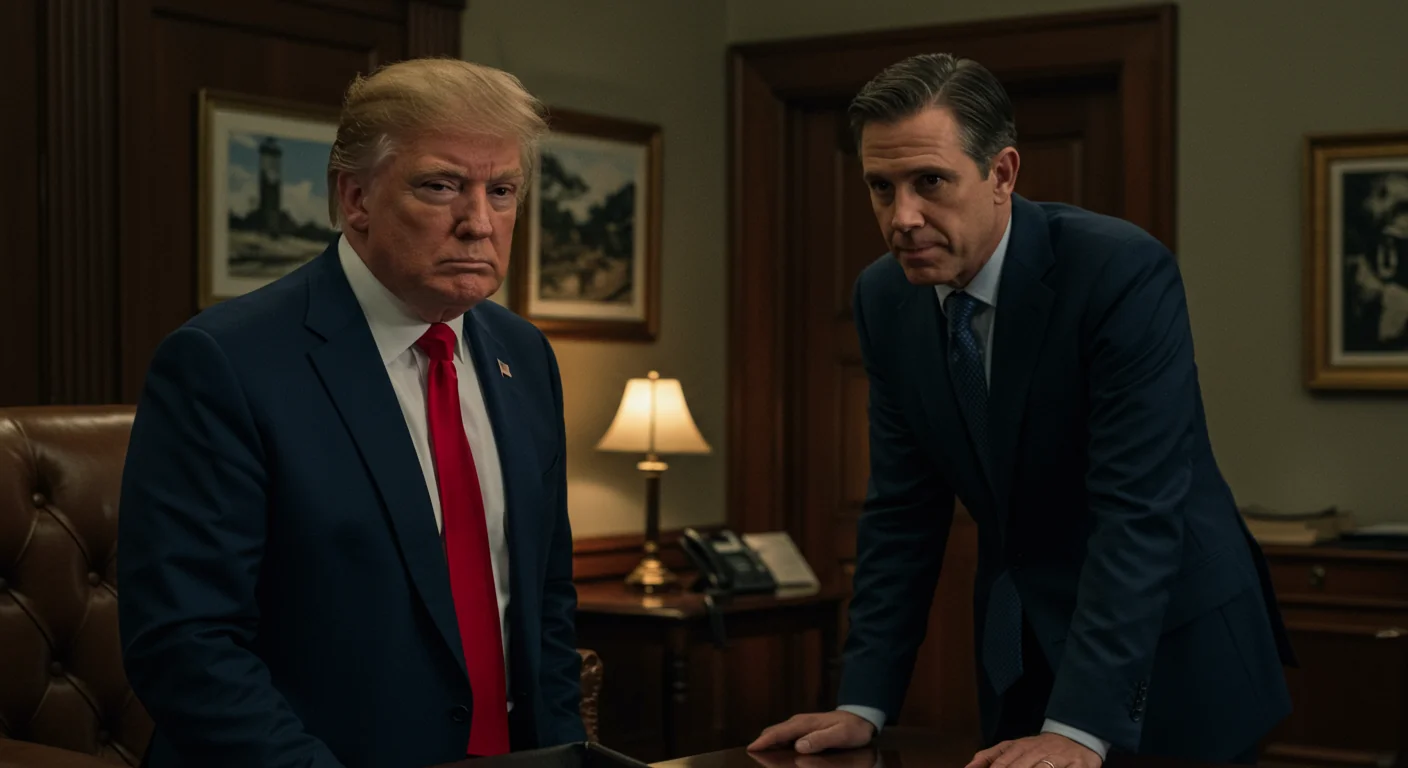
President Donald Trump abruptly fired Attorney General Pam Bondi on April 2, 2026, replacing her with Todd Blanche — the same attorney who personally defended Trump in his New York criminal hush-money trial. The shake-up sent shockwaves through Washington and raised immediate questions about the independence of the Department of Justice under its new leadership.
Who Is Pam Bondi and Why Was She Fired?
Pam Bondi served as Florida's Attorney General from 2011 to 2019, building a reputation as a tough-on-crime conservative before becoming a prominent Trump ally and television surrogate. Trump nominated her as Attorney General following Matt Gaetz's failed nomination in late 2024, and she was confirmed by the Senate in early 2025.
During her tenure, Bondi oversaw several high-profile DOJ operations, including expanded enforcement on fentanyl trafficking, immigration prosecutions under Trump's hardline border agenda, and the targeting of so-called "sanctuary city" jurisdictions. She was widely seen as a loyalist — but apparently not loyal enough.
While the White House has not offered a detailed public explanation for Bondi's dismissal, sources familiar with the situation indicated that Trump grew frustrated with her handling of certain cases and what he perceived as insufficient aggression in pursuing his political agenda. The firing came without warning and blindsided several senior DOJ officials.
- Bondi confirmed as AG in early 2025, fired April 2, 2026
- Served as Florida AG 2011–2019 before becoming Trump ally
- Known for anti-trafficking work and immigration enforcement
- No formal public reason given for dismissal
- Fired via phone call, not in person
Enter Todd Blanche: Trump's Personal Lawyer Now Runs the DOJ
Todd Blanche is perhaps best known for his courtroom work as Trump's lead defense attorney during the 2024 New York criminal trial over falsified business records related to hush-money payments to Stormy Daniels. Trump was ultimately convicted on 34 felony counts — though sentencing was repeatedly delayed — and Blanche mounted an aggressive if ultimately unsuccessful defense.
Blanche has been a fixture in Trump's inner circle since the legal battles began, and his appointment to lead the DOJ marks an extraordinary moment in U.S. legal history: a president placing his own criminal defense lawyer in charge of the nation's top law enforcement agency.
Critics immediately raised alarm bells about conflicts of interest, noting that the DOJ under Blanche would theoretically oversee matters tangentially connected to cases Blanche himself previously litigated on Trump's behalf.
What Changes at the DOJ?
The immediate practical question is how Blanche's leadership will reshape DOJ priorities. Legal experts and former prosecutors expect several shifts:
Political prosecutions vs. defenses: Under Bondi, the DOJ had already moved aggressively against political opponents and critics of the administration. Under Blanche, that posture is expected to intensify, with potential renewed scrutiny of Trump's critics and perceived enemies.
Ongoing federal cases: The DOJ is currently involved in thousands of ongoing prosecutions. Career prosecutors — many of whom have already weathered significant pressure — will be watching closely to see if Blanche attempts to intervene in politically sensitive cases.
Federal oversight of states: The Trump DOJ has clashed repeatedly with Democratic-led states over immigration, election law, and civil rights enforcement. Blanche is expected to maintain and potentially escalate those battles.
Independence and morale: Perhaps most significantly, Blanche's appointment is a signal about the administration's view of DOJ independence. Career attorneys who believe in the independence of the Justice Department from direct presidential control may face even greater pressure to conform or leave.
Reaction: Alarm Across the Aisle — and Some Surprise Among Allies
The response to Bondi's firing was swift and, in some cases, surprising. Even some Republicans expressed private unease about the appointment of a personal defense attorney to head the world's most powerful law enforcement agency.
Senate Majority Leader John Thune indicated that Blanche would need to go through a confirmation process if he is formally nominated as Attorney General — though the White House has suggested it may pursue an interim appointment strategy to avoid Senate scrutiny.
Democratic leaders were more vocal. Senate Minority Leader Chuck Schumer called the appointment "an assault on the rule of law" and promised hearings. Representative Jamie Raskin called it "the most nakedly self-serving appointment in the history of the American justice system."
Legal scholars noted that while presidents have historically appointed loyalists as AG — Robert F. Kennedy serving under his brother John being the most famous example — the Blanche appointment goes further, given his recent direct role as Trump's criminal defense attorney.
- Blanche has deep familiarity with Trump's legal landscape
- Strong loyalty may reduce internal White House conflicts
- Experienced litigator in high-stakes federal proceedings
- Severe conflict-of-interest concerns given prior defense role
- May face difficult Senate confirmation fight
- Career DOJ attorneys may resign in protest
- Further erosion of perceived DOJ independence
What Happens Next?
The immediate path forward depends on how the White House handles Blanche's formal status. If Trump uses the Federal Vacancies Reform Act to install him as acting AG, he could be in place within days without a Senate vote. A formal nomination would trigger confirmation hearings — which could become a lightning rod for opposition.
For the DOJ itself, the coming weeks will be critical. Career prosecutors and senior officials will be assessing whether the department can maintain any operational independence under Blanche's leadership, or whether the new AG will function as an extension of Trump's personal legal team.
Whatever happens next, one thing is certain: the firing of Pam Bondi and the elevation of Todd Blanche represents a dramatic acceleration of the Trump administration's willingness to reshape America's institutions in its own image — and it will define the DOJ's legacy for years to come.