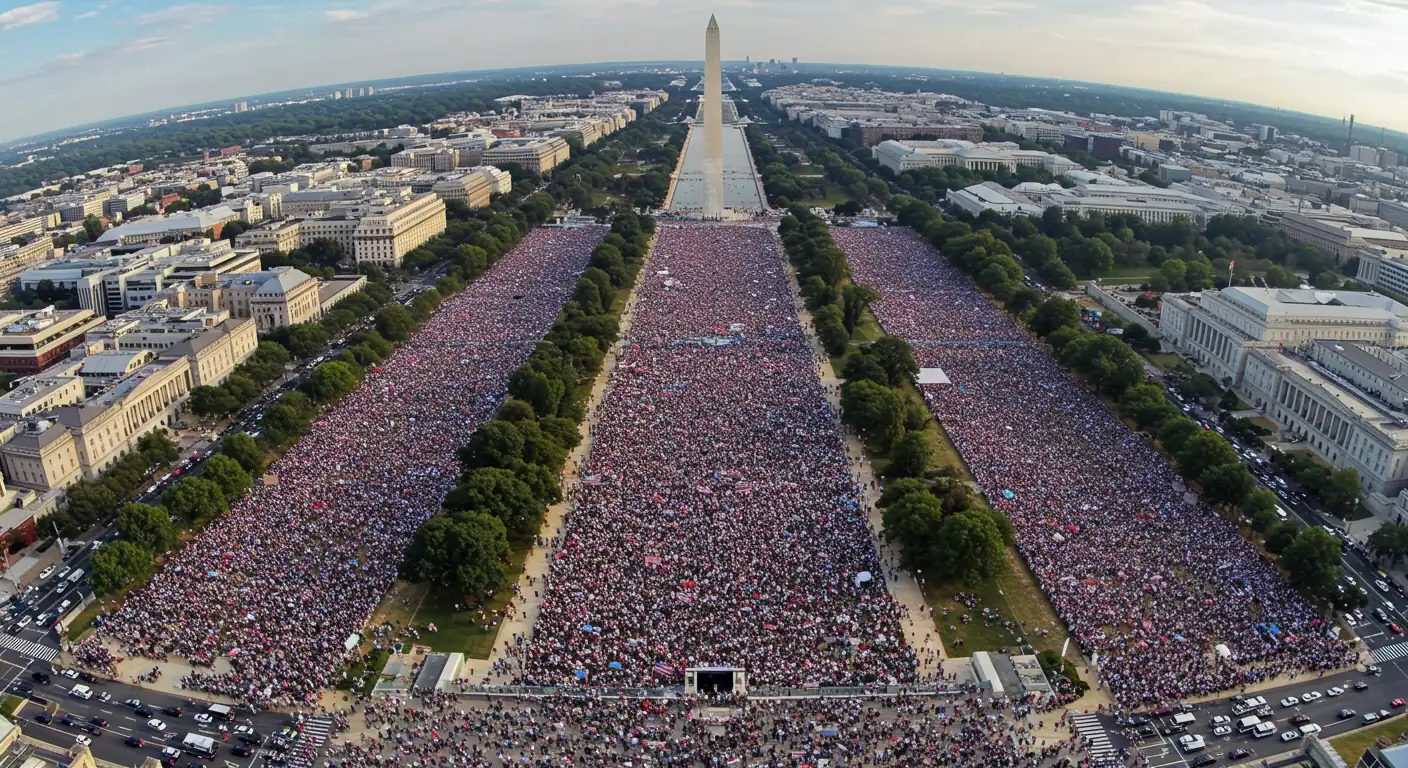
The United States witnessed what organizers are calling the largest single-day protest in American history on March 29, 2026. More than 8 million people gathered at over 3,300 "No Kings" rallies spanning all 50 states — and dozens more events abroad — to push back against the Trump administration's second-term agenda.
The scale is staggering. For comparison, the 2017 Women's March drew an estimated 470,000 people in Washington D.C. The No Kings movement has now surpassed that benchmark many times over in sheer geographic reach.
What Is the No Kings Movement?
The "No Kings" movement is a decentralized, nationwide coalition organized by groups including 50501, Indivisible, and MoveOn. It takes direct aim at what organizers describe as "allegedly fascist policies" and President Trump's statements about executive power. The name is a direct repudiation of what the movement calls a "power-hungry, corrupt administration."
This was the third major No Kings demonstration of 2026 — but by far the largest. Previous events in earlier months laid the groundwork for what became a nationally coordinated day of action.
What Protesters Are Demanding
The movement's grievances are broad but center on several core themes:
- End to the U.S.–Israel war against Iran, which protesters say is costing "billions of tax dollars in missile strikes abroad"
- Halt to aggressive immigration enforcement, including condemnation of the fatal shootings of Renee Good and Alex Pretti by federal agents in Minneapolis
- Addressing the rising cost of living attributed to administration trade and economic policies
- Opposition to what protesters call "massive giveaways to billionaire allies" including Elon Musk's Department of Government Efficiency (DOGE)
- Protection of voting rights, amid Republican-led state efforts to add citizenship requirements to voter registration
Protesters carried signs reading "In America, we don't do kings" and "Impeach, Convict, Remove" — reflecting both frustration and determination to translate street energy into electoral and legal action.
The Minnesota Flagship: Bruce Springsteen Headlined
The marquee event took place in St. Paul, Minnesota, where over 200,000 people gathered according to organizer estimates (the Minnesota State Patrol placed the number at over 100,000). Rock legend Bruce Springsteen performed at the rally, marking one of the most high-profile celebrity endorsements of the movement to date.
Other major turnouts included approximately 50,000 in Albuquerque, New Mexico; 12,000 in Santa Barbara, California; and thousands more in cities from Gainesville, Florida to Reno, Nevada.
Protests Went Global
The No Kings movement wasn't confined to U.S. borders. Solidarity demonstrations were held across Europe and on nearly every other continent, according to organizers, reflecting international concern about the direction of American governance during Trump's second term.
The Backdrop: Iran War and Domestic Tensions
The protests come at a particularly volatile moment. American Marines arrived in the Middle East on March 28 following an unsuccessful Houthi missile attack on Israel. Iran's Islamic Revolutionary Guard Corps issued a threat to target U.S. universities in the region unless the U.S. condemned the bombing of two Iranian universities by noon Monday, March 30, Tehran time.
Back home, Israeli police blocked Catholic leaders from entering the Church of the Holy Sepulchre in Jerusalem for Palm Sunday Mass — the first such incident in centuries — as the region braces for Passover and Easter under the shadow of ongoing conflict.
What Comes Next
The No Kings movement is explicitly framing this as a long-term campaign, not a one-day event. Organizers from Indivisible and MoveOn have signaled plans for continued mobilization, with a focus on:
- Voter registration drives ahead of 2026 midterm elections
- Legal challenges to executive actions
- Sustained local organizing in all 50 states
- Future national days of action
The Guardian published an interactive guide on "next steps for activism" on March 29, suggesting the movement is building institutional infrastructure rather than relying on spontaneous energy.
How This Stacks Up Historically
While the Black Lives Matter movement's sustained totals remain larger over time, the No Kings march's single-day breadth — 3,300 locations versus BLM's concentrated urban centers — represents a different kind of mobilization: deeply distributed and deliberately aimed at winning electoral districts, not just media cycles.
The Bigger Picture
Whether 8 million marchers translates into political change remains the central question. The movement's emphasis on midterm election strategy and local organizing suggests its leaders understand that street protests alone rarely shift policy in a second-term administration insulated from near-term electoral accountability.
What's undeniable is the scale: on a single Sunday in March 2026, roughly 1 in 40 Americans showed up somewhere to say, in plain English, that they reject the current direction of their government. That kind of turnout doesn't happen without deep, widespread sentiment — and it rarely happens without lasting consequences.