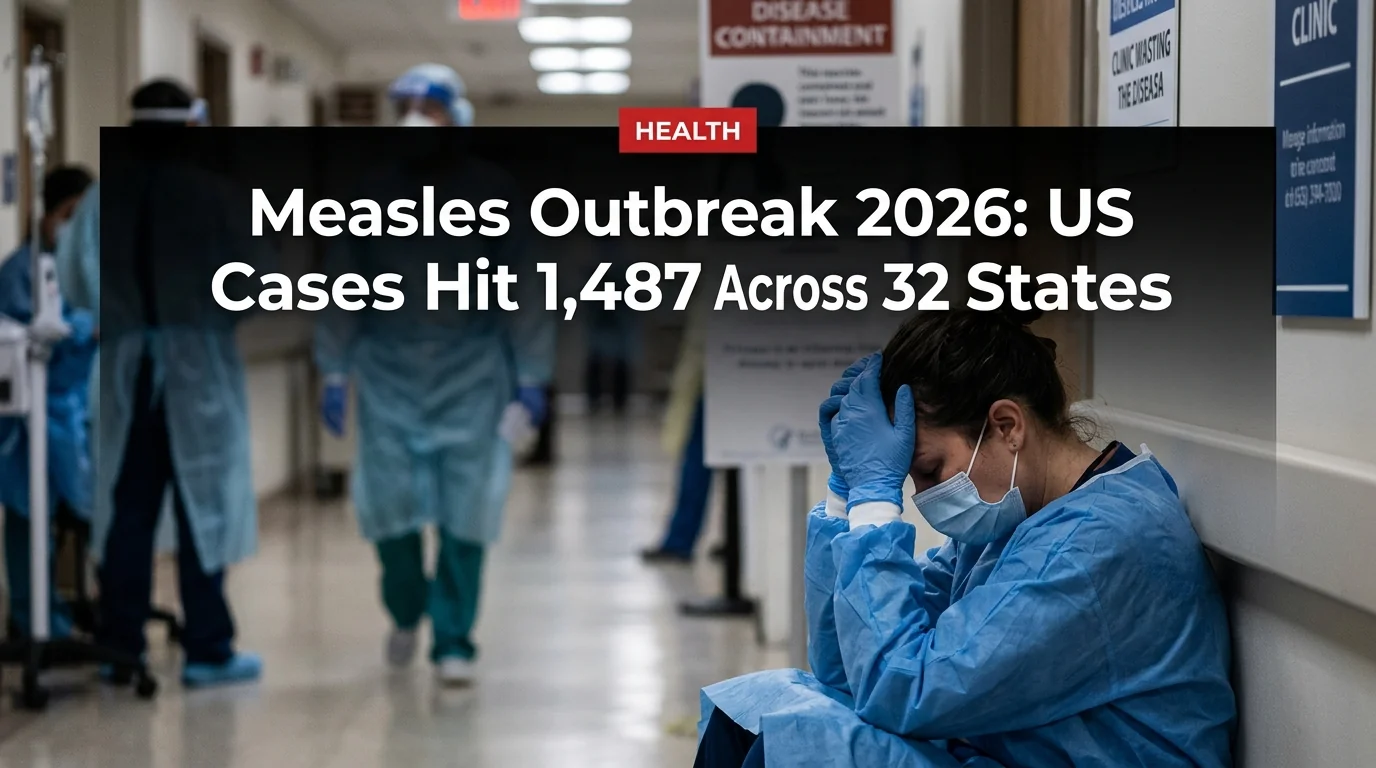
The United States is facing its worst measles surge in over three decades. With 1,487 confirmed cases across 32 states as of March 19, the country now risks losing its "measles-free" status — a designation it has held since 2000.
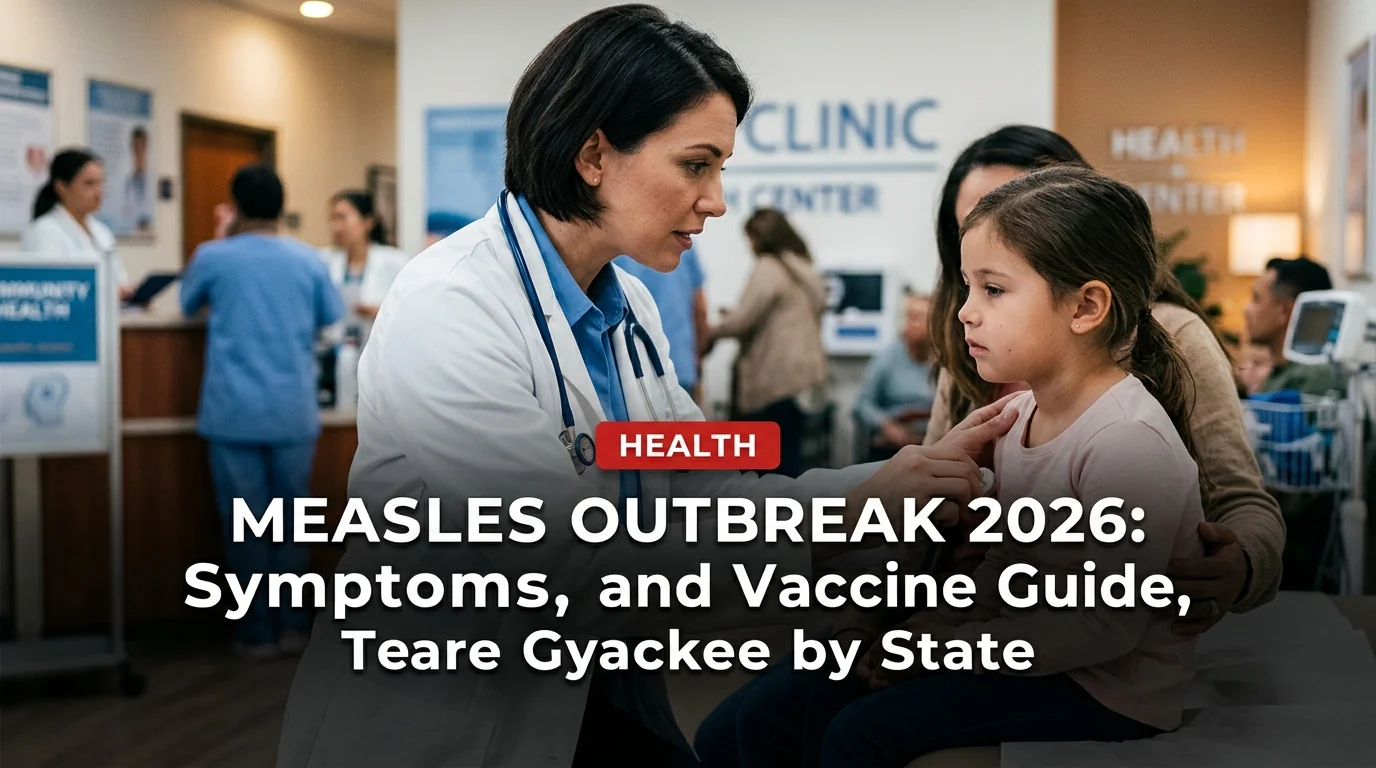
Here is everything you need to know: where cases are spreading, how to recognize symptoms, and whether you or your family need the MMR vaccine.
- 1,487 cases confirmed in 2026 (as of March 19)
- 32 states plus NYC reporting cases
- 92% of patients were unvaccinated or status unknown
- 0 deaths in 2026; 3 deaths in 2025
- November 2026 — US elimination status review by WHO/PAHO
State-by-State Case Tracker
Four states account for the vast majority of 2026 cases. South Carolina alone represents two-thirds of the national total, with the Spartanburg County outbreak now the largest single-site cluster since the 1989–1991 resurgence.
| State | Cases (2026) | Key Cluster | Notes |
|---|---|---|---|
| South Carolina | 997 | Spartanburg County | Largest active outbreak nationally |
| Utah | 443 | Statewide | Ongoing since late 2025 |
| Texas | 147 | Hudspeth County | 108 cases in federal detention facility |
| Florida | 122 | Collier County + university | Spring break expected to worsen spread |
| All other states | ~278 | Multiple clusters | 28 additional states + NYC reporting |
Other states with confirmed cases include Alaska, Arizona, California, Colorado, Georgia, Idaho, Illinois, Kentucky, Maine, Massachusetts, Michigan, Minnesota, Missouri, Nebraska, New Mexico, New York, North Carolina, North Dakota, Ohio, Oklahoma, Oregon, Pennsylvania, South Dakota, Vermont, Virginia, and Wisconsin.
How We Got Here: A Timeline
Recognizing Measles Symptoms
Measles is one of the most contagious diseases known — roughly six times more transmissible than COVID-19. A single infected person can spread the virus to up to 18 unvaccinated individuals in the same space.
Symptoms appear 10 to 14 days after exposure and follow a predictable progression:
Days 1–3 (early stage):
- High fever, often spiking above 104°F (40°C)
- Dry, persistent cough
- Runny nose
- Red, watery eyes (conjunctivitis)
- Koplik's spots — small white spots with red borders inside the mouth
Days 3–5 (rash stage):
- Blotchy rash beginning on the face and behind the ears
- Rash spreads downward across the torso and limbs over 2–3 days
- Appearance varies by skin tone: may look red, purple, or brown
Complications
Measles is not a mild childhood illness. Potential complications include:
- Ear infections (in ~1 in 10 children) — can cause permanent hearing loss
- Pneumonia — the most common cause of measles-related death in children
- Encephalitis (brain swelling) — affects ~1 in 1,000 cases, can cause permanent brain damage
- Death — 1 to 3 per 1,000 cases in developed countries
Do You Need the MMR Vaccine?
With 92% of 2026 cases occurring in unvaccinated individuals, the data is unambiguous: vaccination works. Two doses of MMR provide 97% protection against measles, and most vaccinated people are protected for life.
- 97% effective with two doses
- Protection is typically lifelong
- Safe for children as young as 12 months
- Free under most insurance plans and the Vaccines for Children program
- Can reduce severity if given within 72 hours of exposure
- Common side effects: mild fever, soreness at injection site
- Not recommended for pregnant women or severely immunocompromised individuals
- Two doses needed for full protection (4-week minimum gap)
Who Needs It Now
| Group | Recommendation |
|---|---|
| Children 12–15 months | First dose now; second dose at age 4–6 |
| Children 4–6 years | Second dose before school entry |
| Adults born after 1957 | At least one dose if no documented immunity |
| Healthcare workers | Two documented doses required |
| International travelers | Two doses regardless of age |
| Infants 6–11 months traveling abroad | One early dose before travel (still need routine doses later) |
| Adults born before 1957 | Generally presumed immune; consult doctor if concerned |
Not sure if you're protected? A simple blood test called a titer can check your measles antibody levels. Contact your primary care provider or visit a pharmacy that offers immunization services.
The Political Dimension
The outbreak has become entangled in a larger political debate over public health policy. HHS Secretary Robert F. Kennedy Jr. has described the outbreak as "not unusual," while critics — including resigned CDC official Dr. Demetre Daskalakis — argue the administration's leadership has "damaged our public health system, potentially beyond repair."
Acting CDC Director Jay Bhattacharya has attempted to bridge the divide, emphasizing "trust and collaboration" while promising a return to "gold standard science." Meanwhile, the administration's proposed FY 2026 budget would refocus the CDC on core biothreat detection while reducing broader public health funding.
What Happens Next
The stakes are historic. In November 2026, the Pan American Health Organization will formally review whether the United States has maintained continuous measles-free status. If the same measles strain is found to have circulated for 12 consecutive months, the US will join Canada in officially losing its elimination designation.
For most Americans, the immediate question is simpler: are you and your family vaccinated? If you are unsure, now is the time to check. The MMR vaccine is widely available at doctor's offices, pharmacies, and community health centers — often at no cost.
Data sourced from the CDC, CIDRAP, and state health departments. Case counts are updated weekly by the CDC and may differ from real-time state-level reporting.