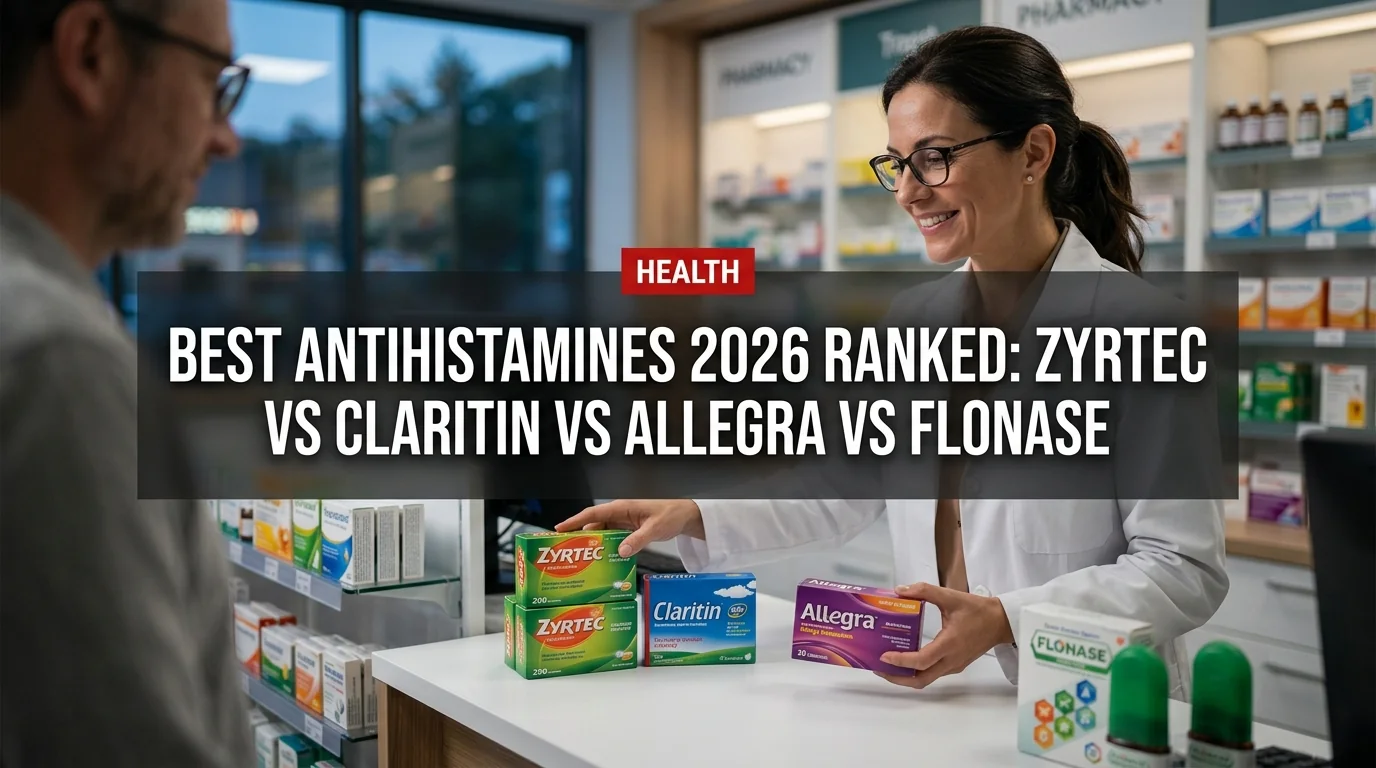
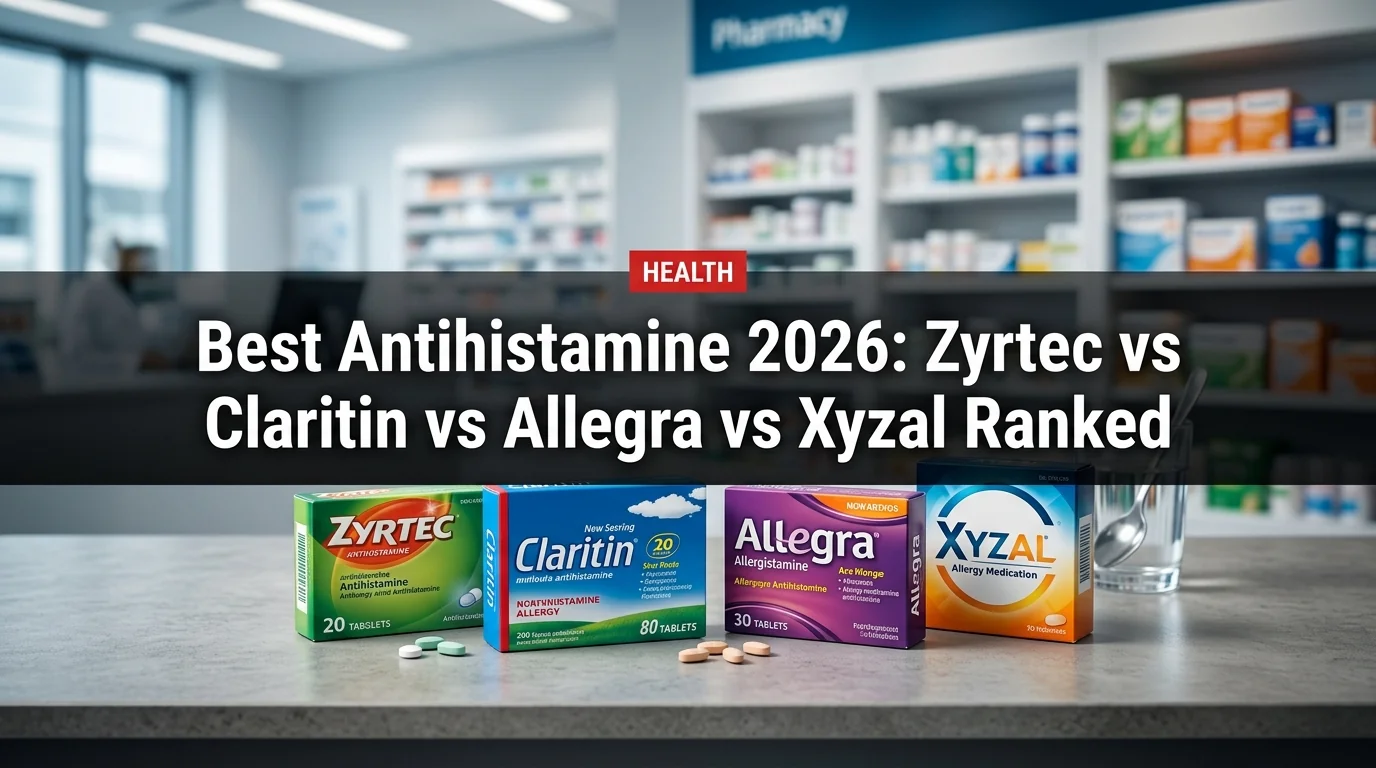
Spring 2026 is already shaping up to be one of the worst allergy seasons on record. Pollen counts across North America and Europe are running 20–30% above historical averages, and millions of people are reaching for over-the-counter antihistamines. But which one actually works best?
We compared the four most popular second-generation antihistamines — Zyrtec (cetirizine), Claritin (loratadine), Allegra (fexofenadine), and Xyzal (levocetirizine) — across speed, effectiveness, drowsiness risk, cost, and best use case. Here's everything you need to know.
How Antihistamines Work
When your body encounters pollen, dust mites, or pet dander, immune cells release histamine — the chemical responsible for sneezing, runny nose, itchy eyes, and congestion. Antihistamines block histamine receptors (specifically H1 receptors), preventing these symptoms from taking hold.
All four medications in this comparison are second-generation antihistamines, meaning they're designed to minimize drowsiness compared to older drugs like Benadryl (diphenhydramine). But "non-drowsy" doesn't mean identical — there are meaningful differences.
Head-to-Head Comparison
Zyrtec (Cetirizine) vs Allegra (Fexofenadine)
- Speed: Zyrtec works in 20–60 minutes | Allegra takes 1–2 hours
- Strength: Zyrtec is stronger for moderate-severe symptoms | Allegra is equally effective for mild-moderate cases
- Drowsiness: Zyrtec causes drowsiness in ~14% of users | Allegra causes drowsiness in ~2% of users
- Duration: Both provide full 24-hour coverage
- Food interactions: None for Zyrtec | Allegra loses effectiveness with fruit juice
The Four Contenders Ranked
1. Zyrtec (Cetirizine 10mg) — Best for Severe Allergies
Zyrtec is the heavy hitter. Clinical trials consistently show cetirizine provides the fastest onset (as quick as 20 minutes) and the strongest symptom relief among OTC antihistamines. It's the go-to recommendation from allergists for people with moderate to severe seasonal allergies.
The trade-off is drowsiness. About 14% of users experience some sedation — not debilitating for most, but noticeable. There are also reports of withdrawal itching when stopping after long-term daily use, something the other three antihistamines don't typically cause.
Best for: People who need maximum relief and don't mind mild drowsiness. Take it at bedtime to minimize sedation during the day.
Generic price: $0.05–0.10 per tablet (cetirizine HCl 10mg)
2. Xyzal (Levocetirizine 5mg) — Best for Nighttime and Chronic Hives
Xyzal is essentially Zyrtec's refined cousin. Levocetirizine is the active isomer of cetirizine — meaning it's the part of the molecule that actually does the work. At half the dose (5mg vs 10mg), it delivers comparable potency with potentially fewer side effects.
Xyzal is FDA-approved for both allergic rhinitis and chronic idiopathic urticaria (chronic hives), making it a versatile choice. Like Zyrtec, drowsiness is possible, so evening dosing is recommended.
Best for: People who respond well to Zyrtec but want a lower-dose option, or those with chronic hives.
Generic price: $0.08–0.15 per tablet (levocetirizine 5mg)
3. Allegra (Fexofenadine 180mg) — Best Non-Drowsy Option
If staying alert is your top priority, Allegra wins. Fexofenadine is the least sedating antihistamine on the market — clinical studies show drowsiness rates essentially equal to placebo. It's the only second-generation antihistamine that truly deserves the "non-drowsy" label without an asterisk.
The downsides: it takes longer to kick in (1–2 hours), and you need to avoid taking it with fruit juice (grapefruit, orange, apple), which can reduce absorption by up to 36%. Take it with water only.
Best for: Daytime use, people who drive or operate machinery, anyone who's experienced drowsiness with other antihistamines.
Generic price: $0.10–0.20 per tablet (fexofenadine HCl 180mg)
4. Claritin (Loratadine 10mg) — Best for Mild Allergies
Claritin is the most widely recognized brand and a solid all-around choice for mild allergy symptoms. It's genuinely non-drowsy for most people and has the longest safety track record of any second-generation antihistamine.
The limitation: multiple head-to-head studies show loratadine is slightly less potent than cetirizine and fexofenadine. If your allergies are mild — occasional sneezing, light runny nose — Claritin handles it well. For moderate to severe symptoms, you may need something stronger.
Best for: Mild seasonal allergies, people who want the safest long-term daily option, children (available in multiple kid-friendly formulations).
Generic price: $0.04–0.08 per tablet (loratadine 10mg)
When to Add a Nasal Spray
Antihistamines handle sneezing, itching, and runny nose well, but they're weak against congestion. If stuffiness is your main complaint, add a nasal corticosteroid spray like:
- Flonase (fluticasone) — Most popular, available OTC, works on multiple inflammatory pathways
- Nasacort (triamcinolone) — Slightly less effective but alcohol-free formula
- Rhinocort (budesonide) — Gentlest option, good for sensitive noses
The combination of an oral antihistamine + nasal corticosteroid spray is what most allergists recommend as the gold standard for moderate to severe seasonal allergies.
- The FDA approved Xyzal for OTC use in 2017; it's still the newest OTC antihistamine
- Phenylephrine (the decongestant in many "-D" products) was ruled ineffective by the FDA in 2023
- Spring allergy season now starts 20 days earlier than in 1990 due to climate change
- Generic antihistamines contain the exact same active ingredients as brand names
- Second-generation antihistamines do not cause the cognitive impairment associated with Benadryl
Quick Decision Guide
Still not sure which to pick? Use this framework:
- "I need the strongest relief possible" → Zyrtec (cetirizine) or Xyzal (levocetirizine)
- "I absolutely cannot feel drowsy" → Allegra (fexofenadine)
- "My allergies are pretty mild" → Claritin (loratadine)
- "I have chronic hives, not just allergies" → Xyzal (levocetirizine)
- "I'm stuffed up, not just sneezy" → Any antihistamine + Flonase
- "I want the cheapest option" → Generic loratadine (Claritin) at ~$0.04/tablet
Antihistamine Comparison Table
| Feature | Zyrtec | Xyzal | Allegra | Claritin |
|---|---|---|---|---|
| Generic name | Cetirizine | Levocetirizine | Fexofenadine | Loratadine |
| Standard dose | 10mg | 5mg | 180mg | 10mg |
| Onset time | 20–60 min | 30–60 min | 1–2 hours | 1–3 hours |
| Duration | 24 hours | 24 hours | 24 hours | 24 hours |
| Drowsiness risk | Moderate (~14%) | Moderate (~10%) | Very low (~2%) | Low (~8%) |
| Potency | ★★★★★ | ★★★★★ | ★★★★☆ | ★★★☆☆ |
| Food interactions | None | None | Avoid fruit juice | None |
| Safe for kids | 6 months+ | 6 months+ | 2 years+ | 2 years+ |
| Generic cost/day | $0.05–0.10 | $0.08–0.15 | $0.10–0.20 | $0.04–0.08 |
| Best time to take | Bedtime | Bedtime | Morning | Anytime |
The Bottom Line
There's no single best antihistamine for everyone — but there is a best one for you. Start with Allegra if you prioritize staying alert, Zyrtec if you need maximum relief, Claritin if your symptoms are mild, or Xyzal if you want Zyrtec-level strength at a lower dose.
Buy generics. They're chemically identical to brand names and cost a fraction of the price. And if you're still suffering, don't white-knuckle through spring — an allergist can offer solutions that OTC pills simply can't match.
Your nose will thank you.