
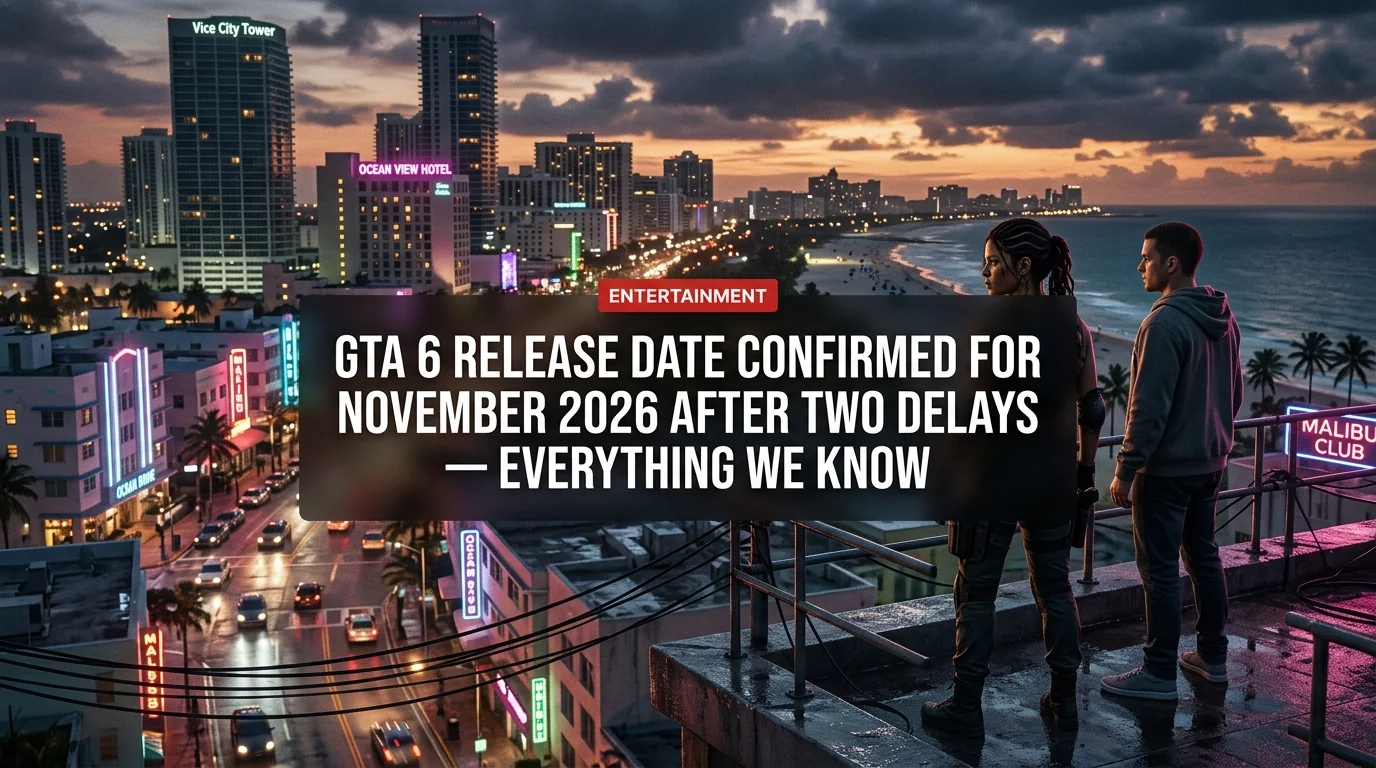
Rockstar Games has locked in November 19, 2026 as the official release date for Grand Theft Auto VI, ending months of speculation after the blockbuster title was delayed twice from its original 2025 launch window. The confirmation came during Take-Two Interactive's latest investor call, where CEO Strauss Zelnick described the decision as necessary to deliver a "genre-defining" experience.
GTA 6 will launch exclusively on PlayStation 5 and Xbox Series X|S, with a PC version expected roughly 12 months later — likely late 2027.
Two Delays, One Message: Rockstar Wants Perfection
The road to GTA 6 has been anything but smooth. Originally teased with a December 2023 trailer that set a 2025 release window, the game has been pushed back twice:
The Financial Fallout
The delays have not been painless for Take-Two's shareholders. When the first delay was announced in May 2025, the company's stock tumbled 10% in a single morning — dropping from $235 to $215 per share.
Vice City 2.0: What Rockstar Is Actually Building
GTA 6 returns to Vice City — Rockstar's fictionalized Miami — within the fictional state of Leonida, inspired by Florida. But this isn't a nostalgia trip. The technical ambition behind what developers internally call "Vice City 2.0" is staggering.
- Setting: Leonida (Florida) and Vice City (Miami)
- Protagonists: Jason and Lucia — a "Bonnie and Clyde" dual narrative
- Engine: RAGE 9 (Rockstar Advanced Game Engine)
- Map includes: Vice City, Grassrivers (Everglades), Leonida Keys (Florida Keys), Port Gellhorn
- Platforms: PS5, Xbox Series X|S (PC in late 2027)
Breakable Glass and Micro-Physics
A former Rockstar graphics programmer recently revealed details about the game's procedural breakable glass system. Unlike pre-baked destruction animations, windows and vehicle glass will deform and shatter uniquely based on impact angle and force. The engine also simulates micro-physics — fizzing bubbles in drinks, foam spilling from shaken bottles — creating an unprecedented level of environmental detail.
AI-Powered NPCs With Memory
Perhaps the most ambitious technical feature: NPCs are rumored to have a 48-hour memory mechanic. Characters will recognize players and react to previous crimes or interactions over an extended period, creating emergent gameplay scenarios that evolve based on player behavior.
Dynamic Weather That Affects Gameplay
The RAGE 9 engine features advanced water physics for Leonida's coastline and Everglades regions, plus dynamic weather patterns that physically affect vehicle handling and NPC routines. Rain doesn't just look different — it changes how the world plays.
The 30 FPS Question
Not everything about the technical picture is rosy. Analysts from Digital Foundry have identified CPU limitations on current-gen consoles as a major bottleneck for GTA 6's simulation ambitions. The NPC memory system, dynamic weather, and physics engine all demand significant processing power.
This could become a flashpoint for the gaming community, where 60 FPS has become the expected standard for major releases.
The Rockstar Scandal No One Expected
Adding an unusual wrinkle to the development story: HMRC (His Majesty's Revenue and Customs) is currently investigating Rockstar Games UK Limited for unpaid employee wages. The studio was ranked 235th out of 389 offending companies on a public list — an embarrassing footnote for a company building a multi-billion-dollar product.
The investigation hasn't impacted development timelines, but it casts a shadow over Rockstar's post-crunch cultural transformation, which the studio has promoted since the backlash during Red Dead Redemption 2's development.
What's Coming Next
With eight months until launch, the marketing machine is about to ramp up significantly:
Should You Believe This Date?
After two delays, skepticism is warranted. But several signals suggest November 19 will hold. The massive QA hiring in India indicates Rockstar has entered the final polishing phase — you don't onboard hundreds of testers for a product that's years away. Take-Two's investor communications have also shifted from hedging language to firm commitments.