
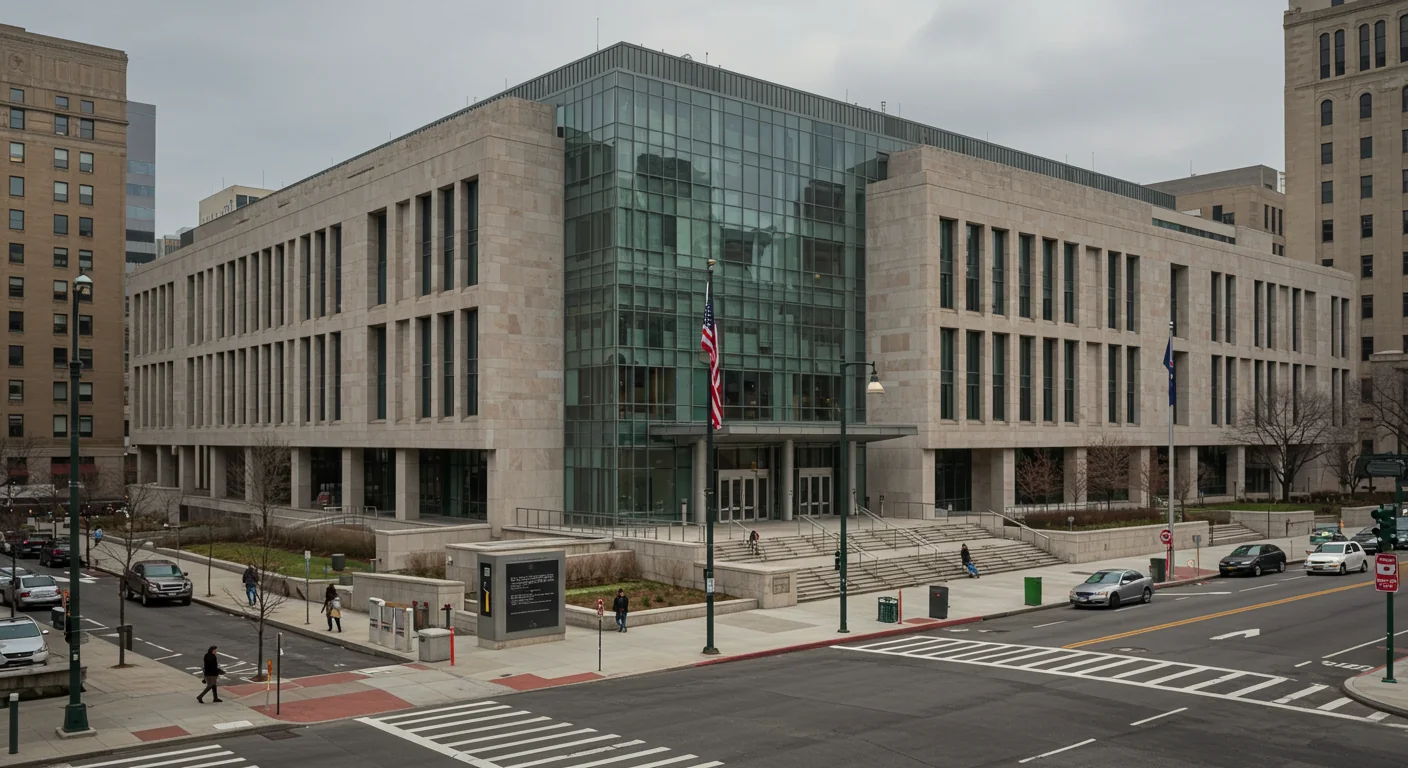
Sean "Diddy" Combs is eight days away from one of the most consequential moments in his legal saga. On April 9, 2026, a three-judge panel at the U.S. Court of Appeals for the Second Circuit will hear oral arguments in his appeal — a fast-tracked review that could uphold his conviction, reduce his sentence, or set him free.
Here's everything you need to know about where the case stands and what's at stake.
The Conviction: What Combs Was Found Guilty Of
Combs was convicted in July 2025 on two counts of transportation to engage in prostitution under the Mann Act — a federal law dating back to 1910, originally enacted to combat human trafficking across state lines. He was acquitted of the more serious charges: racketeering conspiracy and sex trafficking.
In October 2025, U.S. District Judge Arun Subramanian sentenced Combs to 50 months in federal prison, a $500,000 fine, and five years of supervised release. He is currently serving his sentence at FCI Fort Dix in New Jersey.
His projected release date — factoring in good behavior credits — is now listed at April 15, 2028, according to the Federal Bureau of Prisons. That date has shifted slightly several times in recent weeks.
- Convicted: July 2025, two Mann Act counts
- Acquitted: Racketeering conspiracy and sex trafficking
- Sentence: 50 months, $500,000 fine, 5 years supervised release
- Prison: FCI Fort Dix, New Jersey
- Projected release: April 15, 2028 (without appeal)
- Appeal hearing: April 9, 2026 — Second Circuit Court
Why the Second Circuit Fast-Tracked the Appeal
Typically, federal appeals take two to three years to work through the system. The Second Circuit's decision to grant expedited review compressed that timeline dramatically — from Combs filing his appeal in October 2025 to oral arguments in April 2026 is roughly six months.
The court hasn't publicly explained why it granted the speedup, but legal observers note that cases involving significant legal questions — particularly around sentencing methodology — sometimes receive accelerated treatment.
Combs' Lawyers: 4 Core Arguments
Combs' appellate team is led by Alexandra Shapiro, a respected federal appellate attorney. Her brief makes four main arguments:
1. The Sentence Is "Draconian" and Unprecedented
Shapiro argues the 50-month sentence is far harsher than typical Mann Act convictions of this nature. She calls the underlying law "outdated" with "a troubled history" and contends it was improperly applied to what she characterizes as consensual arrangements between adults.
2. Acquitted Conduct Sentencing Is Unconstitutional
This is the most legally substantive argument. Combs was acquitted of racketeering and sex trafficking — but the defense claims Judge Subramanian considered that underlying conduct when calculating the sentence for the Mann Act counts he was convicted on.
This practice, known as "acquitted conduct sentencing," has been controversial for decades. The Supreme Court declined to rule it unconstitutional as recently as 2021, but the issue is still actively litigated. Combs' team argues it fundamentally undermines the jury's "not guilty" verdict and violates due process.
3. First Amendment Protection for "Freak-Off" Parties
In one of the more unusual legal arguments, Combs' attorneys contend his so-called "freak-off" gatherings should be protected under the First Amendment — likening them to amateur adult film productions rather than prostitution. They argue interstate transportation for such activities falls outside the Mann Act's intended scope.
Federal prosecutors pushed back hard on this framing, arguing Combs did not obtain consent to film participants and that his underlying intent was to watch live sex sessions he orchestrated, not to produce protected speech.
4. The Jury's Verdict Was Misinterpreted
Shapiro's team also argues the district court made legal errors in interpreting what the jury found — specifically that the judge read the conviction more broadly than the jury's actual findings warranted when determining the sentence range.
- 50-month sentence is disproportionate for Mann Act convictions
- Acquitted conduct cannot be used at sentencing
- "Freak-offs" are First Amendment-protected expression
- Jury findings were misinterpreted by the trial court
- Combs is a repeat offender who used violence and threats
- Sentencing correctly reflected how offenses were carried out
- Victims were beaten, threatened, lied to, and drugged
- No consent to film means no First Amendment protection
What Prosecutors Say
Federal prosecutors are urging the three-judge panel to uphold both the conviction and the sentence in full. Their brief argues that Judge Subramanian appropriately considered how Combs carried out his Mann Act offenses — including "violently beating" victims, threatening them, lying to them, and "plying them with drugs."
On the First Amendment argument, prosecutors say the claim fails because Combs did not provide advance notice of filming and did not seek meaningful consent. His intent to watch live sex sessions he financed and organized, they contend, does not bring interstate transportation under constitutional protection.
Regarding acquitted conduct: prosecutors acknowledge the controversy but argue existing Second Circuit precedent permits courts to consider relevant conduct at sentencing regardless of the jury's verdict on specific charges.
The Three Possible Outcomes on April 9
The three-judge panel could rule in one of three ways:
1. Uphold everything. The court finds no reversible error, confirms the 50-month sentence, and Combs remains at FCI Fort Dix toward his April 2028 release.
2. Vacate and remand for resentencing. If the panel finds the trial court improperly relied on acquitted conduct, it would send the case back to Judge Subramanian with instructions to resentence Combs without considering the conduct he was acquitted on. This could result in a significantly shorter sentence.
3. Reverse the conviction entirely. The court finds a fundamental legal error — such as the First Amendment argument succeeding — and either enters a judgment of acquittal or orders a new trial. This is the outcome Combs' team is ultimately seeking but is considered the longest of long shots.
Oral arguments on April 9 are typically brief — 15 to 30 minutes per side — and a written ruling usually follows weeks to months later.
Timeline: From Arrest to Appeal
What It Means for the Victims
For prosecutors and advocacy groups, the appeal process has reignited a broader conversation about acquitted conduct sentencing — a practice critics say allows judges to effectively retry defendants on charges a jury rejected. Several victims' advocates have filed amicus briefs supporting the government's position, arguing that Combs' victims deserve finality and that the trial record fully justified the sentence.
The Bottom Line
April 9 is a hearing, not a verdict. The three judges will ask pointed questions of both sides, and their written ruling — likely months away — will determine whether Combs serves his full sentence, gets resentenced, or walks free. Legal experts broadly expect the conviction to survive, but the sentencing methodology question is genuinely contested and the acquitted conduct argument has a real chance of sending the case back to the district court.
Watch this space: we'll update immediately when the panel issues its decision.