Will 2026 Bring a Recession? Here's What the Data Says
The short answer: probably not — but the odds are uncomfortably high and rising fast.
As of March 2026, Goldman Sachs puts the probability of a U.S. recession at 30%, JPMorgan at 35%, and the New York Fed's DSGE model at 35.8%. That's roughly a one-in-three chance. Not a prediction of doom, but not something you can ignore either.
Here's everything you need to know about where the economy stands, what's driving recession risk, and how to protect your finances.
The Recession Probability Scoreboard
::stats
- 30% — Goldman Sachs recession odds (up from ~20% in Jan 2026)
- 35% — JPMorgan recession probability for 2026
- 35.8% — NY Fed DSGE model estimate
- 2.4% — Fed's median GDP growth forecast for 2026
- 4.4–4.6% — Expected unemployment rate by year-end
- $100+ — Brent crude oil price per barrel (March 2026) ::/stats
What Every Major Bank Is Saying
| Institution | Recession Odds | GDP Forecast | Key Concern |
|---|---|---|---|
| Goldman Sachs | 30% | 1.25–1.75% (H2) | Oil shock + fading fiscal support |
| JPMorgan | 35% | Modest growth | Labor market fatigue + policy uncertainty |
| Morgan Stanley | ~25% | 2.0% | Tariff drag + sticky inflation |
| Federal Reserve | N/A | 2.4% (median) | Cost-push inflation from tariffs |
| NY Fed (DSGE) | 35.8% | Below trend | Growth falling below -1.0% scenario |
| IMF | N/A | 3.3% (global) | Geopolitical fragmentation |
| CBO | N/A | 2.2% | Debt at 101% of GDP |
The pattern is clear: no one is predicting a guaranteed recession, but every major forecaster has moved the needle toward danger in the last 90 days.
The 4 Forces Pushing Us Toward Recession
1. Oil Prices Are a Wrecking Ball
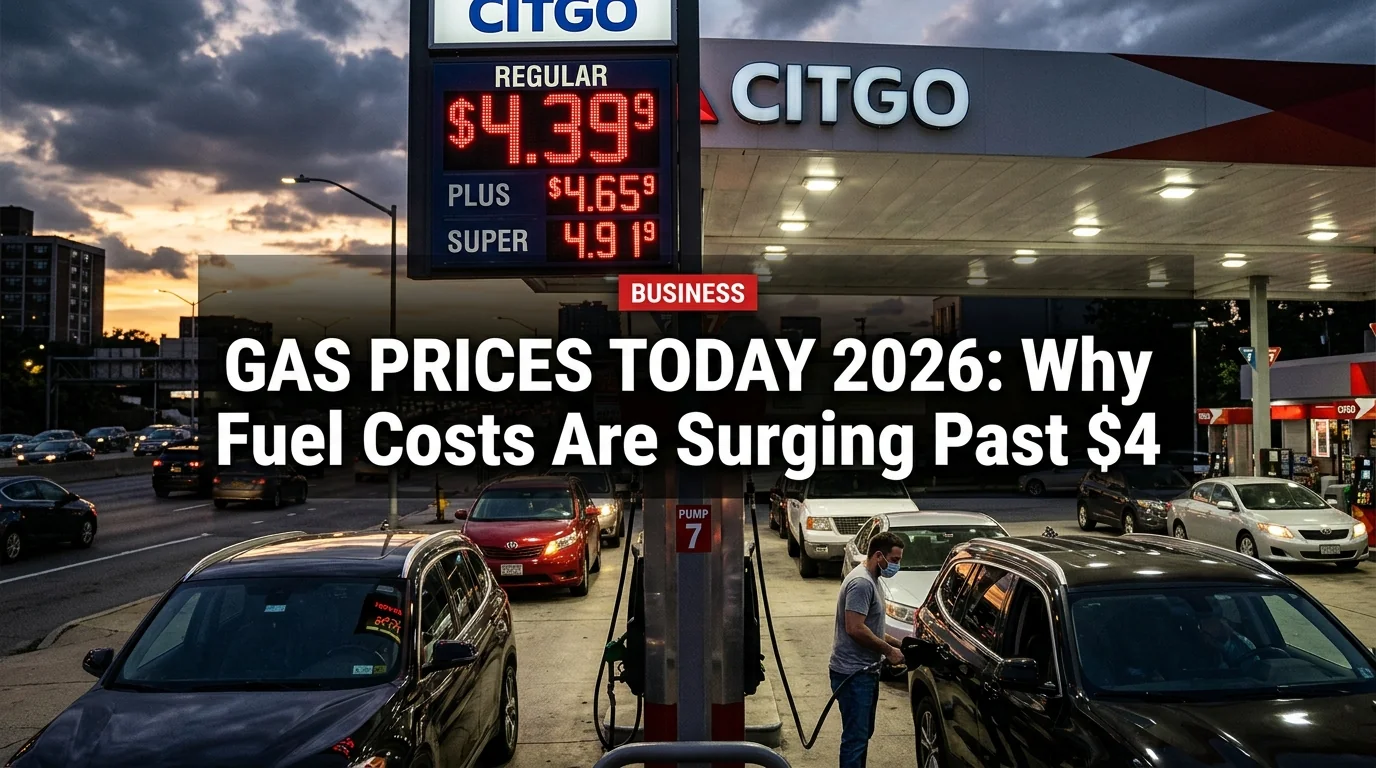
The Iran conflict has pushed Brent crude above $100 per barrel — the first time since 2022. Every $10 increase in oil shaves roughly 0.1–0.2 percentage points off GDP growth and adds to consumer price pressure.
Goldman Sachs specifically flagged Strait of Hormuz disruptions as their top risk. If oil hits $150 (Larry Fink's warning scenario), recession becomes nearly certain.
2. Tariffs Are a Slow-Motion Tax Hike
The near-universal tariffs enacted in April 2025 haven't gone away. They've created a permanent productivity loss and function as a regressive tax on consumers. The Fed itself acknowledged "cost-push shocks from tariffs" in its March 18 statement.
::keyfacts
- Average household cost from tariffs: $570–$2,512/year (Yale Budget Lab)
- Core PCE inflation revised up to 2.7% (from 2.4% in December)
- The Fed can't cut rates to help because inflation is still above target ::/keyfacts
3. The Labor Market Is Losing Steam
We're in a strange "low-hire, low-fire" equilibrium. Unemployment is still low, but hiring has slowed dramatically. JPMorgan CEO Jamie Dimon warned that this calm could break suddenly if corporate confidence drops further.
The Fed projects unemployment rising to 4.4% by year-end. Goldman expects 4.6%. Neither is catastrophic, but the direction matters more than the number.
4. The Fed Is Stuck
On March 18, 2026, the FOMC voted to hold rates at 3.50–3.75% — with only one dissenter (Governor Stephen Miran, who wanted a 25bp cut). The Fed faces a classic trap:
- Cut rates → inflation stays above target
- Hold rates → economy slows further
- Raise rates → nobody is suggesting this, but it's not off the table if oil pushes inflation higher
Markets are pricing in only a 27.5% chance of the first rate cut by December 2026. Many analysts now expect no cuts until 2027.
The Case Against Recession
It's not all doom. Here's why the "soft landing" camp still has a case:
::proscons Bull Case (No Recession):
- The One Big Beautiful Bill Act (passed Dec 2025) provides tax cuts and fiscal stimulus
- Consumer balance sheets remain relatively healthy
- Goldman still forecasts 11% global equity returns for 2026
- AI productivity gains are starting to show up in corporate earnings
- Government shutdown spending shifted from Q4 2025 into Q1 2026, boosting near-term GDP
Bear Case (Recession):
- Oil above $100 with escalation risk toward $150
- Tariff drag hasn't peaked — more retaliatory measures possible
- Fed Chair Powell's term expires May 15, 2026 — leadership transition creates uncertainty
- Public debt at 101% of GDP limits fiscal response options
- Stagflation risk: prices rising while growth stalls (1970s parallel) ::/proscons
Goldman's David Mericle captures the optimist view: "The drag from tariff increases should give way to a boost from business and personal tax cuts." But JPMorgan's Michael Feroli pushes back: "The conflict in the Middle East adds a whole new wrinkle... the Fed will keep interest rates on hold for the rest of 2026."
Key Dates to Watch
::timeline
- March 18, 2026 — Fed holds rates steady, revises inflation up to 2.7%
- May 15, 2026 — Jerome Powell's term as Fed Chair expires; successor appointment expected to cause market volatility
- June 2026 — Next round of tariff reviews; potential for escalation or relief
- September 2026 — Goldman's earliest expected rate cut (if inflation cooperates)
- December 2026 — Markets pricing 27.5% chance of first 25bp rate cut
- 2027 — Most analysts now expect meaningful rate relief here, not 2026 ::/timeline
What This Means for Your Money
::alert info Not financial advice — but here's what economists suggest for a high-uncertainty environment. ::/alert
If you're investing: The consensus is that stocks can still return 8–11% in 2026, but volatility will be higher than 2025. Diversification matters more than ever. Goldman recommends staying "constructive" on equities but hedging with commodities.
If you're employed: Watch your company's hiring trends. The danger isn't mass layoffs — it's a hiring freeze that slowly squeezes opportunity. Update your skills, especially in AI-adjacent fields.
If you're buying a home: Mortgage rates are unlikely to drop significantly in 2026. The Fed's hold-steady stance means 6%+ mortgage rates persist. Don't wait for a rate cut that may not come.
If you're worried about prices: Tariffs and oil are the twin drivers of inflation. Budget for 3–5% higher costs on imported goods, electronics, and fuel through year-end.
The Bottom Line
A 2026 recession is possible but not probable. The base case from most forecasters is sluggish growth — GDP around 1.5–2.4%, unemployment creeping up, inflation staying stubborn above target.
The real risk isn't a single trigger. It's the stacking effect: oil shock + tariff drag + Fed paralysis + leadership transition all hitting within the same 6-month window. Any one of these is manageable. All four together is what pushes that one-in-three probability.
The economy isn't falling off a cliff. But it's walking closer to the edge than it has since 2022 — and the guardrails are thinner than they look.