
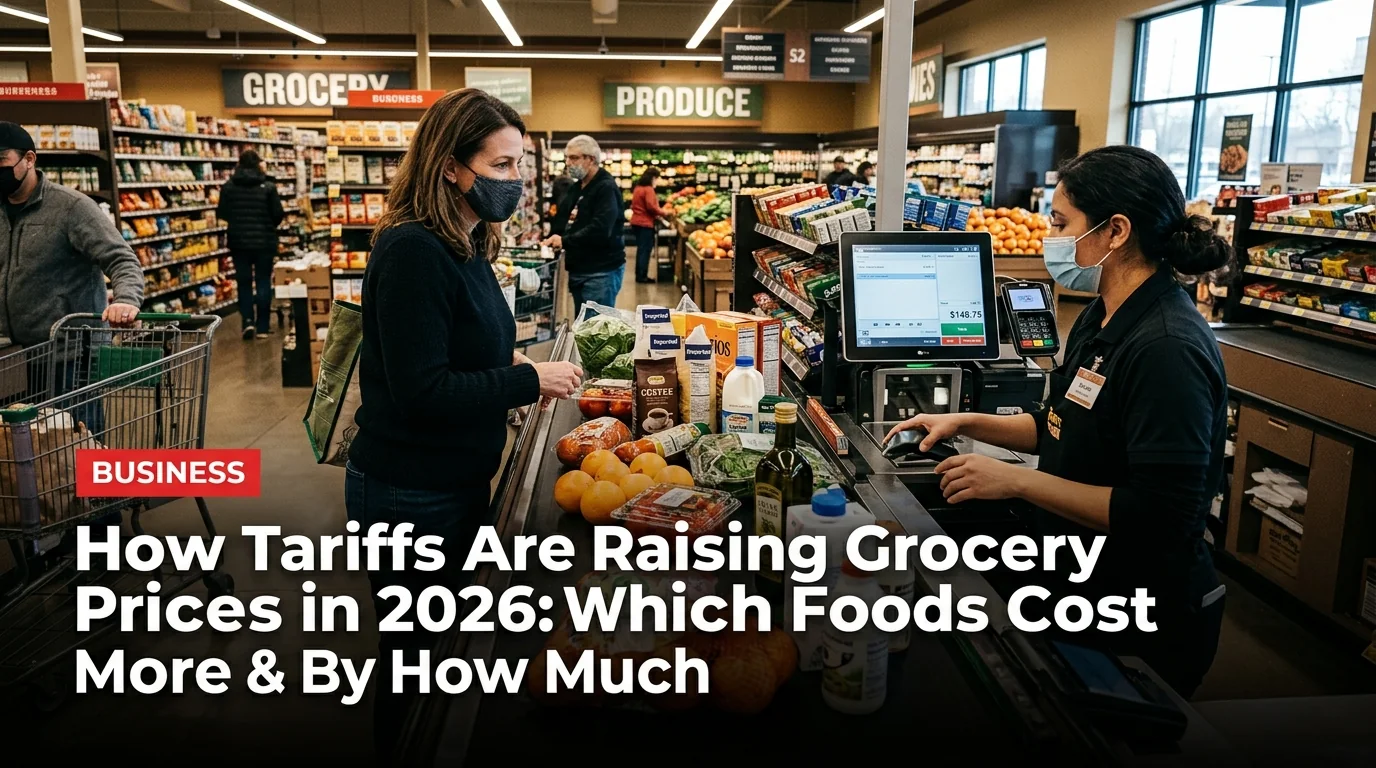
American families are paying more at the grocery store in 2026 — and tariffs are a major reason why. The sweeping import duties that took effect in 2025 and expanded into 2026 have rippled through the food supply chain, hitting everything from avocados to canned tuna. If you've noticed your weekly grocery bill creeping upward, here's what's actually driving it and what you can do about it.
Why Tariffs Raise Food Prices
Tariffs are taxes on imported goods, paid by US importers — not foreign governments. Those costs are almost always passed on to retailers, and then to you. Even foods grown domestically can get more expensive, because tariffs on inputs like fertilizer, packaging, and farm equipment raise production costs across the board.
The US imports roughly 15% of its total food supply and about 50% of fresh fruits and vegetables. When tariffs hit those supply chains, the effect is fast and measurable.
The Foods Getting Most Expensive in 2026
Produce: Avocados, Tomatoes & Berries
Mexico is the single largest source of US produce imports, supplying the vast majority of avocados, tomatoes, cucumbers, and peppers. With 25% tariffs on Mexican imports, retail avocado prices have climbed 20–35% since early 2025. A bag of avocados that cost $4.99 last year now runs $6–$7 at major chains.
California and Florida grow tomatoes domestically, but not enough to cover demand year-round. Expect higher prices on tomatoes, especially in winter months when domestic supply drops.
Seafood: Shrimp, Tilapia & Canned Fish
China is the world's largest seafood exporter, and the 145% tariffs on Chinese goods have effectively ended most direct Chinese seafood imports. That sounds good for domestic producers, but the gap hasn't been filled — US shrimp and tilapia prices are up 25–40% as a result. Canned tuna from Thailand and other Asian suppliers has also risen 10–20%.
Coffee & Cocoa
The US grows virtually no coffee or cocoa domestically. Both commodities flow through supply chains that involve countries facing new or elevated US tariffs — including Vietnam (a top coffee exporter facing 46% tariffs) and several West African cocoa producers. Expect coffee prices to remain elevated, with premium and specialty roasts hardest hit.
Canned & Packaged Goods
Steel and aluminum tariffs (25%+) raise the cost of cans, which affects everything from canned beans to soup to pet food. Cardboard packaging materials have also risen in cost due to tariffs on pulp imports. Manufacturers have responded with a mix of price increases and "shrinkflation" — same price, smaller package.
Olive Oil
Spain and Italy supply most US olive oil. New tariffs on European Union goods (threatened since late 2025 and partially implemented in 2026) have pushed extra-virgin olive oil prices up significantly. A 1-liter bottle of quality EVOO now costs $12–$18 at many stores, up from $8–$12 a year ago.
Approximate price increase % compared to early 2025
What's Not Getting More Expensive (Yet)
Not all grocery staples are affected equally. Domestically produced goods with short supply chains have seen modest or no tariff-related increases:
- US-raised beef and pork — prices driven more by feed costs and drought than tariffs
- Milk and dairy — heavily domestic, though packaging costs are up slightly
- Eggs — affected by avian flu supply issues, not tariffs
- Potatoes and corn — largely domestic crops
- Bread and cereal — wheat is mostly domestic, though fertilizer tariffs have some effect
- Avocados, shrimp, olive oil, and coffee are the hardest-hit grocery categories
- Steel tariffs are raising the cost of canned goods even for domestic food brands
- Shrinkflation is accelerating — packages are getting smaller without obvious price tags
- Domestic beef, dairy, and eggs are less tariff-exposed but face other pressures
- Low-income households are hit hardest because food represents a higher share of their budgets
The Shrinkflation Problem
Many manufacturers have chosen to absorb some tariff costs by reducing package sizes rather than raising sticker prices. This "shrinkflation" makes cost increases harder to spot but no less real. A box of crackers that was 16 oz in 2024 may now be 13.5 oz for the same price — effectively a 15–18% price increase hidden in plain sight.
The Consumer Price Index captures some of this, but unit-pricing at the shelf is your best defense. Always compare price per ounce or per unit rather than total package price.
How Much More Are You Actually Paying?
The USDA and independent economists estimate that tariff-related food price increases are adding $80–$120 per month to the average American family's grocery bill, compared to 2024. That's roughly $1,000–$1,440 per year in additional food costs — on top of the post-pandemic inflation that already raised prices in 2022–2024.
Lower-income households spend a higher percentage of their income on food, making the burden proportionally heavier. Families relying on SNAP benefits face particular pressure, since benefit levels haven't been adjusted to keep pace with 2026 grocery inflation.
What to Stock Up On Now
If prices continue rising — or if additional tariff escalation hits — stocking up on shelf-stable items now can lock in lower prices. Practical items to consider:
High priority (prices rising fast):
- Canned fish (tuna, salmon, sardines)
- Olive oil
- Coffee beans (whole bean stores better than ground)
- Canned beans and lentils
- Tomato products (paste, crushed, diced)
Medium priority:
- Pasta and rice (tariffs on machinery, not grain, but prices creeping up)
- Cooking oils (canola, vegetable — affected by Canadian import tariffs)
- Cocoa powder and chocolate
Skip stockpiling:
- Fresh produce (perishable, buy as needed)
- Dairy and eggs (short shelf life, domestic supply)
- Bread (bake from domestic flour if prices spike)
How to Reduce Your Grocery Bill Despite Tariffs
Buying smarter helps offset tariff-driven price increases:
- Buy store brands — private-label products are often domestically sourced or produced under longer-term contracts, insulating them from short-term tariff shocks.
- Shop seasonal and local — farmers markets and CSA boxes (community-supported agriculture) bypass import chains entirely for produce.
- Use unit pricing — always compare cost per ounce, not sticker price, to catch shrinkflation.
- Freeze proteins — stock up on domestic chicken, pork, and beef when on sale and freeze in portions.
- Grow a few things — even a small container garden of tomatoes, herbs, and peppers meaningfully offsets produce costs.
- Domestic producers benefit from reduced import competition
- Encourages US food manufacturing investment
- Some supply chain reshoring happening in processed foods
- Higher grocery bills for all American consumers
- Shrinkflation hides true cost increases
- Low-income families bear disproportionate burden
- Retaliatory tariffs from Canada, Mexico, EU hurt US agricultural exports
- Small specialty food importers being squeezed out
The Bottom Line
Tariffs are a real and measurable factor in 2026 grocery price increases. Avocados, shrimp, coffee, olive oil, and canned goods are the categories feeling it most. The average family is spending roughly $1,000–$1,400 more per year on food compared to 2024, with tariffs accounting for a meaningful share of that.
The smartest near-term moves are to stock shelf-stable imports that are rising fast, compare unit prices vigilantly to catch shrinkflation, and lean into domestic and seasonal produce where possible. Tariff policy can change quickly — but planning around today's prices is better than being caught off guard.