If you import goods into the United States and you're confused about which tariff is currently in effect, you're not alone. The rapid-fire changes since early 2026 — court rulings, emergency measures, new authority shifts — have left even experienced trade lawyers scrambling. This guide cuts through the noise and explains exactly what the Section 122 tariff is, how it came to replace the IEEPA tariffs, what it covers, and what your business needs to know before July 24, 2026.
What Is Section 122 of the Trade Act of 1974?
Section 122 is a provision of the Trade Act of 1974 that grants the President emergency authority to impose import surcharges or quotas when the United States faces a significant balance of payments deficit or a substantial deterioration in its monetary reserves. Unlike IEEPA (International Emergency Economic Powers Act), which grants broader national security emergency powers, Section 122 is specifically a trade tool — and it comes with a hard 150-day cap unless Congress votes to extend it.
The key distinction: Section 122 tariffs are temporary by design. Congress built in an expiration clock that the President cannot override alone.
How Did Section 122 Replace the IEEPA Tariffs?
The backstory matters here. In early 2026, the Trump administration had imposed sweeping global tariffs using IEEPA authority — an emergency tool typically used for sanctions and asset freezes, not trade policy. On February 20, 2026, the U.S. Supreme Court issued a landmark ruling invalidating those IEEPA-based tariffs, finding that they stretched the statute beyond its intended scope.
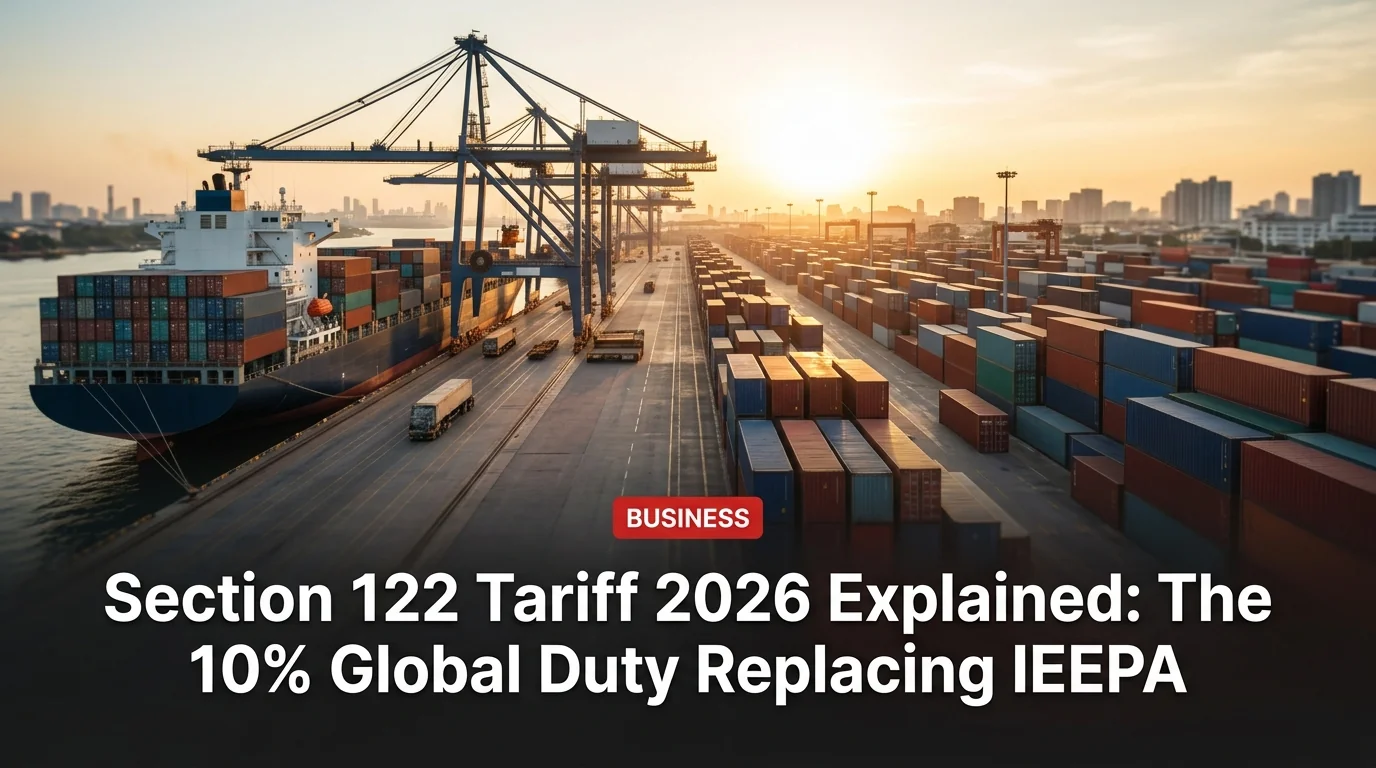
Faced with the sudden removal of its broad tariff authority, the administration pivoted fast. On February 24, 2026 — just four days after the Supreme Court ruling — a 10% global import surcharge under Section 122 took effect as a replacement measure. The administration signaled a potential increase to 15%, but as of April 2026, the rate has remained at 10%.
What Does the Section 122 Tariff Cover?
The 10% surcharge applies broadly to most imported goods entering the United States. However, it is applied on top of — not instead of — several other active tariff regimes:
Section 232 Tariffs (Still in Force)
Section 232 national security tariffs remain fully active and stack on top of the Section 122 duty. Current Section 232 rates include:
- Steel and Aluminum: 50% tariff (significantly increased from earlier levels)
- Automobiles and Auto Parts: 25% tariff on vehicles and light truck parts
- Advanced Semiconductors: 25% tariff (effective January 15, 2026)
- Copper Products: 50% tariff (enacted July 2025)
- Softwood Lumber/Timber: 10% tariff; upholstered furniture at 30%; kitchen cabinets at 50%
Section 301 China Tariffs
Targeted tariffs on Chinese imports under Section 301 remain active and also stack with the 10% Section 122 duty.
De Minimis Suspension
The $800 de minimis exemption — which previously allowed low-value international shipments to enter duty-free — remains suspended under separate authority. Small businesses relying on direct-from-China or overseas suppliers still face duties on packages regardless of value.
How Does This Affect Your Business?
For General Importers
If you import finished goods not covered by Section 232, the Section 122 tariff adds a flat 10% to your import costs. For high-volume importers, this means a significant jump in landed costs that likely needs to be passed to customers or absorbed into margins.
For Steel, Aluminum, and Auto Part Importers
You're facing stacked tariffs — the 10% Section 122 rate plus the 50% (steel/aluminum) or 25% (auto parts) Section 232 rate. Effective rates for these categories can exceed 60%, fundamentally altering supply chain economics.
For Small E-Commerce Businesses
The suspended de minimis exemption combined with the Section 122 tariff creates double pressure. Even low-value direct-to-consumer shipments now face duties, and customs processing adds time and administrative cost.
- Temporary measure — expires July 24, 2026 unless Congress acts
- 10% rate is lower than the IEEPA reciprocal tariffs it replaced
- Applies universally — no country-specific uncertainty
- Businesses can plan for a known expiration date
- Stacks on top of Section 232, creating very high effective rates for some goods
- Legal authority is still being challenged in trade courts
- De minimis exemption remains suspended separately
- Congress could vote to extend it beyond July 2026
Will Section 122 Be Extended Past July 24?
Most trade law experts consider a congressional extension unlikely but not impossible. Section 122 requires an affirmative vote from Congress to extend beyond 150 days — Congress would have to pass legislation specifically authorizing it, which faces significant political hurdles given bipartisan concern about consumer price inflation.
The more likely scenario: the administration will either let it expire and shift to other legal mechanisms, or pursue negotiated trade deals with key partners that could reduce or exempt certain countries from the baseline rate.
Can You Claim Refunds?
The Section 122 tariff does not have the same refund pathway as the now-invalidated IEEPA tariffs. For goods imported under IEEPA before the Supreme Court ruling, the CBP CAPE portal refund process remains open. However, Section 122 duties paid going forward do not carry the same refund eligibility unless the tariff is itself later ruled invalid by a court.
- Section 122 is found in the Trade Act of 1974, not IEEPA
- The 10% rate applies globally — not country-specific
- It auto-expires after 150 days unless Congress votes to extend
- Section 232 tariffs are separate and remain in full force
- De minimis suspension is separate and also remains in force
- Refund claims for prior IEEPA duties are processed via CBP CAPE portal
Bottom Line for Importers
The current tariff environment is complex but more predictable than the IEEPA era. You have a known baseline (10% global surcharge), known stacked rates for specific industries (steel, aluminum, autos), and a known expiration clock ticking toward July 24, 2026.
The practical steps for businesses right now:
- Audit your HTS codes to understand your exact combined tariff exposure
- Model your landed costs with the 10% Section 122 rate layered over any applicable Section 232 rates
- Track the July 24 expiration — if Congress moves to extend, expect market disruption
- File IEEPA refund claims if you paid duties before the Supreme Court ruling (use CBP CAPE portal)
- Diversify suppliers if stacked tariff rates make current sourcing unviable
The Section 122 tariff is a stopgap, not a permanent trade architecture. But for importers, "temporary" still means paying real duties every day until it ends.