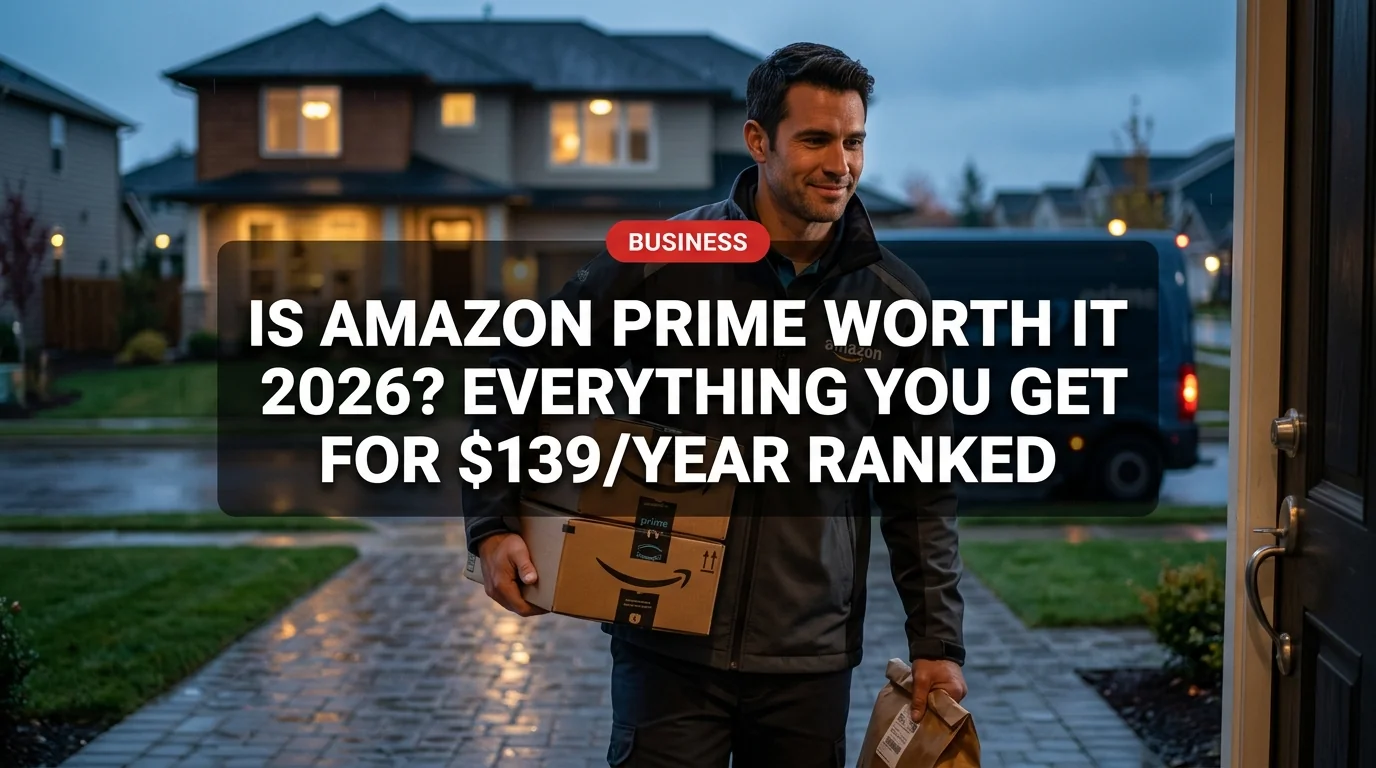
Amazon Prime has been the default subscription for millions of households for over a decade. But at $139 per year — or $14.99/month — it's no longer a throwaway decision. With ads now running on Prime Video and competitors undercutting on streaming, is Amazon Prime still worth it in 2026?
We ran the numbers on every benefit included in the membership, compared it to buying each separately, and gave you a straight answer.
What You Get With Amazon Prime in 2026
Amazon has aggressively expanded Prime's value stack since the last price hike in 2022. Here's everything included in a single $139/year membership:
- Free shipping — Same-Day and Next-Day delivery on 100M+ eligible products
- Prime Video — 25,000+ movies and TV episodes, including originals like Reacher, The Boys, Fallout, and The Rings of Power
- Thursday Night Football — exclusive NFL streaming through at least 2033
- Prime Music — on-demand access to 100M+ songs
- Amazon Photos — unlimited full-resolution photo and video storage
- Prime Reading — access to 1,000+ Kindle books and magazines
- Prime Gaming — free games monthly + Twitch channel subscription credit
- Whole Foods discounts — 10% off select items and weekly deals
- Grubhub+ membership — free food delivery on orders over $12
- Prime Day early access — first dibs on deals twice a year
- Student discounts — half price at $69/year with a .edu email
- Price: $139/year or $14.99/month
- Student plan: $69/year ($7.49/month)
- Add household member: $4.99/month each (up to 2)
- Ad-free Prime Video upgrade: $2.99/month extra
- Countries available: 25+
The Math: Does the Shipping Alone Cover the Cost?
The easiest way to evaluate Prime is shipping arithmetic. Standard non-Prime delivery typically runs $8–$10 per order. At $139/year, you need roughly 14–17 paid deliveries annually to break even on shipping alone.
For most active Amazon shoppers, that happens by March. If you order from Amazon more than once a month, the subscription pays for itself before you've touched a single other benefit.
But the math gets more interesting when you stack everything else.
Even a conservative estimate puts the bundled value well above $200/year for anyone who uses two or three of the included services.
What's Changed in 2026
The biggest shift in recent memory: ads arrived on Prime Video in January 2024, and they've stayed. Unless you pay an extra $2.99/month ($35.88/year), you'll see ads on movies and shows — including Amazon Originals.
This is the single biggest complaint about the membership right now, and it's legitimate. You're paying $139 and watching ads. That said, ad loads are lighter than Peacock or Hulu's free tier, and the content library remains one of the strongest in streaming.
Other notable 2026 updates:
- MGM library fully integrated — James Bond, Rocky, Legally Blonde, and thousands more
- Grubhub+ bundled in — saving subscribers $99/year if they use food delivery
- Amazon Pharmacy RxPass — $5/month add-on for eligible generic prescriptions (separate)
Prime Video in 2026: Is It Competitive?
Prime Video has quietly become one of the top two or three streaming services by original content quality. Reacher, The Boys, Fallout, and The Rings of Power consistently land in Nielsen's weekly top 10. Thursday Night Football adds live sports that Netflix still doesn't offer.
The ad-supported default remains a point of friction, but the content justification has never been stronger.
- 25,000+ titles
- NFL Thursday Night Football exclusive
- Strong originals (Fallout, Reacher, The Boys)
- Ads by default (remove for +$2.99/mo)
- Included in Prime with 10+ other benefits
- Larger overall library
- No live sports
- Strong originals (Stranger Things, Wednesday)
- Ad-free at Standard tier
- Streaming only — no shipping, gaming, or storage
Who Should Subscribe to Amazon Prime in 2026
Prime makes obvious sense for certain people — and genuinely poor value for others. Here's the honest breakdown:
- Ships pays for itself if you order 14+ times per year
- Prime Video rivals Netflix for original content quality
- Grubhub+ alone is worth $99/year for food delivery users
- Unlimited photo storage is a hidden gem for iPhone and Android users
- Thursday Night Football is a unique live sports differentiator
- Student plan cuts cost in half
- Prime Video now has ads — removing them costs $2.99/month extra
- Most people use only 2-3 of the 10+ benefits
- Monthly plan ($14.99/month = $180/year) costs 30% more than annual
- Not worth it if you rarely shop on Amazon or stream content
- Whole Foods discounts require living near a Whole Foods
Prime vs. Buying Separately: The Honest Verdict
If you use Amazon regularly for shopping and stream at least occasionally, Prime is one of the best-value subscriptions available in 2026. The shipping benefit alone typically covers the cost for anyone buying household essentials, electronics, or gifts online.
The sweet spot is someone who:
- Orders from Amazon at least 2x per month
- Watches at least some TV or movies online
- Uses food delivery occasionally
- Has a large photo library they want backed up
For that person, Prime delivers $250–$350+ in annual value for $139.
Where it falls flat: if you're a casual Amazon shopper who already pays for Netflix and Google Photos, you're paying $139 mostly for shipping. Run the numbers on your own order frequency first.
Final Verdict
For most Amazon shoppers in 2026, Prime is still worth it — but the value gap has narrowed. The ads on Prime Video were a real step backward, and casual users will continue to find the subscription harder to justify.
Buy it if: You order from Amazon regularly, use food delivery, or want a solid streaming service bundled into your shipping membership.
Skip it if: You order from Amazon once a month or less, already have two streaming services, and don't use Whole Foods or Grubhub.
At $139/year — roughly $11.58/month — Prime remains a defensible value for the average American household. It just requires you to actually use what you're paying for.