
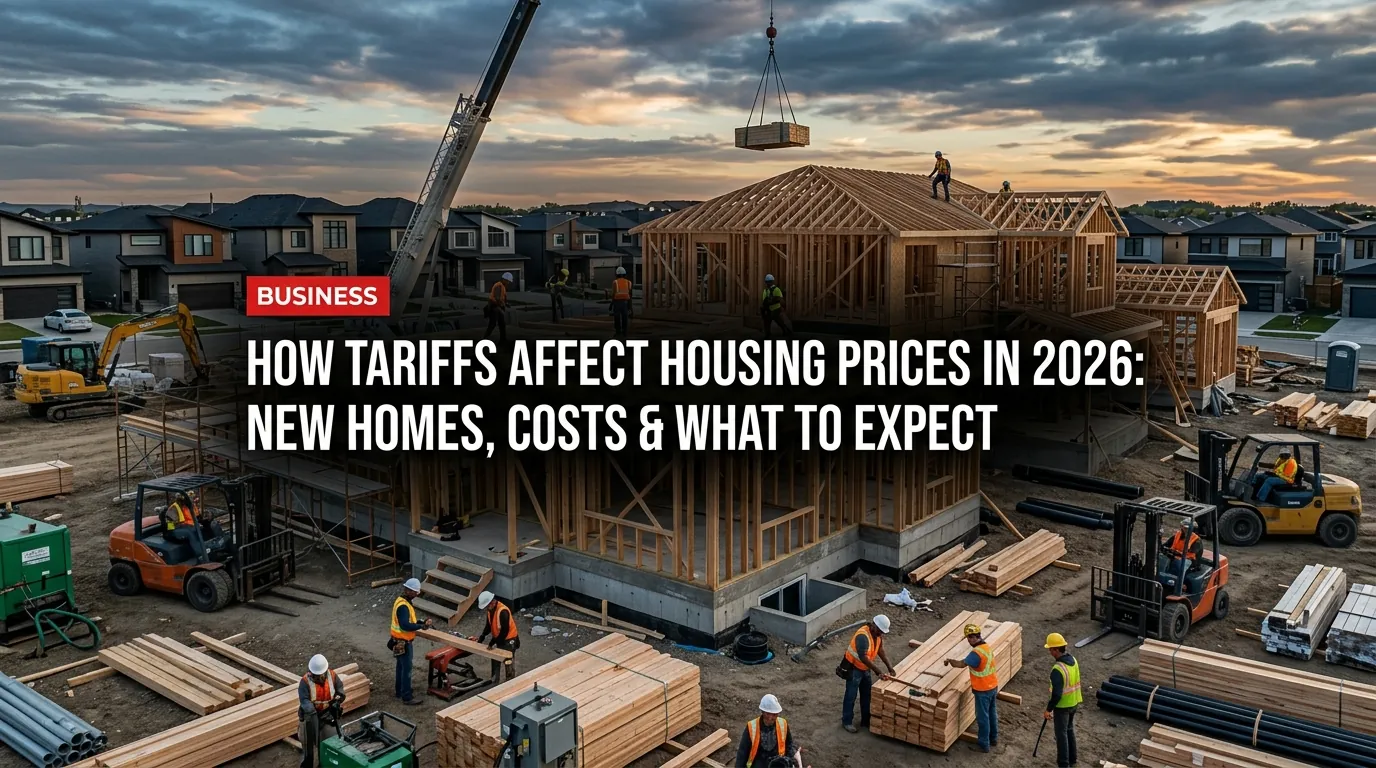
If you're shopping for a new home in 2026, tariffs are quietly adding to the price before you ever sit down at a closing table. Steel tariffs, lumber tariffs, and sweeping import duties on construction materials are pushing up building costs — and builders are passing every dollar to buyers.
Here's exactly how it works, what the numbers look like, and what it means if you're buying, selling, or waiting on the sidelines.
The Direct Path From Tariffs to Your Home Price
A new home is essentially a pile of imported materials assembled on a lot. The main tariff-sensitive inputs:
- Steel — structural beams, rebar, roofing, appliances, HVAC systems
- Lumber — framing, flooring, cabinetry, doors (significant Canadian import exposure)
- Aluminum — windows, siding, gutters, roofing
- Copper — electrical wiring, plumbing
- Appliances — washers, dryers, refrigerators (largely manufactured in Asia)
Trump's 2026 tariff regime includes a 25% tariff on all steel and aluminum imports (reinstated and expanded), 25% on Canadian lumber (Canada supplies roughly 30% of U.S. softwood lumber), and the new country-specific reciprocal tariffs ranging from 10% to 145% on goods from dozens of countries where construction components and appliances originate.
The Lumber Problem
Lumber is the most direct hit. A typical new single-family home requires approximately 15,000 to 25,000 board feet of lumber. Canada is the largest foreign supplier of softwood lumber to the U.S., and the 25% tariff on Canadian imports has pushed lumber prices sharply higher.
U.S. domestic lumber production doesn't have the capacity to quickly replace Canadian supply — mills take years to scale. So builders face higher prices with no easy substitution.
For a 2,000 square foot home, the lumber cost increase alone is estimated at $2,000–$4,500 depending on local market conditions and how aggressively builders are absorbing versus passing costs.
The Steel and Aluminum Multiplier
Steel and aluminum show up everywhere in new construction — and the 25% tariff applies broadly:
- Structural steel in framing and foundations
- Rebar in concrete work
- Roofing materials — steel and aluminum panels, flashing
- HVAC systems — largely steel and aluminum components
- Appliance packages — nearly all manufactured with significant steel content
The National Association of Home Builders (NAHB) estimates steel and aluminum tariffs add approximately $4,000–$6,000 to the cost of a typical new home. Combined with lumber, total material cost increases are running $7,000–$10,000 per home in 2026.
How This Affects New Home Prices vs. Existing Homes
New construction is hit first and hardest. Builders can't absorb these cost increases indefinitely — margins are already thin in the production home market. Most major builders (D.R. Horton, Lennar, PulteGroup) have raised base prices in 2026, and some have pulled back on spec homes in markets where they can't price the costs into the sale.
Existing homes are less directly affected by tariffs — the materials cost is sunk. But there are second-order effects:
- Tighter new home supply — when building costs rise, fewer new homes get built. Less new supply pushes buyers toward existing inventory.
- Higher renovation costs — tariffs on lumber, steel, and appliances also raise the cost of remodeling, which can support existing home prices in areas where buyers would otherwise add their own upgrades.
- Mortgage rate pressure — tariff-driven inflation has complicated the Federal Reserve's ability to cut rates. Higher-for-longer rates mean higher monthly payments regardless of home prices.
- New home supply tightening supports existing home values
- Renovation cost inflation makes existing homes relatively more attractive
- Less competition from new builds in some markets
- New homes cost more
- Existing home inventory stays tight as sellers don't want to give up locked-in low mortgages
- Renovation and repair costs are also up
- Mortgage rates staying elevated due to tariff-driven inflation
The Mortgage Rate Ripple Effect
Tariffs affect housing costs through another channel: mortgage rates. Here's the chain:
- Tariffs raise prices across the economy
- Higher inflation makes it harder for the Fed to cut rates
- The Fed holds rates elevated longer than expected
- 30-year mortgage rates stay above 7% longer than the market hoped
At 7% vs. 6%, a $400,000 mortgage costs an extra $270 per month — more than $96,000 over 30 years. For millions of potential buyers sitting on the sidelines waiting for rates to drop, tariff-driven inflation is the invisible force keeping them there.
Which Housing Markets Feel It Most
Not all markets are equally exposed:
High-impact markets:
- Sun Belt new construction corridors (Phoenix, Dallas-Fort Worth, Atlanta, Jacksonville) — heavy new build activity, builders can't hide cost increases
- Affordable housing developments — thinner margins mean tariff costs are harder to absorb
- Remote/rural custom builds — higher exposure to imported materials with less substitution
Lower-impact markets:
- Dense urban areas (NYC, San Francisco) — prices already high, tariff cost is a smaller percentage premium; existing inventory dominates
- Markets with limited land for new development — tariff impact is muted when most transactions are existing homes
What Should Buyers Do?
If you're buying new construction: Negotiate on upgrades, not price. Builders rarely cut base prices but will often throw in appliance packages, flooring upgrades, or closing cost contributions. In a high-tariff environment, those upgrades are more valuable.
If you're buying existing: The existing home market is less tariff-affected on the purchase price, but budget for higher renovation and repair costs if the home needs work.
If you're waiting for prices to fall: Waiting for tariff relief is a gamble. Even if tariffs are reduced, construction costs don't drop quickly — material suppliers and subcontractors lock in pricing. And if rates drop before tariffs do, demand surges and prices rise anyway.
If you're a seller: In markets with tight new home supply, existing homes hold value well. Tariffs are keeping new competition limited.
- Tariffs on steel, lumber, and aluminum are estimated to add $7,000-$10,000 to the cost of a new home in 2026
- Canada supplies 30% of U.S. softwood lumber — the 25% tariff on Canadian lumber directly hits new construction costs
- New homes are hit harder than existing homes, but tighter supply supports existing home values
- Tariff-driven inflation is keeping mortgage rates elevated, compounding affordability problems
- Sun Belt new construction markets face the largest direct impact
The Bottom Line
Tariffs in 2026 have added a real, measurable cost to new home construction. The NAHB puts the number at roughly $9,200 per home and rising as more import duties take effect. That cost lands on buyers.
For existing homeowners, it's mostly good news — supply tightens and values hold. For buyers, the combination of higher new home prices, elevated mortgage rates, and pricier renovations makes affordability worse across the board.
The housing market was already strained before tariffs arrived. They've added one more weight to a scale that was already out of balance.
For related coverage, see Car Prices After Tariffs 2026 and How to Protect Your Money From Tariffs in 2026.