
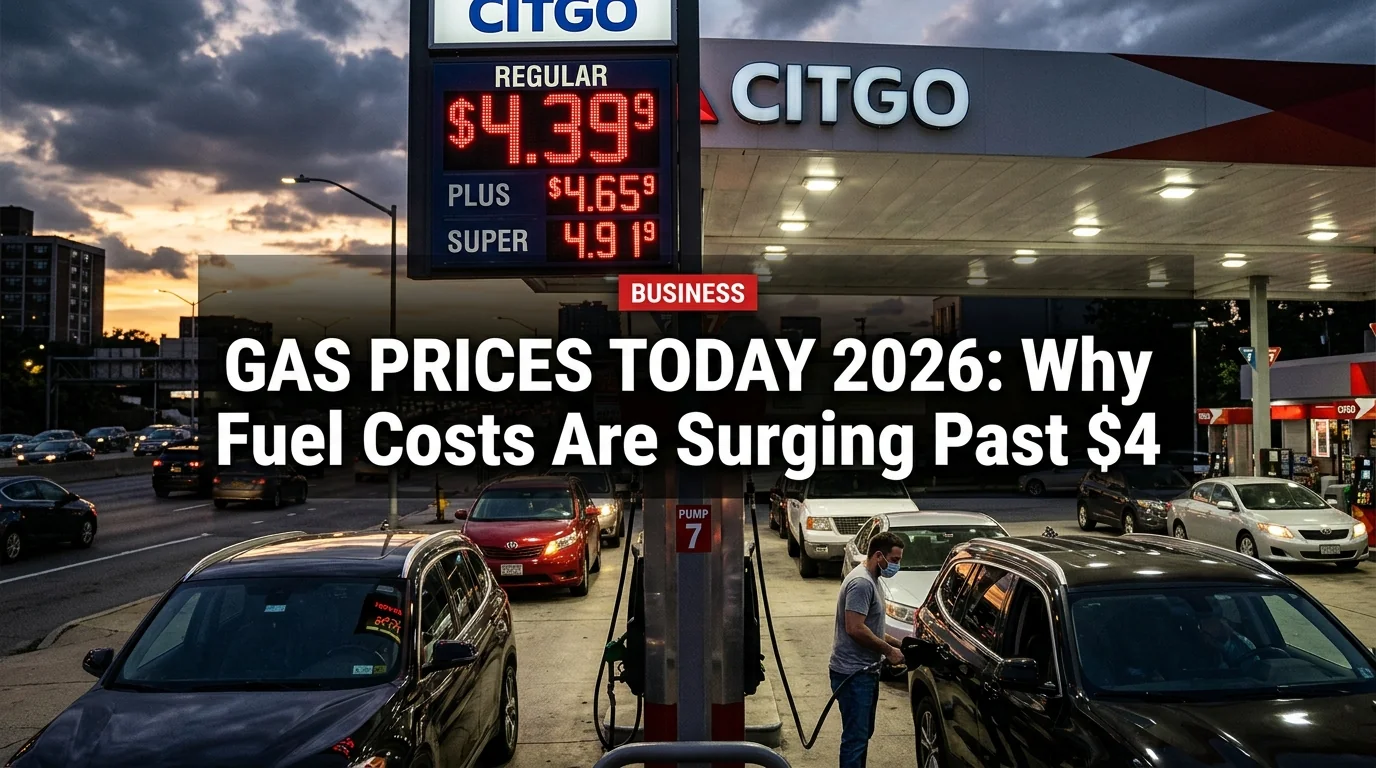
The national average for a gallon of regular gasoline hit $3.98 on March 24, 2026 — up 35% in a single month — and analysts say it will cross the $4 mark within hours. The cause is simple and severe: the Iran war has shut down the Strait of Hormuz, choking off 20% of the world's oil supply.
Here is everything drivers need to know right now: what you are paying, why it is happening, when it might stop, and what you can do about it.
What Are Gas Prices Today by State?
Prices vary enormously depending on where you live. California drivers are already paying close to $6, while parts of the Midwest remain under $3.50.
| State | Regular ($/gal) | Change vs. Feb |
|---|---|---|
| California | $5.79 | +$1.82 |
| Hawaii | $4.76 | +$1.40 |
| Washington | $4.74 | +$1.55 |
| Nevada | $4.51 | +$1.48 |
| Illinois | $4.17 | +$1.17 |
| New York | $3.94 | +$0.98 |
| Texas | $3.52 | +$0.87 |
| North Dakota | $3.09 | +$0.62 |
| Oklahoma | $3.05 | +$0.58 |
| Kansas | $3.04 | +$0.55 |
Source: AAA Fuel Gauge Report, March 24, 2026
Why Are Gas Prices Rising So Fast?
Three forces are compounding simultaneously:
1. The Strait of Hormuz Is Closed
Iran blockaded the strait on March 1 in retaliation for U.S.-Israeli strikes launched on February 28. Roughly 21 million barrels per day — one-fifth of global oil — normally flow through this 21-mile-wide chokepoint between Iran and Oman.
Iran's Deputy Parliament Speaker Ali Nikzad has publicly ruled out negotiations and stated the blockade will continue. That single decision is the primary driver of every price at every pump in America right now.
2. Global Emergency Reserves Are Not Enough
The response has been massive but insufficient:
- The U.S. released 172 million barrels from the Strategic Petroleum Reserve
- IEA members collectively committed 400 million barrels of emergency stocks
- U.S. domestic production is at a record 13.6 million barrels per day
IEA Executive Director Fatih Birol called this "the largest supply disruption in the history of the global oil market." The reserves are slowing the spike but cannot replace a permanent flow of 21 million barrels daily.
3. Spring Demand Is Hitting at the Worst Time
Gasoline demand surged to 9.24 million barrels per day last week — up from 8.29 million a month ago — as spring break travel began. Meanwhile, U.S. crude inventories dropped to 249.5 million barrels, tightening supply further.
How High Could Prices Go?
It depends entirely on how long the Strait of Hormuz remains closed.
The broader economic fallout extends beyond the pump. Professor Edward Van Wesep of CU Boulder's Leeds School of Business offered the starkest warning: if the blockade lasts another month, crude could hit $200 per barrel, which would translate to roughly $7–8 per gallon at the pump.
What Can Drivers Do Right Now?
With prices climbing daily, here are practical steps to reduce your fuel costs:
Find the cheapest gas near you. Apps like GasBuddy, Waze, and Google Maps show real-time prices. Price differences of $0.50–$1.00 between stations within the same city are common right now.
Use loyalty and cashback programs. Costco and Sam's Club members typically save $0.20–$0.40/gallon. Credit cards like the Citi Custom Cash offer 5% back on gas purchases. DoorDash has launched an emergency program giving Dashers 10% cashback on fuel.
Drive smarter. The Department of Energy estimates that aggressive driving wastes 15–30% more gas on highways. Keeping tires properly inflated improves mileage by up to 3%.
Consider your commute. If remote work is an option, each day working from home saves the average American commuter about $8 in fuel at current prices — roughly $160 per month.
- SPR release is providing some price ceiling
- U.S. domestic production at record highs
- Trump hinting at diplomatic resolution within days
- Trading Economics projects $3.30/gallon by Q2 if crisis resolves
- Iran publicly refuses to negotiate
- Strait of Hormuz still fully blockaded
- Spring demand adding upward pressure
- West Coast refinery capacity declining through 2027
When Will Gas Prices Come Down?
The honest answer: nobody knows, because it depends on geopolitics, not economics. Other ongoing oil disputes like the Essequibo standoff show how quickly regional conflicts can ripple into global energy markets.
The optimistic scenario relies on President Trump's claim of "productive talks" with Iran leading to a ceasefire and the reopening of the Strait of Hormuz. If that happens, Trading Economics projects gasoline futures falling to $3.30 per gallon by the end of Q2 2026, with retail prices following within weeks.
The pessimistic scenario — a prolonged blockade through summer — could see the national average challenge or exceed the all-time record of $5.016, set on June 14, 2022.
Either way, West Coast drivers face a structural disadvantage. Nations are already pivoting — the $764 billion ASEAN Power Grid represents a bet on reducing fossil fuel dependency. Declining refinery capacity in California and Washington means prices there will remain significantly above the national average well into 2027, regardless of what happens in the Middle East.
The Bottom Line
Americans are facing the fastest gas price spike since 2022, driven not by domestic supply problems but by a military conflict 7,000 miles away. The $4 national average is a near-certainty this week. Whether it becomes $5 depends on whether diplomacy can reopen the Strait of Hormuz before summer driving season adds even more demand pressure.
The best thing drivers can do today: use price-comparison apps, consolidate trips, and plan for prices to stay elevated through at least April.
For a broader read on how the energy crisis is reshaping the entire economy, see our coverage of SpaceX's $1.5 trillion IPO — the listing that could provide capital for next-generation energy infrastructure.