The New START treaty between the United States and Russia expired on February 5–6, 2026, ending the last legally binding limits on the two countries' strategic nuclear arsenals for the first time in decades. The same week, trilateral Ukraine peace talks concluded in Abu Dhabi with a major prisoner exchange and an agreement to restore U.S.-Russian military-to-military dialogue, while the U.S. and Iran held indirect nuclear talks in Oman for the first time since American strikes on Iranian nuclear sites in 2025.
Background
New START, signed in 2010 and in force from 2011, capped each side's deployed strategic warheads at 1,550 and limited delivery systems, with verification through data exchanges and on-site inspections. Russia suspended its participation in 2023 and stepped up actions that undermined the broader arms control framework. UN Secretary-General António Guterres called the treaty's expiration a "grave moment" for international peace and security and urged both countries to return to negotiations and agree on a successor that restores verifiable limits. France's foreign ministry attributed the failure to Russia and reaffirmed support for strategic arms control between the largest nuclear-weapon states.
Key Details
With New START gone, neither side has the same real-time visibility into the other's strategic forces, raising the risk of miscalculation amid ongoing tensions over Ukraine, the Middle East, and other regions. The U.S. National Defense Strategy has set a new NATO benchmark of 3.5 percent of GDP for defense spending, above the previous 2 percent target. NATO members, including Canada, have committed to the higher spending goals in response to what alliance leaders describe as the most dangerous European security environment since World War II.
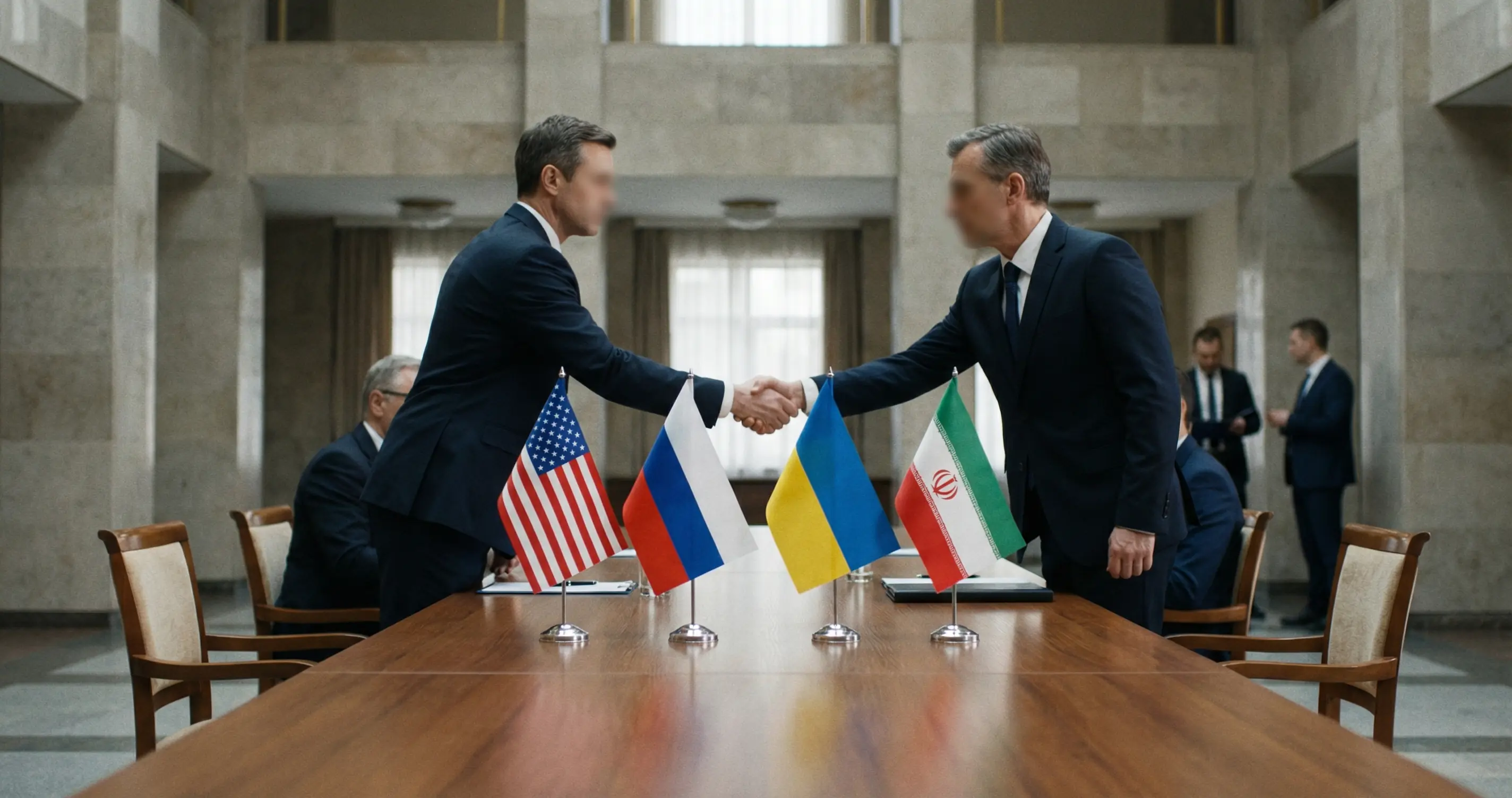
In Abu Dhabi, a second round of trilateral talks involving American, Ukrainian, and Russian officials produced a prisoner exchange of more than 300 servicemen—over 155 Russian soldiers for about 150 Ukrainians—the first large swap in roughly five months. The U.S. European Command announced that the U.S. and Russia had agreed to reestablish high-level military-to-military dialogue for the first time in over four years. Fundamental issues remain unresolved: the status of Donbas, control of the Zaporizhzhia nuclear plant, and post-war security guarantees for Ukraine, including possible U.S. involvement. Ukrainian President Volodymyr Zelenskyy has insisted on binding Western security guarantees. Russian negotiator Kirill Dmitriev suggested after the talks that "some security guarantees in some form may be acceptable." Fighting continued during the talks; Zelenskyy stated that 55,000 Ukrainian troops have been killed since the invasion began.
In Oman on February 6, Iranian Foreign Minister Abbas Araghchi and U.S. Middle East envoy Steve Witkoff led indirect nuclear talks mediated by Oman. Araghchi described the atmosphere as "very positive" and said the sides agreed to continue, though they deferred details on timing and format. The U.S. sought to address not only nuclear issues but also Iran's ballistic missiles and support for regional proxies; Iran stated it would not cease enrichment or send uranium abroad. Admiral Brad Cooper, head of U.S. Central Command, took part in the Oman talks, the first time a top U.S. military commander in the region participated directly in negotiations with Iran.
Impact
The end of New START removes a decades-old pillar of strategic stability and occurs during active great-power competition and proxy conflict. The combination of no verifiable caps, modernized and new weapon systems, and heightened tensions increases the importance of risk reduction and dialogue even in the absence of a new treaty. The Ukraine and Iran talks show that diplomacy is continuing in parallel to military and economic pressure, but substantive breakthroughs depend on resolving core disagreements over territory, security, and nuclear constraints.
What's Next
Whether the U.S. and Russia return to arms control negotiations will depend on political will and the evolution of the Ukraine conflict. Further rounds of Ukraine talks are expected; the restoration of military-to-military channels could help manage incidents and support any future ceasefire or settlement. U.S.-Iran engagement is set to continue in the coming days, with Oman and other partners facilitating, but progress will require concrete steps on nuclear limits, missiles, and regional behavior.