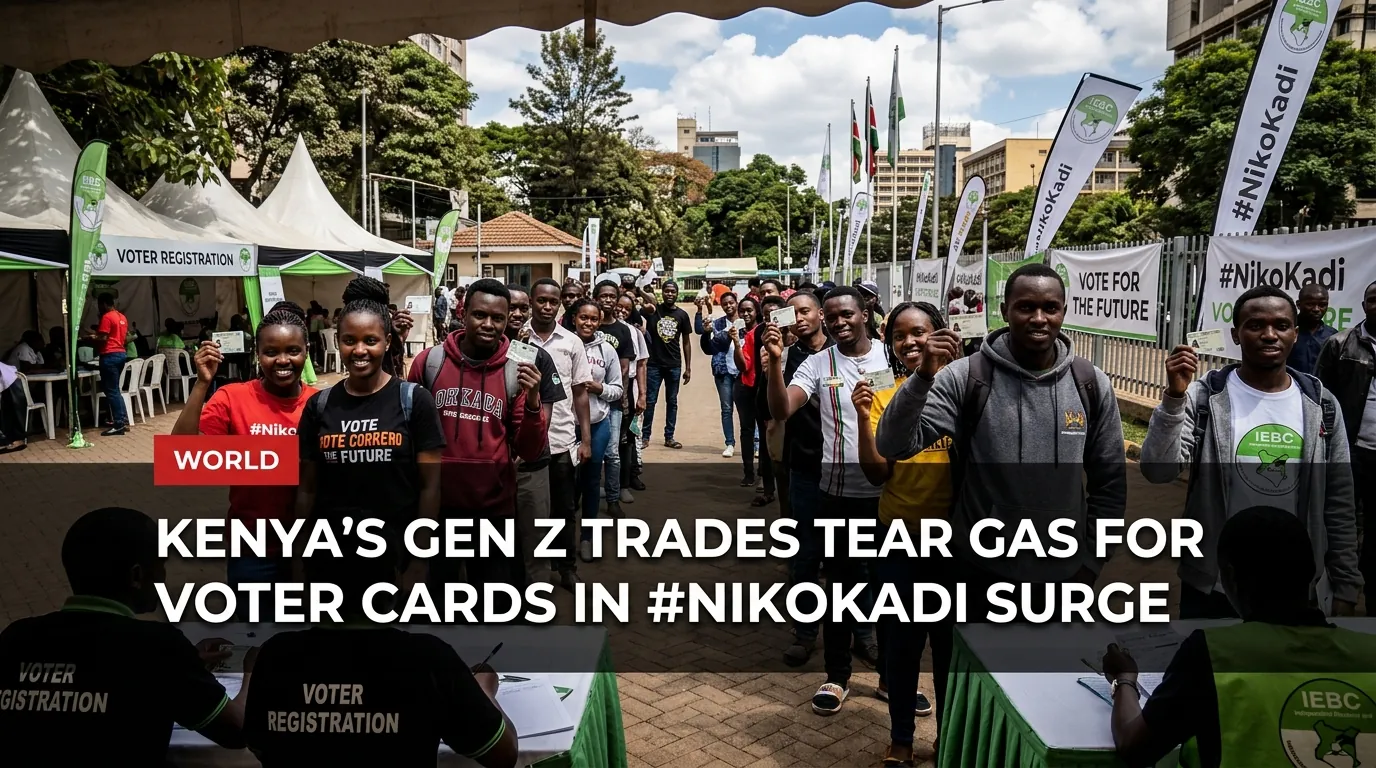
Two years after storming parliament and forcing a president to scrap his own budget, Kenya's Generation Z is deploying a new weapon — the ballot. The #NikoKadi movement (Swahili for "I have the card") has transformed voter registration from civic duty into viral social media phenomenon, with millions of young Kenyans racing to sign up before the country's 2027 general election.
From Street Power to Ballot Power
The shift didn't happen overnight. Kenya's Gen Z movement exploded in June 2024 when hundreds of thousands marched against the Finance Bill, a package of tax hikes that would have raised levies on bread, cooking oil, and digital transactions. Protesters breached parliament grounds in scenes not seen since independence. President William Ruto backed down, vetoing his own bill and firing his entire cabinet.
But the victory came at a terrible cost.
By mid-2025, a second wave erupted after blogger Albert Omondi Ojwang died in police custody, triggering nationwide fury. But something was changing in the movement's DNA. Street rage was giving way to strategic thinking.
The #NikoKadi Playbook
In March 2026, the transformation became unmistakable. Instead of protest placards, young Kenyans began posting photos of their voter registration cards on TikTok, X, and Instagram with the hashtag #NikoKadi.
The numbers tell the story:
What makes #NikoKadi different from typical voter drives is its organic, leaderless structure — the same decentralized DNA that made the 2024 protests impossible to shut down. There's no party behind it, no politician's face on the poster. It's peer pressure weaponized for democracy.
Why Ruto Should Be Worried
President Ruto attempted to ride the wave, posting "Tuko Kadi!" ("We have the card!") on his social media accounts. The response was immediate and savage — activists accused him of "political theft" of a grassroots movement explicitly designed to unseat his government.
The economic backdrop makes the political math brutal for the incumbent:
Kenya's debt crisis is the engine behind the unrest. With over 55% of government revenue consumed by debt servicing and GDP growth sliding from 5.7% to 4.7%, the average Kenyan feels poorer even as headline numbers grow. The government faces a July 2026 deadline for significant debt repayments — likely requiring the kind of tax proposals that triggered the original uprising.
- Youth engagement in democratic process at historic highs
- Peaceful transition from street protest to electoral participation
- Voter registration could add 6.3 million new voices
- Movement is cross-ethnic, breaking Kenya's tribal voting patterns
- Government has history of suppressing digital organizing
- IEBC capacity questioned for processing millions of new registrations
- Risk of election violence if results are disputed
- Key activists face arrest and intimidation — CPK leader Booker Ngesa Omole reportedly abducted in March 2026
A Generational Break from Tribal Politics
Perhaps the most significant aspect of the Gen Z movement is what it isn't. For decades, Kenyan politics was organized along ethnic lines — Kikuyu vs. Luo vs. Kalenjin, with each community backing "their" candidate. The Gen Z movement has been conspicuously "tribeless."
The old opposition couldn't capitalize. When Raila Odinga's Orange Democratic Movement (ODM) joined Ruto's government in a "broad-based" coalition, it left a vacuum that no traditional politician could fill. Gen Z filled it instead.
KEY STAT: One in five Kenyans aged 18-34 is not in employment, education, or training. That's not a demographic — it's a political army waiting to vote.
Activists like Morara Kebaso and Kasmuel McOure are now weighing runs for office themselves, potentially carrying the movement's energy directly into parliament. McOure's recent decision to join ODM drew backlash — a sign that the movement polices its own independence fiercely.
The Amnesty International Warning
Not everyone is optimistic about a peaceful path forward. Amnesty International documented how Kenyan authorities "weaponized social media and digital tools" to suppress the 2024-2025 protests, including surveillance, internet throttling, and coordinated disinformation campaigns. The Kenya National Commission on Human Rights (KNCHR) continues to investigate scores of unresolved deaths.
The Independent Policing Oversight Authority (IPOA) has opened investigations into police shootings, but accountability has been slow. Families of victims say justice feels theoretical.
What Happens Next
The March 30 mass registration launch will be the first real test of #NikoKadi's reach. If projections hold and millions of young voters register, the 2027 election becomes a genuine referendum on the Gen Z revolution.
But between now and then, the government faces that July 2026 debt deadline. New austerity measures could reignite street protests — a "Protests 3.0" that would test whether the movement can hold its discipline and channel anger into ballots rather than barricades.
For now, Kenya's Gen Z has pulled off something rare in African politics: building a leaderless, cross-ethnic, digitally native political movement that survived government crackdowns, co-optation attempts, and its own success. Whether it can survive an election remains the open question.
The voter cards are being printed. The hashtags are trending. And William Ruto's government is running out of slogans to steal.