Israel Kills Iran Intelligence Chief Khatib in Tehran Airstrike
Israeli forces assassinated Iran intelligence minister Esmaeil Khatib in a precision Tehran airstrike, the third senior official killed in 24 hours.
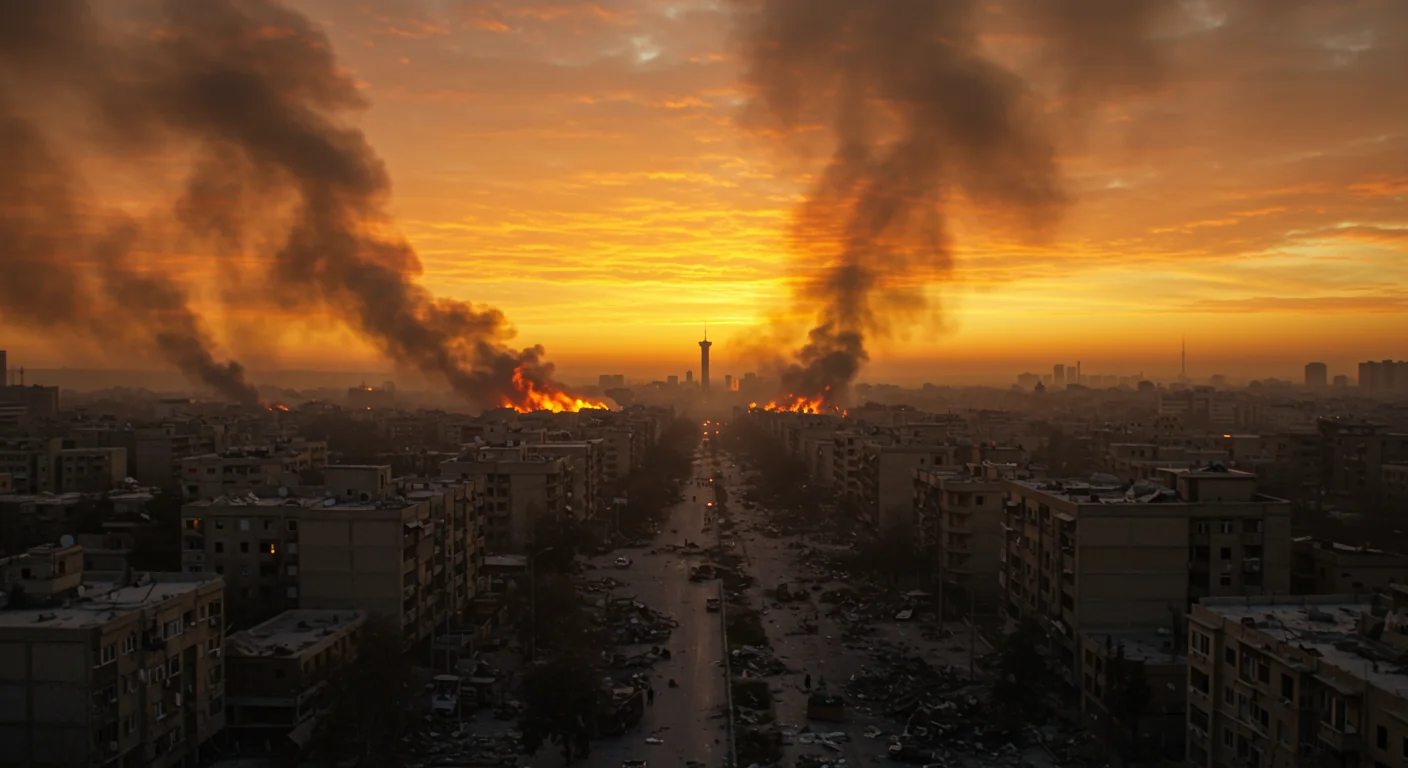
Israeli warplanes killed Iran's intelligence minister Esmaeil Khatib in an overnight precision strike on Tehran early Wednesday, the third senior Iranian official assassinated in 24 hours as Israel accelerates a campaign to dismantle the Islamic Republic's command structure.
Israeli Defense Minister Israel Katz confirmed the killing and announced that military commanders no longer require political approval for individual strikes on Iranian leaders. "No one in Iran has immunity and everyone is in the crosshairs," Katz said. "The war has reached its final, decisive phase."
Iranian President Masoud Pezeshkian confirmed Khatib died alongside several family members and accompanying personnel. He called it a "cowardly assassination" and vowed the country would continue with "even greater resolve."
Background
The strike is part of a broader decapitation campaign that began on February 28, when US and Israeli forces launched massive coordinated strikes on Tehran. Supreme Leader Ali Khamenei and Defense Minister Aziz Nasirzadeh were reportedly killed on the first day.
Since then, power has passed to Mojtaba Khamenei, the late supreme leader's son. Analysts at the Council on Foreign Relations say the transfer of authority has been uneven, with questions about whether the younger Khamenei can maintain control over the Islamic Revolutionary Guard Corps and the country's fractured security apparatus.
Khatib ran the Ministry of Intelligence, known as MOIS, the regime's primary tool for domestic surveillance and repression. He oversaw the crackdown on the Mahsa Amini protests in 2022 and 2023, and was considered a close ally of the Khamenei family. His removal strips the regime of its most experienced internal security operator at the moment it can least afford the loss.
Key Details
The killing followed the assassinations of Ali Larijani, secretary of the Supreme National Security Council, and Gholamreza Soleimani, commander of the Basij paramilitary force, both on March 17. Three senior leaders eliminated in a single day represents the most aggressive targeting of a sovereign government's leadership since the 2003 invasion of Iraq.
The Israeli Air Force used precision-guided munitions to strike targets in Tehran described by the IDF as intelligence and IRGC command hubs. Katz warned of further operations on March 18 across "all arenas," including Lebanon and Yemen.
Israeli defense manufacturers Elbit Systems, Israel Aerospace Industries, and Rafael have accelerated production to sustain the multi-front war. US contractors Lockheed Martin, RTX, and Northrop Grumman have quadrupled output. RTX stock has risen 110 percent since 2023.
Impact
The war's economic toll continues to mount. Brent crude has surged to $110 per barrel, up 40 percent since fighting began. Global equity markets lost $3.2 trillion in value within the first 96 hours of the conflict.
The Strait of Hormuz, through which roughly 20 percent of the world's oil passes, has been effectively shut. Daily transits have dropped from 138 to five. President Trump has proposed a naval escort coalition, but Japan and Australia have declined to participate.
The human cost is steep. Since February 28, reported deaths include 1,300 in Iran, 922 in Lebanon, and 16 in Israel. Thirteen US service members have been killed. Top Trump administration advisers have estimated the war's cost to the United States at $12 billion in its first two weeks.
Retired US generals and international observers have warned that the pace of operations is draining resources faster than they can be replenished. The Council on Foreign Relations noted that while the campaign's metrics are striking, the absence of regime collapse suggests a protracted conflict with no clear endgame.
What's Next
The immediate question is whether Iran can reconstitute a functioning command structure. With the supreme leader, intelligence chief, national security council secretary, and Basij commander all dead, the regime's ability to coordinate military and domestic operations has been severely degraded.
Analysts are watching for two outcomes. The first is whether the decapitation campaign triggers a popular uprising inside Iran, where discontent has simmered since the Amini protests. The second is whether Mojtaba Khamenei can consolidate enough authority to order a retaliatory strike that changes the war's trajectory.
Iran has continued to launch missiles at Israel and US bases in the Persian Gulf since the war began. But each round of retaliation has been met with a further escalation in targeted killings, creating a cycle that neither side appears willing to break.
The energy crisis tied to the Hormuz closure adds a layer of global pressure. European and Asian economies dependent on Gulf oil are already feeling the strain. Without a diplomatic off-ramp, the economic damage will compound weekly.
Katz's statement that the war is in its "final, decisive phase" may be aspirational. Three weeks of decapitation strikes have hollowed out Iran's leadership, but the country's military infrastructure and missile capability remain largely intact. The war's next chapter depends on whether removing the people at the top is enough to break the system they built.
Tags
Sources
Related Articles

Arctic Sovereignty Crisis Deepens as Canada, Russia and US Stake Claims
Arctic sovereignty disputes intensify as Canada pledges $35 billion for defense, Russia expands seabed claims, and the US pushes to acquire Greenland.

Pope Francis Backs U.S. Bishops on Migrant Dignity Amid Deportation Push
Francis sent U.S. bishops a letter in February 2025 supporting their defense of migrants' rights and warning that immigration enforcement must never undermine human dignity.

China Builds Space Alliances in Africa With Surveillance Access
Reuters reports Beijing has 23 space partnerships in Africa, retains access to satellite data, and runs Egypt's 'homegrown' satellite facility with Chinese personnel and equipment.