Ethiopia's $5 billion Grand Renaissance Dam now holds 74 billion cubic meters of Blue Nile water, enough to cut nearly an entire year's flow to the 150 million people downstream who depend on it. Egypt and Sudan want the United Nations to intervene before the first drought tests whether Africa's largest hydroelectric project becomes a weapon or a lifeline.
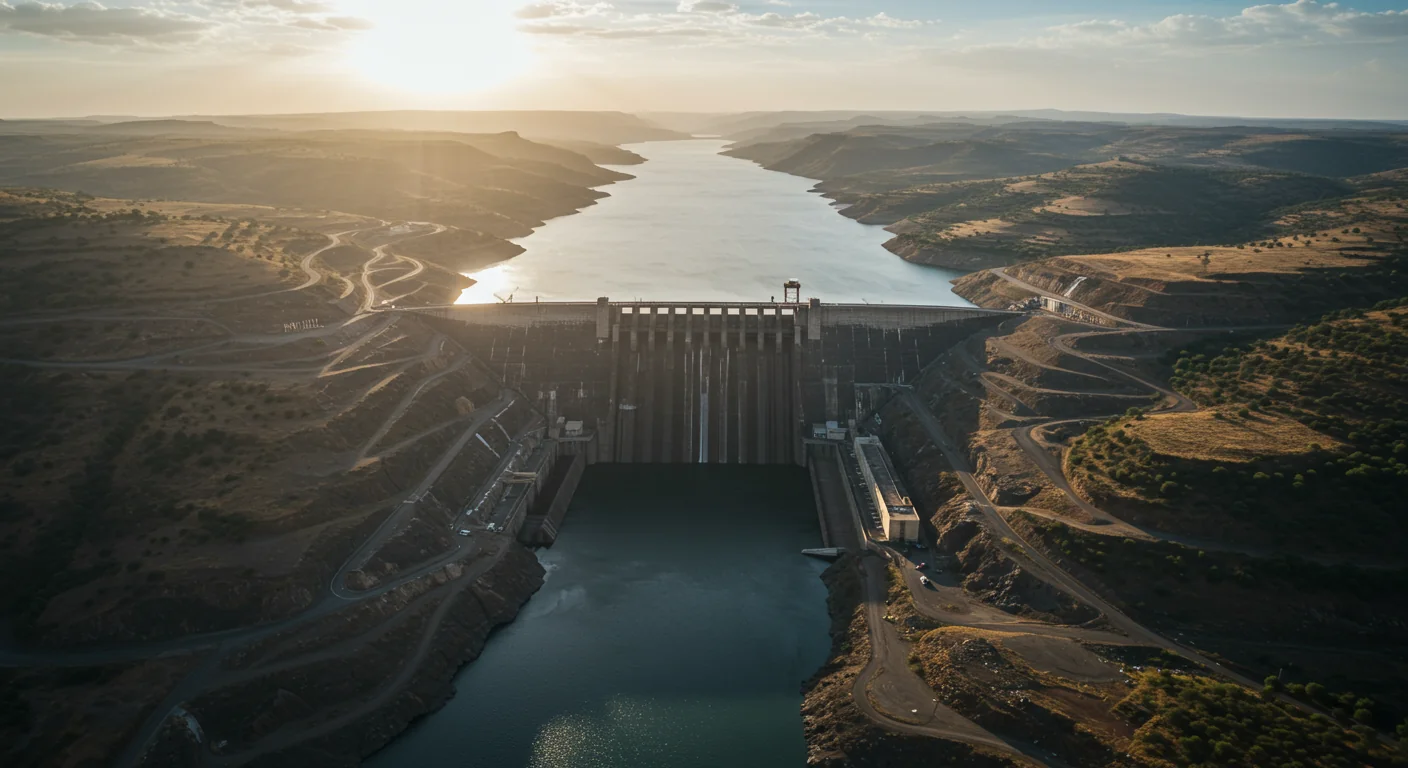
The reservoir behind the Grand Ethiopian Renaissance Dam reached its maximum height of 640 meters above sea level in December 2024, completing a filling process that began in July 2020. On September 9, 2025, Prime Minister Abiy Ahmed inaugurated the dam at a ceremony in Guba, the remote Benishangul-Gumuz region site where construction started under his predecessor Meles Zenawi in April 2011.
All 13 Francis turbines are now operational, delivering 5,150 megawatts of installed capacity. Ethiopia has already begun exporting 200 to 400 megawatts to Kenya and additional power to Djibouti, with Tanzania and South Sudan in active negotiations.
The Century-Old Water Order Collapses
For nearly a hundred years, two treaties governed who got the Nile. The 1929 agreement and its 1959 successor handed Egypt and Sudan roughly 90 percent of the river's annual flow and gave Cairo an effective veto over any upstream construction. Ethiopia signed neither.
The GERD dismantled that arrangement through concrete and steel rather than diplomacy. The Blue Nile, which originates in Ethiopia's Lake Tana, supplies approximately 85 percent of the water that reaches Egypt. A dam holding 74 billion cubic meters at the source fundamentally reverses a power dynamic that colonial-era negotiators set in place.
KEY STAT: The Blue Nile provides 85% of Egypt's water supply. GERD can hold back nearly a full year of that flow.
The Cooperative Framework Agreement, pushed by upstream nations including Ethiopia, Uganda, and Rwanda, has now entered force. It establishes a new basin-wide legal order that explicitly rejects the "acquired rights" doctrine underpinning the old treaties. Egypt and Sudan refuse to sign it.
What Cairo and Khartoum Are Demanding
Egyptian Foreign Minister Badr Abdelatty filed formal complaints with the UN Security Council in early 2026, calling the dam's unregulated operation an "existential threat to the rights and interests of 150 million citizens of downstream countries." President Abdel Fattah el-Sisi has repeated that the Nile remains a matter of national security, language that Egyptian officials have historically paired with implicit military warnings.
Sudan occupies an uncomfortable middle position. The dam provides genuine flood control benefits for communities along the Blue Nile, and Khartoum's Roseires Dam sits just downstream. But Transitional Prime Minister Kamil Idris warned in February 2026 that "unregulated water discharge" could threaten Sudanese infrastructure. He met with Egyptian leadership the same month to coordinate a joint response.
- GERD reservoir holds 74 billion cubic meters at full capacity
- 13 turbines produce 5,150 MW of electricity
- Project cost approximately $5 billion, funded largely by Ethiopian public bonds
- Ethiopia expects $1 billion in annual electricity export revenue by late 2020s
- 50% of Ethiopia's 130 million citizens currently lack electricity access
The diplomatic stalemate has widened into broader regional maneuvering. Egypt signed a defense pact with Somalia in 2025, a move widely interpreted as an attempt to pressure Addis Ababa from multiple directions. Ethiopia responded by deepening energy partnerships with East African neighbors, creating economic dependencies that double as strategic alliances.
The Drought Scenario No One Has Solved
Professor Abbas Sharaky at Cairo University, who has monitored the dam's filling since its first stage, identifies the critical vulnerability: a multi-year drought with no binding agreement on minimum water releases.
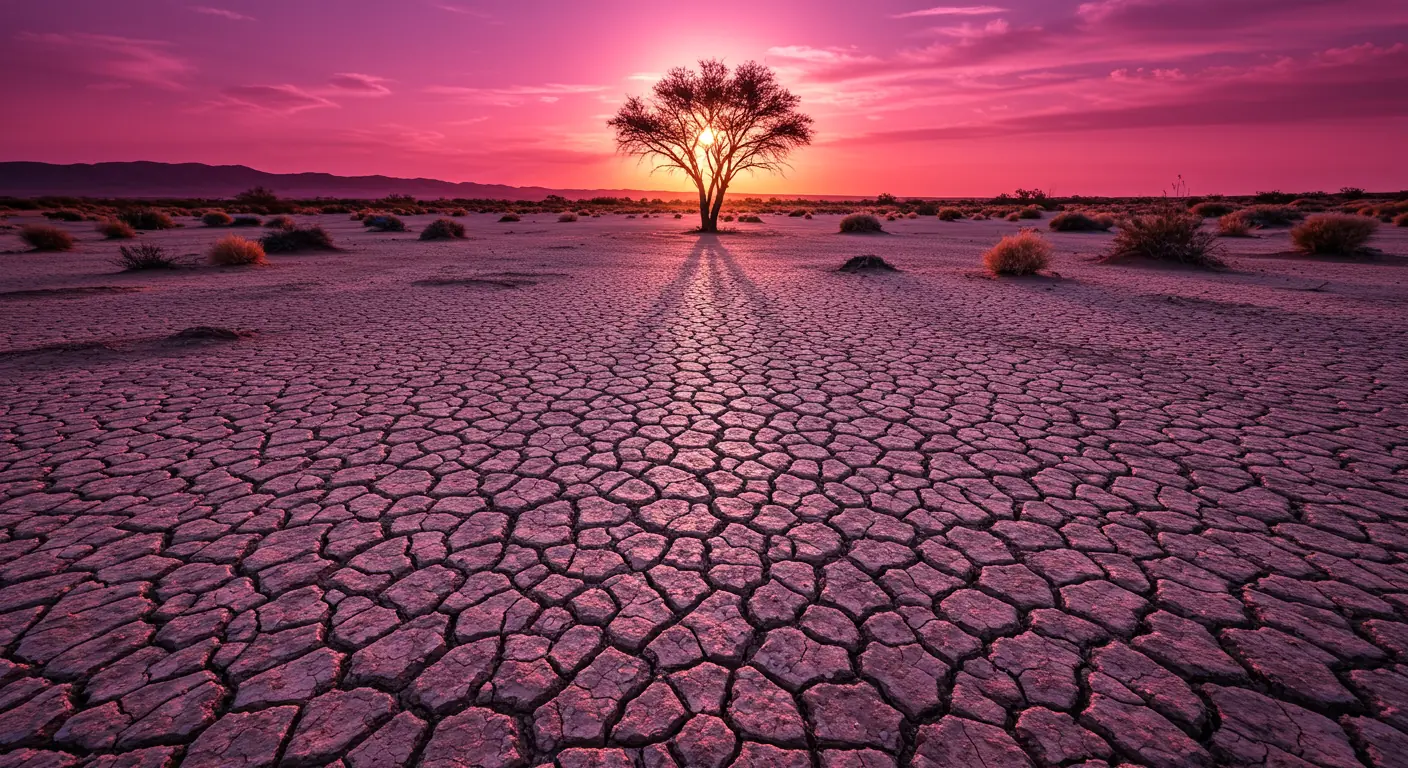
During normal rainfall years, the dam's impact on downstream flow is manageable. Ethiopia can generate power while releasing enough water to keep Egypt's High Aswan Dam functional. The crisis scenario arrives when consecutive dry years force a choice between maintaining reservoir levels for power generation and releasing water that downstream nations need for agriculture and drinking.
Without a treaty, Ethiopia has complete discretion. Ethiopian Electric Power, the state-owned company managing the dam, answers to Addis Ababa alone. No international body has enforcement authority over release schedules.
Abiy Ahmed has consistently framed the dam as cooperative infrastructure. At the inauguration, he called it "a shared opportunity for regional cooperation" and pointed to the power exports as proof of good faith. But good faith is not a binding legal mechanism, and Cairo's negotiators have spent fifteen years learning that distinction.
Who Wins, Who Loses
Ethiopia's gains are concrete and immediate. The dam doubles the country's total power output, targeting the 65 million citizens without reliable electricity. Export revenues could reach $1 billion annually by the late 2020s. The project, funded almost entirely through domestic bonds and diaspora contributions, has become a symbol of national sovereignty that no Ethiopian leader could negotiate away without political destruction.
Egypt's losses are slower but potentially devastating. The country already faces severe water stress, with per capita availability well below the international scarcity threshold. Any reduction in Nile flow accelerates a crisis that affects agriculture, industry, and the 100 million people concentrated in the narrow river valley.
Sudan stands to gain from flood control and cheap power imports but risks catastrophic infrastructure failure if the dam's operators release water unpredictably. The ongoing civil conflict has further weakened Khartoum's ability to negotiate or prepare.
The construction firm Webuild, the Italian group formerly known as Salini Impregilo, delivered Africa's largest hydroelectric dam on a project that took fourteen years from groundbreaking to inauguration. GE Vernova supplied the turbines. Both companies now market the GERD as proof of capability for similar mega-projects across the developing world.
Regional power dynamics have shifted permanently. The old Nile order, where downstream nations held legal and military dominance over water allocation, is finished. What replaces it depends on whether diplomacy catches up to engineering before the next drought forces the question.