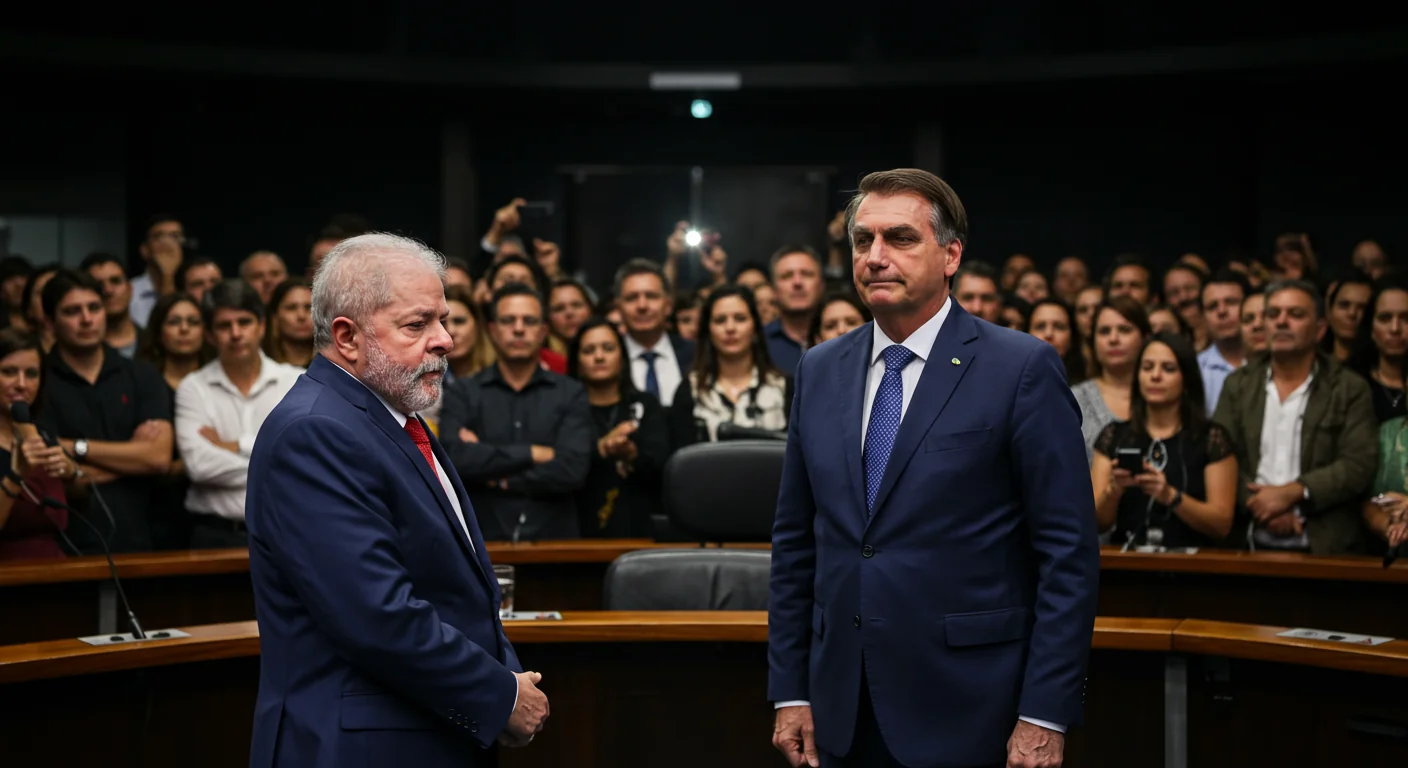
Brazil's 2026 presidential election is shaping up to be the most consequential vote in Latin America this decade. With incumbent Luiz Inácio Lula da Silva locked in a statistical dead heat against Flávio Bolsonaro — the eldest son of imprisoned former president Jair Bolsonaro — the October showdown could reshape the region's largest democracy.
Major campaign rallies in Brasília this weekend marked the unofficial start of what analysts are calling the most polarized election cycle in South American history.
The Numbers Tell the Story
The February AtlasIntel/Bloomberg poll sent shockwaves through Brazilian politics: for the first time, a Bolsonaro candidate pulled ahead of Lula in second-round voting intentions. A follow-up Datafolha poll on March 7 confirmed the trend — Lula at 46%, Flávio at 43%, well within the margin of error.
How We Got Here
The Candidates: Father's Shadow vs. Incumbent's Age
This election is unprecedented: the son of a sitting prisoner running to reclaim the presidency his father lost. It's a dynastic play with no parallel in Brazilian history.
- Age: 80, seeking unprecedented 4th term
- Platform: Social welfare expansion, Bolsa Família, state-led infrastructure
- Strength: Institutional power, international legitimacy
- Weakness: Age concerns, declining poll numbers, economic headwinds
- Voter commitment: 67% say their vote is definitive
- Age: 45, current Senator for Rio de Janeiro
- Platform: Fiscal discipline, public safety, anti-corruption
- Strength: Surging momentum, father's base, youth appeal
- Weakness: Father's imprisonment, coup association, market jitters
- Voter commitment: 63% say their vote is definitive
Flávio's announcement on December 5, 2025, came with his father's explicit prison endorsement — a dramatic moment that consolidated the right-wing vote behind a single candidate. São Paulo Governor Tarcísio de Freitas, long considered the moderate right's best hope, is now expected to seek re-election as governor instead.
Michelle Bolsonaro, the former First Lady, has emerged as a powerful campaign figure. While she publicly denies presidential ambitions, she heads PL Mulher (the party's women's wing) and is widely expected to join the ticket as vice-presidential candidate — bringing the conservative female vote that could tip the balance.
What's Actually at Stake
This isn't just a presidential race. On October 4, Brazilians will also elect:
| Position | Seats | Significance |
|---|---|---|
| Federal Deputies | All 513 | Controls budget, legislation |
| Senators | 54 of 81 | Two-thirds renewal — could flip Senate |
| State Governors | All 27 | Controls local police, infrastructure |
| State Legislatures | All seats | Sets regional policy |
The Centrão — Brazil's powerful bloc of non-ideological parties including PP, MDB, and PSD — remains the kingmaker. No president can govern without them, and both sides are courting their support aggressively.
The Economy Looms Large
Brazil's economic backdrop adds pressure to an already volatile race.
With the Selic rate at a punishing 15%, the cost of living is a top voter concern. Lula's government collected record tax revenues of R$2.89 trillion in 2025, but opposition critics argue the spending that follows is fiscally irresponsible — especially in an election year.
Markets initially favored Tarcísio de Freitas for his technocratic approach. When Flávio entered the race instead, local markets sold off on fears of continued ideological volatility. Investors are watching whether a potential Bolsonaro 2.0 administration would bring fiscal discipline or political chaos.
The Unprecedented Factor: A Son Campaigning for His Imprisoned Father
The elephant in the room is Jair Bolsonaro himself. Sentenced to 27 years and 3 months for his role in the January 8, 2023 insurrection — when supporters invaded the Three Powers Plaza in Brasília — the former president remains a martyr figure for the right and a convicted criminal for the left.
Flávio's candidacy is, in many ways, a referendum on his father's legacy. The unspoken question: would a Flávio presidency lead to a pardon?
Lula, meanwhile, faces his own vulnerability. At 80, questions about his stamina and potential successors are constant. His decision to run for an unprecedented fourth nonconsecutive term — rather than anoint a successor — speaks to how seriously PT takes the Bolsonaro threat.
New Election Rules
The Superior Electoral Court (TSE) has introduced significant changes for 2026:
- **Audit rate doubled** from 3% to 6% of electronic ballot boxes
- **AI deepfakes banned** within 72 hours of the vote
- **5,569 municipalities** plus 171 international locations will hold votes
- **Pablo Marçal**, the right-wing influencer businessman, faces ongoing eligibility challenges
The deepfake ban is particularly notable given Brazil's experience with viral misinformation in 2022. With AI capabilities far more advanced in 2026, the TSE is racing to stay ahead of synthetic content that could sway millions of voters in the final hours.
What to Watch Next
Political analyst Mário Sergio Lima of Medley Global Advisors expects the election to be decided by a "minimal difference in votes" — mirroring the razor-thin 1.8% margin of 2022.
The next critical dates: party conventions in July will formalize the tickets, and the official campaign launch on August 16 will unleash television advertising — still the most powerful medium in Brazilian politics, especially in rural areas where 30% of the electorate lives.
For now, Brazil waits. The polls say it's a coin flip. The stakes say it's everything.