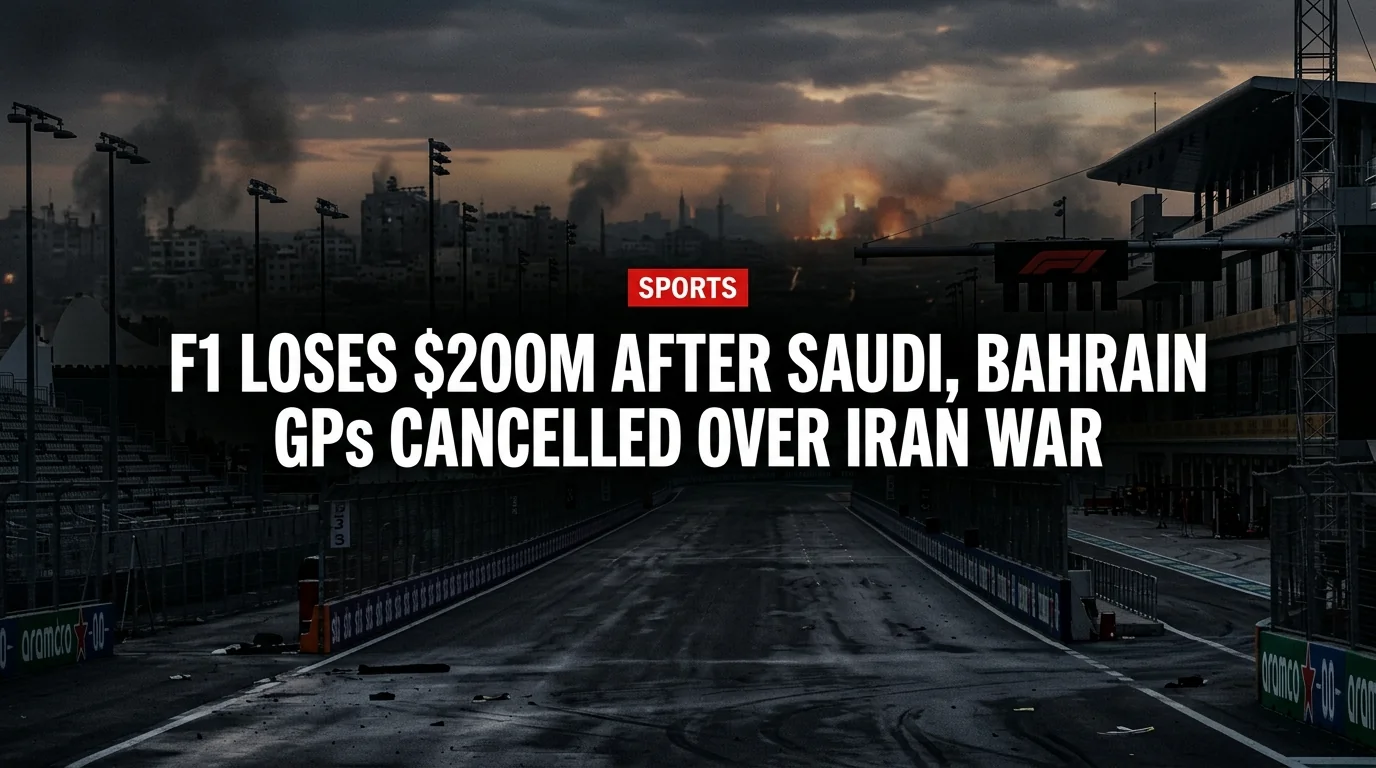
Formula 1 is facing its biggest financial crisis in decades after confirming the cancellation of both the Saudi Arabian and Bahrain Grands Prix, slashing the 2026 calendar from 24 to 22 races and leaving a five-week gap that no replacement venue can fill.
The decision, announced on March 14, came after escalating military conflict between the United States, Israel, and Iran rendered the entire Gulf region too dangerous for international sporting events.
- **Both races cancelled** — Bahrain (April 12) and Saudi Arabia (April 19) scrapped
- **No replacements** — Five-week gap between Japan (March 29) and Miami (May 3)
- **$200M revenue loss** — Guggenheim Partners estimate for F1's commercial operation
- **Support series hit** — F2, F3, and F1 Academy rounds also cancelled
Why F1 Had No Choice
Iran's retaliatory strikes in late February targeted American military bases across Bahrain, Saudi Arabia, Qatar, and the UAE — four countries that collectively host five Formula 1 races per season. The Jeddah Corniche Circuit, a temporary street track running along Saudi Arabia's Red Sea coastline, sits in a region that has faced security concerns before.
In March 2022, a Houthi missile struck a nearby Aramco oil depot during Practice 1 at Jeddah. The race went ahead despite driver protests, but the incident exposed the vulnerability of staging global events in an active conflict zone.
This time, F1 CEO Stefano Domenicali didn't hesitate: "While this was a difficult decision to take, it is unfortunately the right one."
The Financial Damage
The numbers tell a brutal story for Formula 1's bottom line.
Promoter fees from Middle Eastern races account for roughly 27% of F1's total race hosting revenue. Losing two in a single stroke hits the sport's second-quarter financials hard.
Individual teams face losses of several million dollars each, since approximately half of hosting fees are distributed through F1's prize money structure. Some teams noted a silver lining: reduced logistics costs and fewer power unit miles consumed — particularly welcome given the reliability headaches plaguing Honda's new 2026 power units.
A Timeline of Escalation
What Happens to the Calendar?
The revised 2026 schedule now reads:
| Race | Date | Status |
|---|---|---|
| Australian GP | March 14-16 | ✅ Completed |
| Chinese GP | March 21-23 | ✅ Next up |
| Japanese GP | March 28-30 | Scheduled |
| Bahrain GP | April 11-13 | ❌ Cancelled |
| Saudi Arabian GP | April 18-20 | ❌ Cancelled |
| Miami GP | May 1-3 | Scheduled |
F1 has not added replacement races. The packed 22-race calendar and Middle Eastern summer heat make rescheduling "highly unlikely," according to paddock sources. Qatar and Abu Dhabi, scheduled for later in the season, remain under review.
The Bigger Picture: F1's Gulf Dependency
The cancellations expose a strategic vulnerability that F1's commercial operation has been building for years. The sport's aggressive expansion into the Middle East — driven by hosting fees that dwarf those paid by European circuits — has created a concentration risk.
KEY STAT: Middle Eastern races contribute an estimated $250M+ annually in promoter fees to Formula 1, making the region the sport's single most lucrative market.
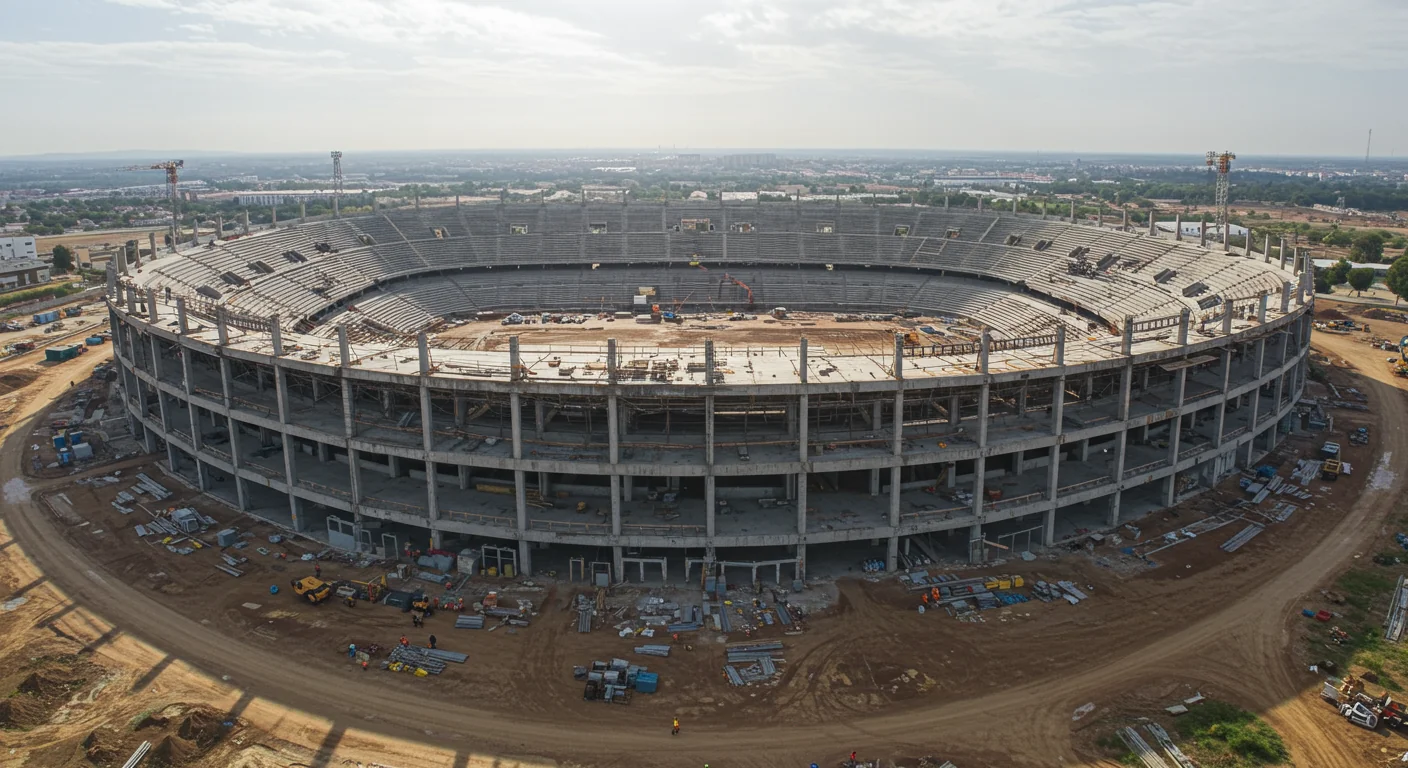
Saudi Arabia's involvement in F1 is part of Crown Prince Mohammed bin Salman's Vision 2030 diversification strategy. The kingdom has invested heavily in a permanent racing facility at Qiddiya, with construction 39% complete and contracts valued between $500 million and $1.9 billion.
Human Rights Watch used the moment to reiterate criticism of F1's Gulf partnerships: "This cancellation does not absolve the racing bodies from carrying out due diligence" on host nations' human rights records.
Driver Reactions
Williams driver Carlos Sainz broke the paddock's largely diplomatic silence with a pointed statement: "I truly hope that this conflict comes to an end as soon as possible and that everyone stays safe."
Other drivers expressed private relief, with several teams noting the extra development time could help resolve persistent reliability issues with the new 2026 technical regulations — particularly Honda's power unit vibration problems that surfaced during pre-season testing.
What Comes Next
Despite the 2026 disruption, Saudi Arabia's long-term F1 contract through 2030 and beyond remains intact. The kingdom has expressed interest in eventually hosting two races per year — one street race in Jeddah and one at the purpose-built Qiddiya Speed Park Track, designed by Alex Wurz and Hermann Tilke.
For now, F1's immediate concern is whether the conflict will threaten the Qatar and Abu Dhabi rounds later in the season. Both nations host American military installations that have been targets of Iranian retaliation.
The sport that prides itself on racing anywhere, anytime, has been reminded that some risks can't be managed with better tire strategies.