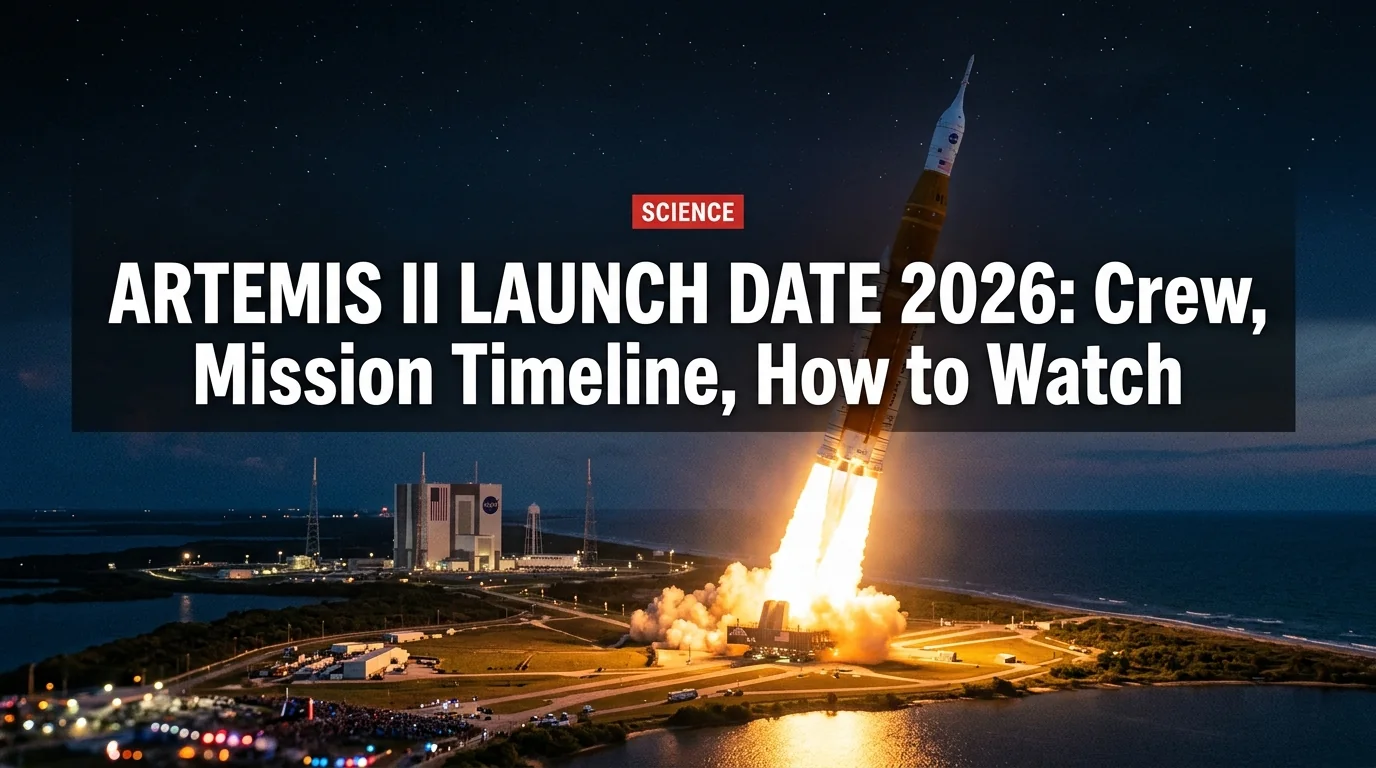
NASA has delayed the Artemis II crewed lunar flyby to no earlier than March 2026 after the February 2, 2026, wet dress rehearsal uncovered a liquid hydrogen leak, valve issues on the Orion crew module, and communication dropouts. The agency has also set Artemis III—the first crewed Moon landing since Apollo 17 in 1972—to no earlier than 2028, citing ongoing work on the SpaceX Starship Human Landing System, new spacesuits, and Orion life support and heat shield fixes.
Background
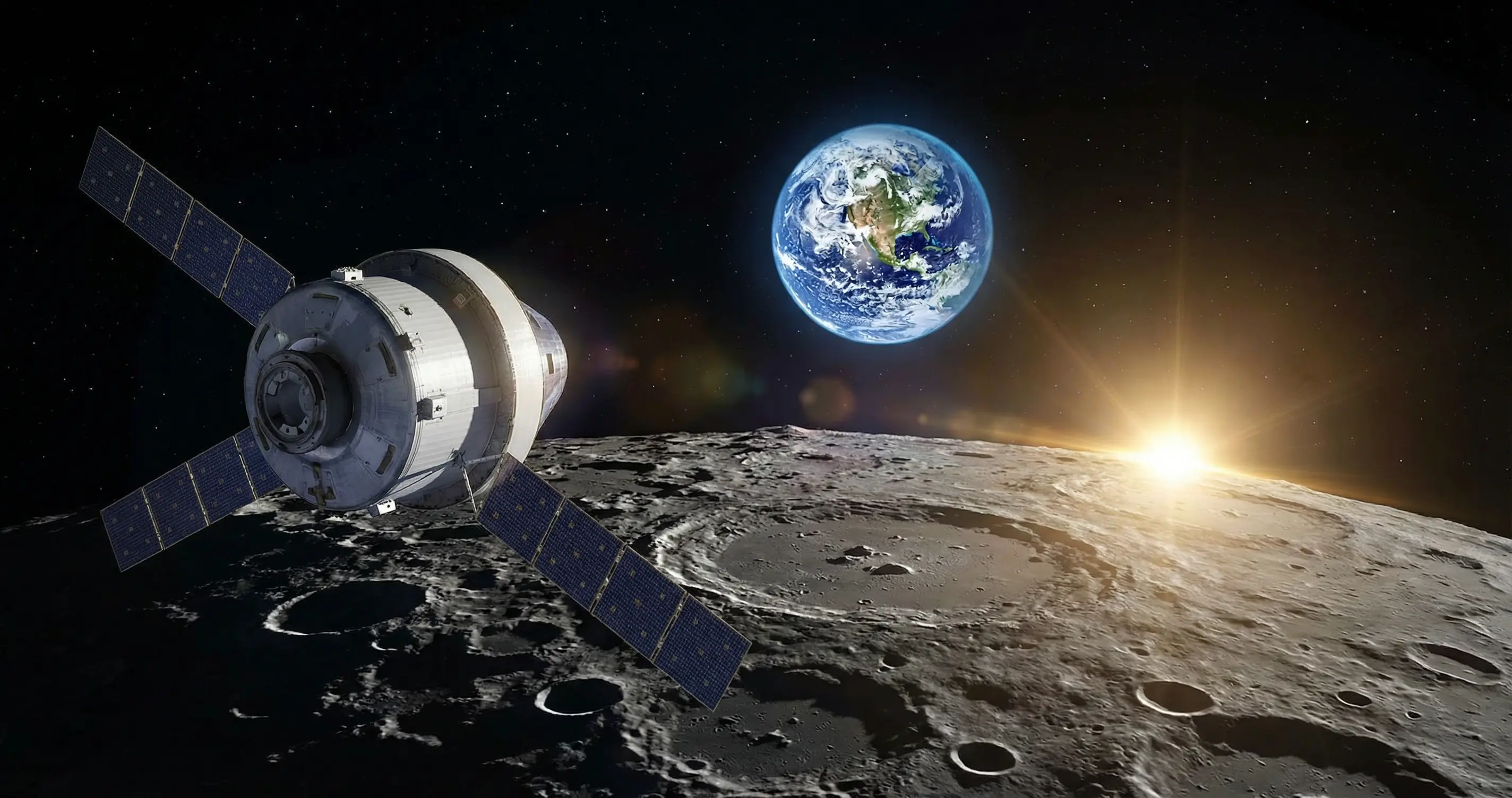
Artemis II is the first crewed mission of the Space Launch System and Orion spacecraft, sending four astronauts on a roughly 10-day flight around the Moon. The stack was rolled to Launch Complex 39B at Kennedy Space Center on January 17, 2026. The crew is Commander Reid Wiseman, Pilot Victor Glover (who would be the first person of color to fly around the Moon), Mission Specialist Christina Koch (the first woman to go beyond low Earth orbit and to the Moon), and Mission Specialist Jeremy Hansen of the Canadian Space Agency (the first non-American to fly around the Moon). The mission would use a free-return trajectory, reaching about 402,000 km from Earth—beyond the Apollo 13 record—and testing Orion's life support and manual control in deep space.
Key Details
During the wet dress rehearsal, teams faced cold-weather delays, a liquid hydrogen leak that required troubleshooting, and a valve on the Orion capsule that needed retorquing. NASA also identified audio dropouts affecting ground teams. Earlier launch attempts in early February were already scrubbed due to weather. NASA has listed potential launch dates on March 6, 7, 8, 9, and 11, 2026, with March as the realistic window. The Orion heat shield remains in focus: after Artemis I, inspectors found more erosion and char loss of the AVCOAT material than models predicted. An independent review concluded that trapped gases caused cracking and material loss. NASA chose to keep the existing heat shield and use a steeper reentry profile to limit exposure; Administrator support for flying with this approach was confirmed in January 2026.
Artemis III, which would land two astronauts near the lunar south pole for about a week, has been delayed repeatedly. NASA now targets no earlier than 2028. Delays stem from development of the SpaceX Starship Human Landing System, Axiom Space's advanced spacesuits, Orion life support updates, and heat shield and reentry strategy. When it flies, Artemis III will use SLS and Orion to send four crew to lunar orbit; two will transfer to Starship for descent and surface operations while two remain in Orion. Scientific payloads will include a seismometer (LEMS), a plant-growth experiment (LEAF), and the Lunar Dielectric Analyzer, with sampling focused on south polar geology and volatiles.
Gateway, the lunar orbital station, is on track for its first elements—the Power and Propulsion Element and the Habitation and Logistics Outpost (HALO)—to launch together on a Falcon Heavy no earlier than 2027. The HALO module arrived in the U.S. in April 2025 for final outfitting. Commercial landers are also advancing: Blue Origin's Blue Moon Mk1 cargo lander is scheduled to fly to the south polar region; Firefly's Blue Ghost Mission 2 is planned for the far side in 2026; and China's Chang'e 7 is set to launch in the second half of 2026 to study water ice at the south pole.
Impact
The slips keep the first crewed lunar flyby in 2026 and the first landing in 2028, extending the gap from the original Artemis III target of late 2024. They reflect the difficulty of integrating new heavy-lift rockets, crew spacecraft, landers, and suits on a single schedule. International and commercial partners are aligning with the new dates; ESA and JAXA are providing the I-HAB module for Gateway, with Artemis IV currently planned for September 2028 to deliver I-HAB and conduct the second crewed landing.
What's Next
NASA will work through the Artemis II wet dress rehearsal findings and aim for a March 2026 launch. Success of Artemis II is required before committing to Artemis III. Parallel progress on Starship lander tests, Gateway element delivery, and spacesuit qualification will determine whether 2028 holds for the first crewed return to the lunar surface.