
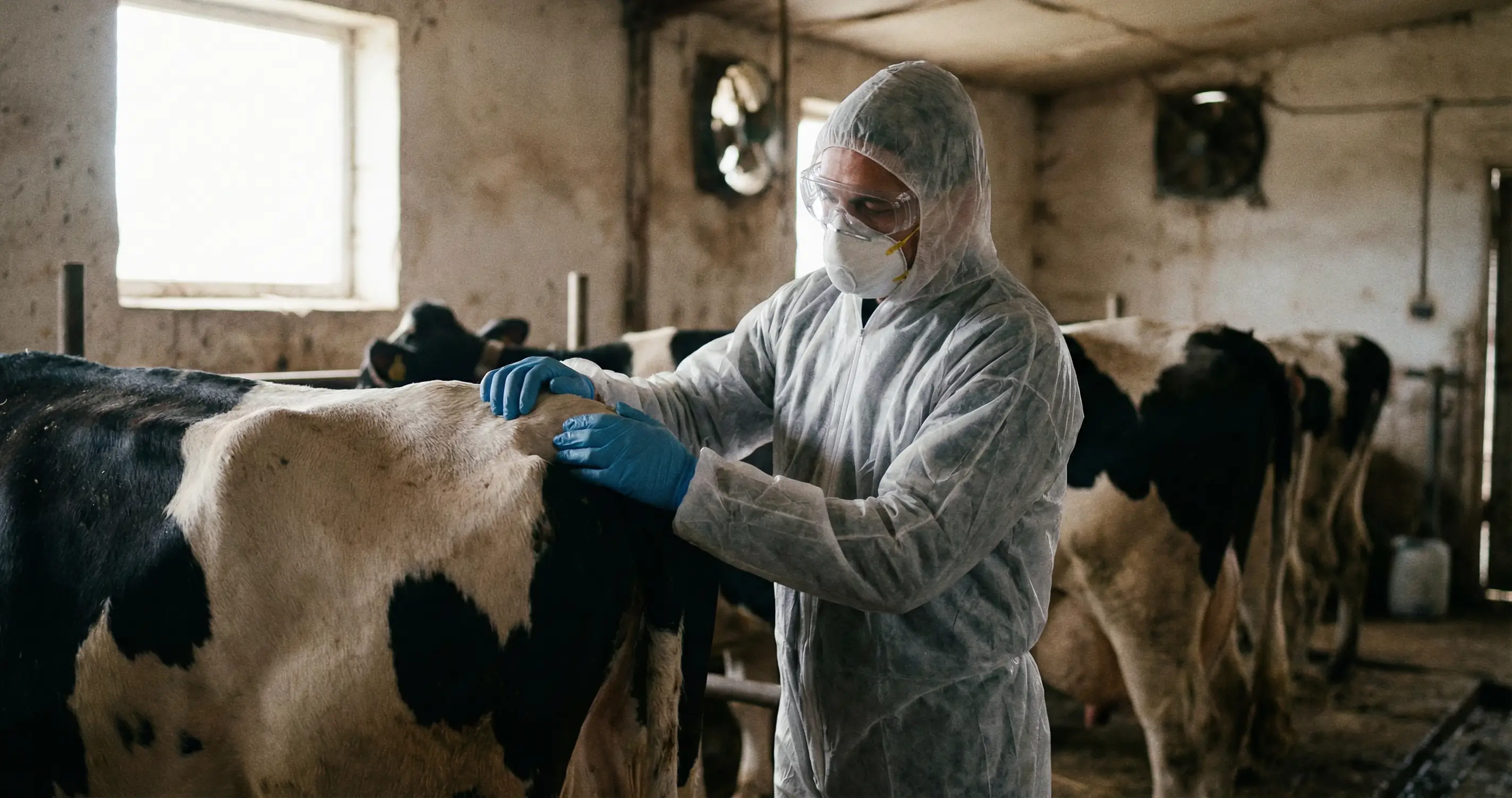
A federal study of dairy veterinarians has found evidence that H5N1 bird flu is infecting people without causing symptoms, and that the virus is circulating in livestock in more places than official outbreak reports suggest.
The Centers for Disease Control and Prevention tested 150 bovine veterinarians who attended the 2024 American Association of Bovine Practitioners conference. Three had antibodies indicating a recent H5N1 infection—a 2% seropositive rate. None of the three reported respiratory illness or conjunctivitis, the symptoms most often seen in confirmed human cases. The findings appear in the Feb. 14, 2025 issue of the Morbidity and Mortality Weekly Report.
What the Study Showed
Two of the three infected veterinarians had no known exposure to animals with confirmed H5N1. One worked only in Georgia (dairy) and South Carolina (poultry)—states that had not reported H5N1 in dairy herds at the time. That suggests undetected spread in cattle or other livestock beyond the counties and states where outbreaks have been publicly confirmed.
The CDC had planned to publish the results earlier. Release was delayed during the Trump administration's pause on health agency communications, according to NPR and other outlets. The data were made public in mid-February 2025.
Why Silent Infections Matter
Relying on symptomatic cases and voluntary reporting underestimates how many people are infected. "There are clearly infections happening that we're missing," one expert told NPR. Human H5N1 cases in the U.S. had reached nearly 70 by February 2025, about 40 of them in dairy workers. The serosurvey implies the true number of infections is higher.
The CDC recommends stronger, systematic surveillance of dairy cattle, milk, and exposed workers, and better protection for veterinarians—including respiratory and eye protection—when working with potentially infected herds.
What's Next
State and federal agencies are under pressure to expand testing of dairy herds and at-risk workers. Whether the 2% rate holds in broader surveys of dairy workers, and how it changes over time, will shape policy on vaccination, surveillance, and public messaging.